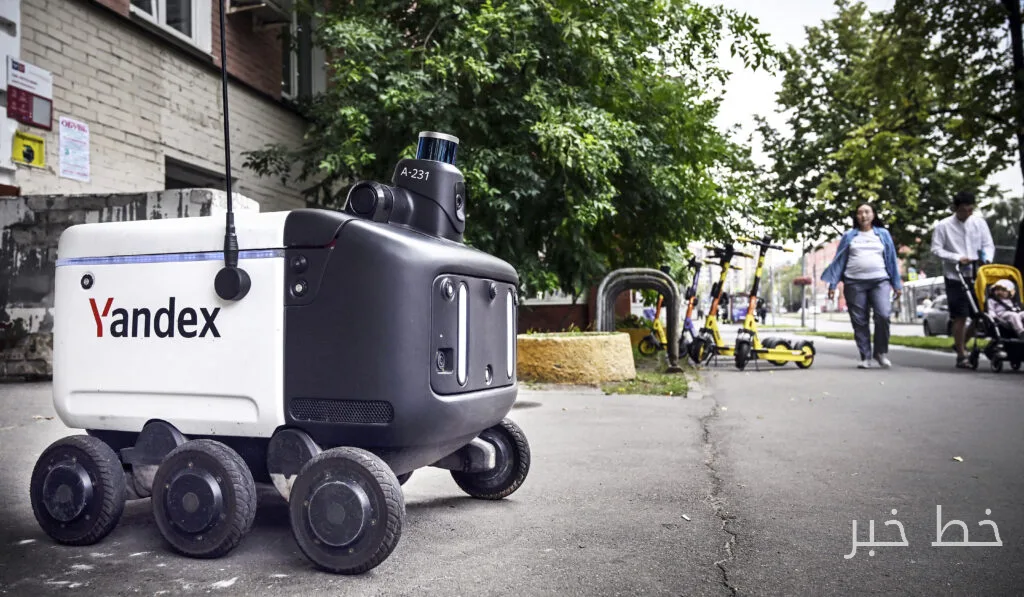
Europe has gradually retreated from competition in advanced artificial intelligence and has shifted its focus to utilizing this technology. Officials and experts on the continent have recently realized that none of the European AI models can compete with the superior American or Chinese models, prompting Europe to consider optimizing the use of existing models.
Shifting Approach to Leveraging Technology
Max Jonstran, CEO of the Swedish company Legora, commented on this, saying: "The effort to build an advanced laboratory currently seems like a mere fantasy. I prefer to think more about how we can leverage existing technology rather than trying to compete." This perspective arises as advanced AI models have become a global security issue.
Read more: China Gains an Edge in the AI Competition
Advanced American models, including OpenAI and Anthropic, were forced to disclose incidents last summer where AI agents went off testing processes. This led these companies to be more cautious in releasing their new models. Meanwhile, Chinese open-source models have emerged as a credible alternative to proprietary American models.
Challenges of Dependency on Foreign Technology
Relying on American or Chinese models is not without risk for Europe, as the continent is heavily dependent on technologies such as chips and cloud services that come from these countries. Leaders, including Ursula von der Leyen, President of the European Commission, believe that Europe should focus more on helping its industry and companies leverage AI. They argue that building domestic technology champions that can provide these tools is a smart strategy.
As politicians and industry leaders gather in Dublin on Wednesday for an international AI summit, Irish government organizers have tried to focus discussions primarily on how to utilize AI. Neam Smith, the Irish Minister for AI, said: "This is a topic that attracts everyone more: how do we want to employ this new technology we have and how do we want to encourage businesses to adopt it?"
However, not everyone agrees with this approach. A spokesperson for Mistral, Europe's main competitor in developing advanced AI, stated: "The idea that Europe should retreat from advanced AI and settle for applications is a strategic mistake." This spokesperson emphasized that a large part of the value belongs to those who build the front lines, not just those who build on it.
In recent weeks, a movement to reconsider the leadership of the bloc in Brussels has gradually been taking shape. The European Commission and the Council of the European Union, which represents national governments, have indicated that the focus should shift to how to apply this technology.
Von der Leyen, in her speech on the state of the European Union in mid-September, said: "We do not need to be those who develop advanced technology to extract the greatest value from it." This statement came after a seminar on September 4, where the AI representative of the Commission, Jim Hagman Senabe, told the 27 commissioners that the European Union should focus less on winning the competition to build AI and more on how to use it to improve the productivity of this bloc.
The challenges are clearly evident: at the end of last year, only 1 in 5 European businesses used AI in their operations. This statistic was reported at 42% in Denmark and 5.2% in Romania. This indicates that small and medium-sized enterprises make up a significant portion of the European economy, and last year, 55% of large European companies used AI, while only 17% of small companies did so.
Companies that considered using AI but backed out cited lack of expertise as their main concern. In the coming weeks, the European Commission will undertake several efforts to increase the adoption rate. On November 16, this Commission will hold the "AI in Action" summit to accelerate the implementation of AI in strategic industries.
Some in Brussels quickly respond to the idea that Europe has completely abandoned leading models. Henna Virkkunen, head of technology at the Commission, said in an interview: "We have not given up on advanced AI; we are accelerating the development of our AI systems." She added: "It is very important for Europe to have our own models, as complete dependence on other countries is a significant risk."
Read more: MI5 Addresses AI Threats and the Danger of Biological Weapons · EU Cyber Agency Begins Testing Chinese AI Models