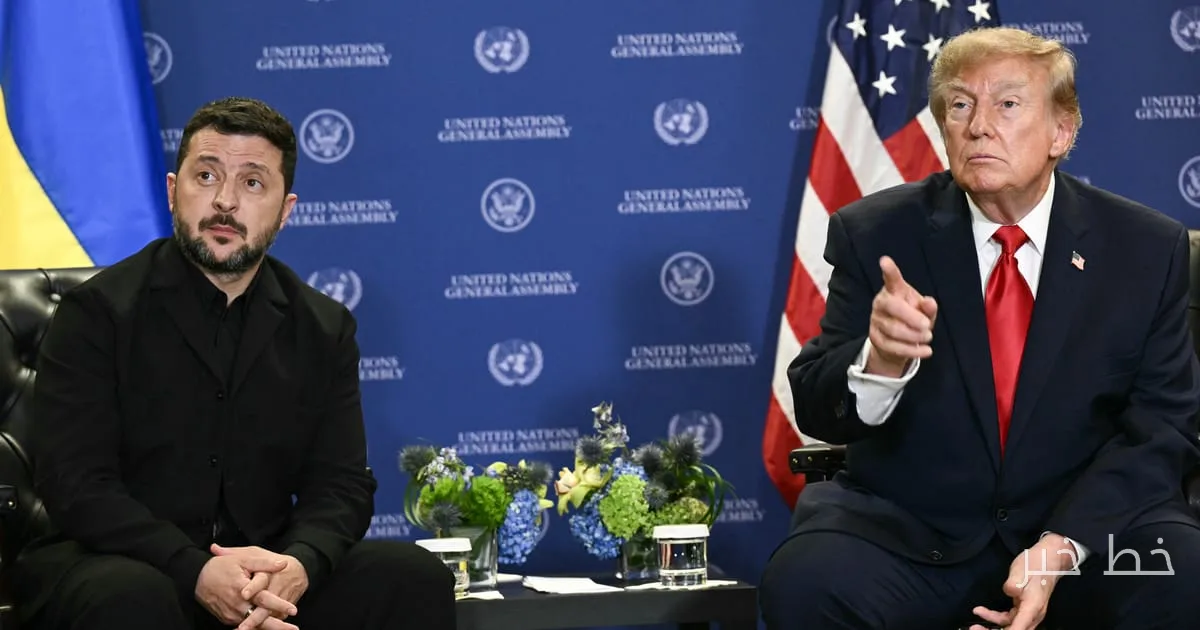
European governments reacted negatively to Donald Trump's plan, the President of the United States, to import 300,000 tons of Russian diesel and emphasized their determination to support Ukraine and maintain pressure on Moscow. Trump announced this move a few weeks before the U.S. midterm elections, at a time when Republicans are facing challenges in the polls and energy prices and living costs are at the forefront of attention.
Reactions from European Officials
The Lithuanian Foreign Minister, Gabrielius Landsbergis, stated at the EU Foreign Ministers' meeting: "This agreement is neither in favor of fuel prices nor in favor of the transatlantic community's unity." He emphasized that such an approach is inconsistent with European values.
The Irish Foreign Minister, Helen McEntee, described Trump's announcement about the agreement with Moscow as concerning. Meanwhile, Gunter Krichbaum, the Minister for Europe in Germany, emphasized that every dollar spent on Russian energy contributes to purchasing weapons against Kyiv.
Criticism of the Claim of an Energy Ceasefire Agreement
The EU Foreign Minister, Kaja Kallas, reminded Washington that "Russia started this war. We must not forget this." Volodymyr Zelensky, the President of Ukraine, stated at the Warsaw Security Forum that the proposal to deliver Russian diesel would have a significant impact on global supply.
Zelensky also mentioned that Kyiv was not informed of the energy ceasefire agreement before Trump's announcement and said: "We learned about it through the media." He urged Washington to sign a contract with Ukraine instead of an agreement with Moscow.
The Latvian Foreign Minister, Edgars Rinkēvičs, emphasized that pressure on Russia and sanctions are the only way forward towards peace. The British Foreign Minister, Steven Dowd, also stated that London has no plans to purchase Russian energy and emphasized increasing economic pressure on Moscow.
Kyiv is preparing for its fifth winter since the full-scale Russian invasion began in February 2022. Donald Tusk, the Prime Minister of Poland, warned that this winter could be critical for Ukraine due to ongoing Russian attacks on infrastructure.
Ukraine's financial needs are likely to be raised at the European leaders' summit in Brussels on Thursday. Estimates suggest that Kyiv will face a financial shortfall of $30 to $35 billion next year.
Read more: Republican senators warn that Trump has failed on immigration