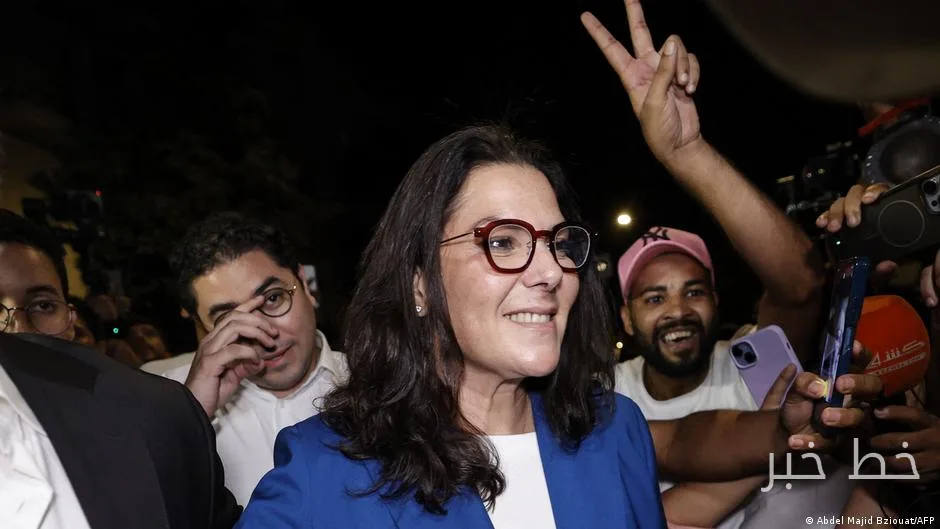
Fatima Zahra Mansouri has been appointed as Morocco's first female prime minister. This selection has generated hopes and expectations among the people, while some also point to the challenges and obstacles she may face.
Public Reactions to Mansouri's Appointment
After the announcement, many Moroccan citizens expressed their happiness in television interviews. One woman said: "This appointment can uplift our spirits." Another stated: "Why shouldn't we give women a chance? We have never had a woman in this position, and I hope God supports her." Others also pointed out an important fact that the change should benefit Morocco.
Read more: Hungarian man sets record for largest collection of energy drink cans
Challenges Facing the Female Prime Minister
At the same time, some individuals mentioned the challenges that Mansouri will face as a woman in a country with specific traditions. One man said: "People say that a nation cannot succeed if a woman is at the helm, even if she only holds half of the power." These remarks refer to the political realities of Morocco, where King Mohammed VI ultimately holds executive power.
Morocco is a constitutional monarchy, and despite holding elections, the king retains ultimate authority. Mansouri, who is currently the mayor of Marrakech, has been chosen as a candidate for this position and becomes the third woman to hold this office in the Arab world.
The Symbolic Importance of Mansouri's Appointment
Mansouri's appointment as prime minister carries significant symbolic importance. Two Tunisian women, Najla Bouden and Sara Zaafrani, have held this position before her. Research shows that these changes in female leadership in Tunisia have shifted attitudes towards women in power.
Recent reports indicate that attitudes towards the role of women in Morocco are also changing. Mansouri could accelerate these changes. One of the founders of the media organization "Mobilizing for Rights Associates," Stephanie Wilman Bordat, said: "We have realized that this appointment has had a significant impact on social and cultural norms."
Future Prospects and Legal Reforms
Although Mansouri is seen as a symbol, some analysts believe that she is unlikely to bring about fundamental changes in past policies. Her party's electoral program, the Authenticity and Modernity Party (PAM), does not pay much attention to women's issues and has only proposed a few related policies.
In 2023, King Mohammed VI asked the previous prime minister to consider reforms to the family code, but these discussions are still ongoing. Some other parties in the recent elections have taken stronger positions on women's rights.
Many believe that Mansouri could serve as a role model for women and girls in Morocco and the region, but the need for legal reforms to improve the status of women in this country remains essential.
Read more: Brazil's electoral controversy leads to cancellation of final presidential debate · Spain warns Morocco; a disaster has occurred at the borders