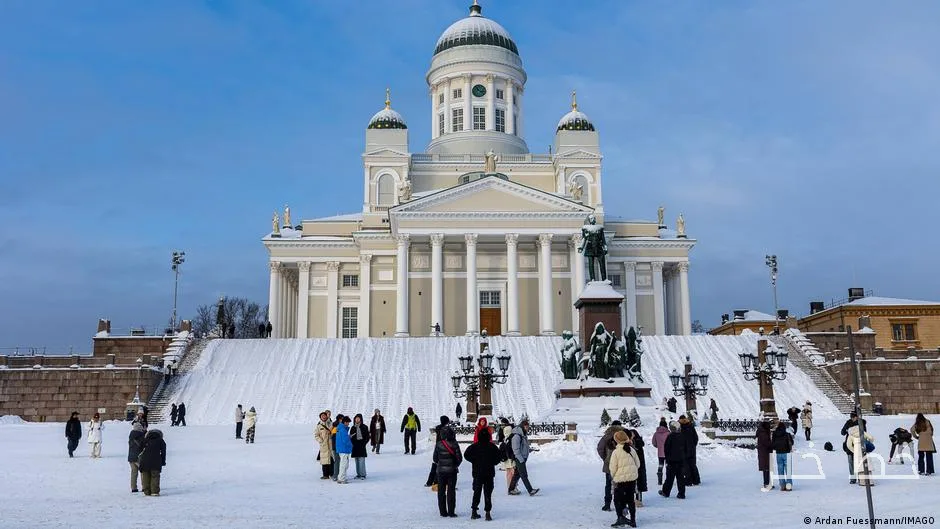
Finland, which has been ranked as the happiest country in the world for nine consecutive years, is facing unpleasant weather and a cold winter. The country is currently dealing with the toughest austerity budget in recent years, and economic tensions due to debt and deficit are at their worst since the 1990s.
Economic and Political Challenges
As elections approach in April, discussions are no longer about how much should be cut, but rather which services, benefits, and pensions will face the largest reductions. Finland's debt and financial deficit have reached 90.3 percent of GDP in the second quarter of this year, while before the pandemic, this figure was around 65 percent.
Since the global financial crisis of 2008/9, the Finnish government has spent more than it earns. An aging population and weak economic growth are also major reasons for this situation. Recently, the government treasury has predicted that the financial deficit will reach 4.2 percent of GDP by 2026.
EU Pressures and Economic Planning
The European Union has put significant pressure on Helsinki to reduce the debt gap, as union rules do not allow member states to have a deficit exceeding 3 percent of GDP. In January, the European Council initiated an excessive deficit procedure and gave Finland a deadline to meet the target by the end of 2028.
Prime Minister Petri Orpo's government, which came to power in June 2023, has announced that its goal is to save about 9 billion euros ($10.1 billion) during this parliamentary term. However, economists warn that whoever wins the upcoming elections will need to cut much more than this amount.
Although the unemployment rate in Finland is lower than the EU average, youth unemployment has reached 23.3 percent. In August, the unemployment rate in Finland rose to 10.3 percent, which is higher than unemployment in Spain.
Lauri Holappa, director of the New Economic Analysis Center of Finland, has warned that a new round of austerity may hit the domestic economy hard. He stated that more than a quarter of the population works in the public sector, and if these employees face the risk of layoffs, savings rates will increase, and private spending will decline again.
Sequential impacts such as the COVID-19 pandemic, high interest rates, and global financial effects from the two current wars have pressured efforts to reduce the growing gap between income and debt. The draft budget for 2027 still accounts for a cost gap of 12.4 billion euros.
Finland has also committed to purchasing 64 F-35A fighter jets from the United States, which costs about 8.4 billion euros, and is moving towards increasing its military spending to 3.2 percent of GDP, close to NATO's target of 3.5 percent.
While oil prices remain close to $100 per barrel, the government has so far refrained from increasing fuel subsidies. However, the Bank of Finland has warned about the continuous rise in energy prices and predicted its impact on economic growth and inflation.