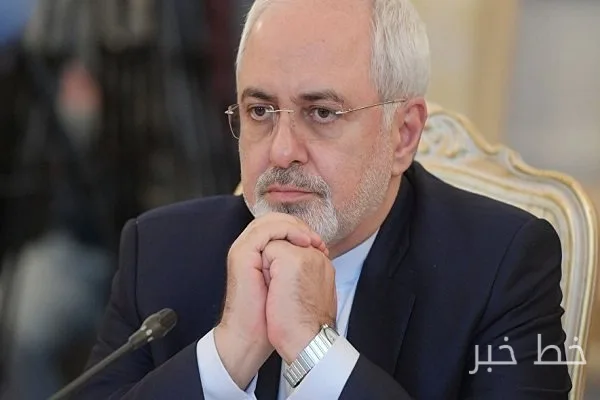
The former foreign minister analyzed the military capability of the United States and the costs of resistance against it. His recent comments have raised questions about the boundary between diplomatic realism and preemptively accepting the superiority of the opposing side. This viewpoint, which believes that the U.S. can neutralize Iran's defense system with one bomb and that resistance against an invading power only results in increased damage, concludes that the sooner we kneel before the superior power, the less we will have to pay.
Challenges of Military Analysis
This type of analysis reduces America's power to an absolute variable and Iran's capability to an almost ineffective factor. The outcome of any confrontation seems predetermined, and national will, response capability, defensive capacities, and the costs imposed on the aggressor play no role in the equation. The claimed realism can turn into a miscalculation. No serious analysis of war is complete merely by counting bombs and comparing military equipment; because the capacity for destruction is not the same as the ability to impose political will, and military superiority does not equate to achieving all strategic objectives.
Read more: Trump's Defense of Russia's Attacks on Ukraine's Infrastructure
Limitations of Military Power
As the experience of contemporary wars has increasingly revealed the limitations of military power in achieving political goals, the equations of a unipolar world and America in 1991 still cast a shadow over today's issues. In this image, America is assumed to be an unrivaled power, and Iran is portrayed as if it bears no difference from Iran during the Qajar and Pahlavi eras; a country that has no choice but to retreat in the face of external pressure. This type of perspective not only ignores the shifts in power within the international system but also excludes Iran's accumulated capacities and experiences from consideration.
The issue is not about denying the military power of the United States or ignoring the costs of war; rather, it should be examined why the cost of resistance is highlighted in this calculation, while the cost of surrender, the consequences of retreat, and the likelihood of increased demands from the opposing side are not given equal attention. Diplomacy is not meant to remind the country of the opposing side's power; its duty is to transform all national capacities into leverage for negotiation and to defend the country's interests. If the starting point of the analysis is Iran's incapacity and the endpoint is the necessity to concede, we are no longer facing a power-based diplomatic approach; instead, we are confronted with an approach that has already conceded part of the outcome to the opposing side before negotiations begin.
Read more: Survivor of the Fort Hood Shooting Comments on Nidal Hasan's Execution · Araghchi Emphasized Utilizing Diplomatic Capacities to Safeguard National Interests