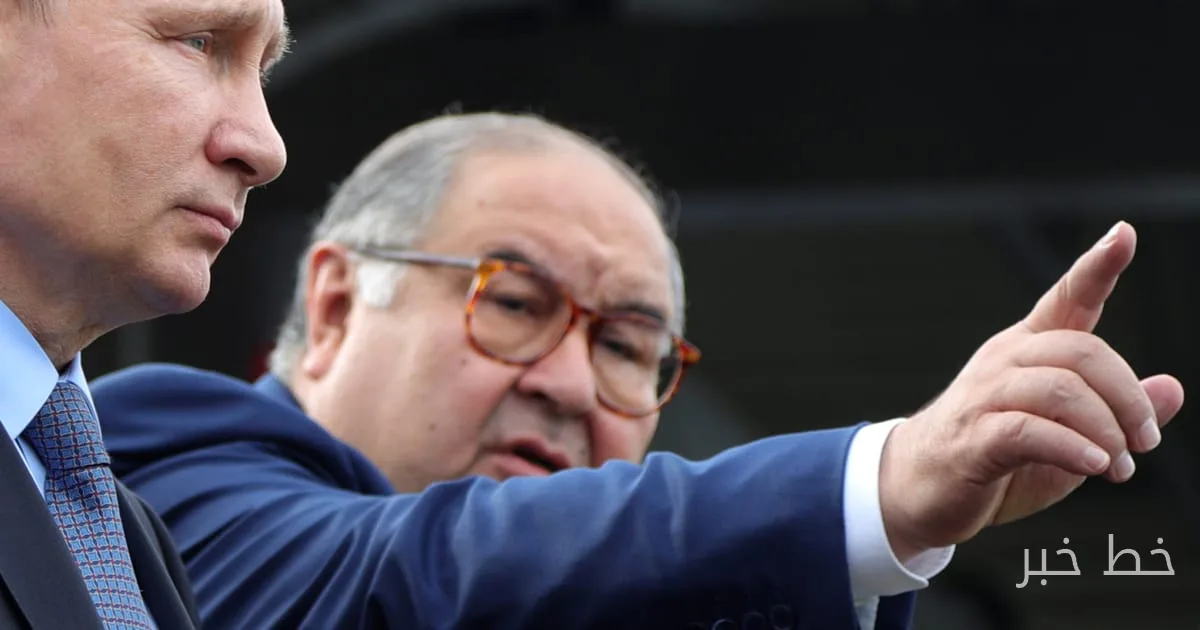
France has one week to assure other EU countries that the effort to remove Alisher Usmanov, the Russian-Uzbek billionaire, from the EU sanctions list will not weaken these restrictions.
No agreement in the EU ambassadors' meeting
EU ambassadors were unable to reach an agreement on removing Usmanov from the EU blacklist during a meeting held on Monday. This closed-door meeting, known as Coreper, saw five diplomats and officials present stating that it is now Paris's turn to explain why removing Usmanov would not set a dangerous precedent. EU ambassadors are set to reconvene on September 22.
Concerns about the consequences of lifting sanctions
A senior EU official expressed the potential risks of this action, stating: "If France continues with this action, other countries will also face similar requests to lift their sanctions, which will lead to the collapse of the sanctions framework." Foreign ministers of EU member states will discuss this matter with Paris on Tuesday and Wednesday. Two EU diplomats expressed concern that, given Moscow's increased attacks on Ukraine's civilian infrastructure, this action is inappropriate.
Initially, France justified the effort to remove Usmanov as a concession to Slovakia, a country that has long sought his removal from the sanctions list. However, French officials have clearly stated that this action is due to their national security issues and they want to provide a positive response to their international partners who have contacted them about this.
Some Members of the European Parliament have warned about the consequences of this action, stating: "We do not want to send a message that if a Russian oligarch wants to be removed from the sanctions list, he must take some Europeans hostage."
The EU has imposed financial and travel sanctions against Usmanov since 2022 due to his support for Russia in the war against Ukraine. Usmanov has denied these allegations and has called for his name to be removed from this list.