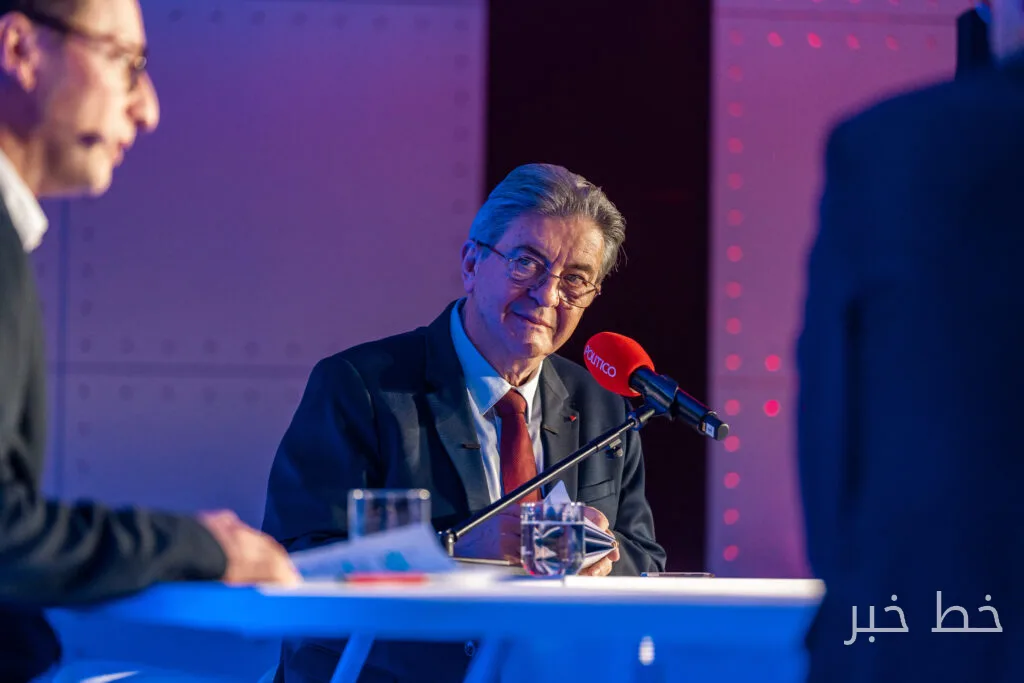
The main candidates for the 2027 French presidential election presented their views on Ukraine, Europe, and relations with other countries at the first symposium "Playbook Paris Live". This event took place in Paris and included Marion Maréchal, Jean-Luc Mélenchon, and Gabriel Attal, each expressing different opinions on various issues.
Support for Ukraine and Different Approaches
Gabriel Attal emerged as a strong supporter for increasing aid to Ukraine. He pointed out that supporting Ukraine is an "investment for us" and not a humanitarian cost. Attal also supported seizing Russian assets to help fund Ukraine's defense and did not rule out sending European aircraft to monitor Ukrainian airspace.
In contrast, Marion Maréchal emphasized that France can no longer provide financial assistance to Ukraine, linking this to the country's budgetary constraints. She stated, "We can train their military and military leadership and provide them with military aid. But we can no longer provide financial assistance to Ukraine, and we regret this."
Different Positions on NATO and Germany
Maréchal also criticized French President Emmanuel Macron, stating that he has not done enough to bring Moscow and Kyiv closer together. She supported former U.S. President Donald Trump's move to invite Vladimir Putin to the G20 summit in Miami in December, saying, "Any actions that help end this slaughter are welcome."
Mélenchon stressed the need to prohibit deep Ukrainian strikes into Russian territory, warning that such actions could put France at risk. He said, "Do you really think the Russians will remain passive and allow Moscow to be targeted? We are firing with French and Ukrainian weapons and becoming a party to the conflict."
Both candidates stated that providing any type of military equipment to Ukraine could put France at risk. Maréchal also emphasized her commitment to withdrawing from NATO's integrated command, but only after the war in Ukraine ends.
On the other hand, Mélenchon strongly criticized Germany's plans to strengthen its armed forces, referencing Germany's "history" of attacks on France. He said, "The Germans want to build the largest conventional military force in Europe, for what?... We need to talk about this."
Berlin is seeking to become Europe's dominant military power following Russia's attack on Ukraine and the reduced U.S. presence in Europe, which Mélenchon linked to economic interests.
Agreement on the EU Budget
Maréchal also criticized Ursula von der Leyen, President of the European Commission, accusing her of wanting to "bypass democracy" by accelerating negotiations on the EU's multiannual budget. She stated, "Her love for democracy is not evident in all these decisions" and added that von der Leyen is trying to avoid "accepting the will of the people."
Attal, who leads Macron's political party, Renaissance, strongly supported a pro-European agenda and emphasized the need for greater cooperation in economic areas and technology oversight. He also proposed the idea of a United States of Europe, stating that this bloc should become a "continent of power" capable of standing up to China and the United States. However, Attal added that this is only possible with progress in a multi-speed Europe.