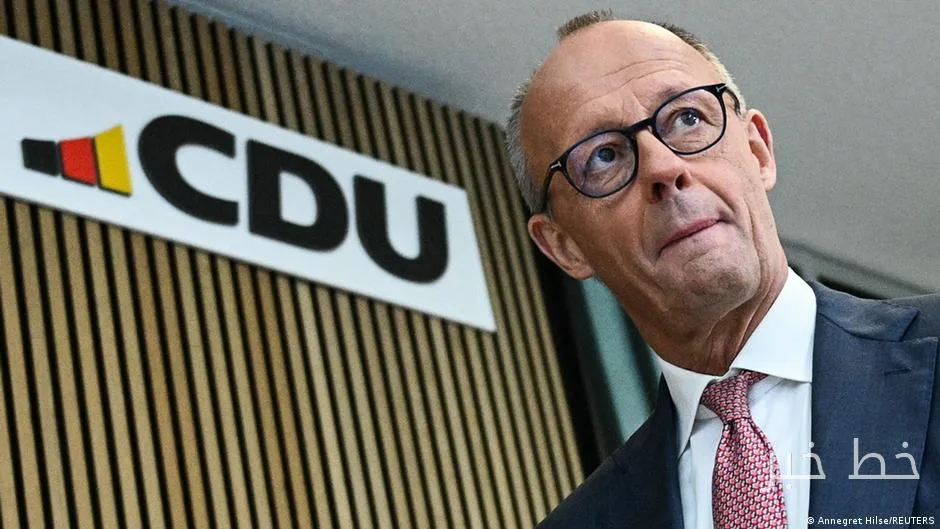
Friedrich Merz, the Chancellor of Germany, is facing serious criticism and challenges following the results of two state elections held on September 20. His party, the Christian Democratic Union (CDU), has failed to secure at least 5% of the votes needed to enter the parliament of the state of Mecklenburg-Vorpommern for the first time. In the state of Berlin, where the CDU was in power, the party has faced a significant drop in its votes and is likely to move into opposition.
Consequences of the Elections for the CDU
Merz commented on the elections, saying: "This election is a profound turning point. It is a dramatic and unprecedented result for the CDU in Germany that we could not surpass the 5% threshold. Losing an entire block in the state parliament is a heavy blow, and this will stay with us for a long time." He also pointed to the impact of federal policies that have failed to garner public support.
Political Challenges in Germany
Merz also referred to changes in the party political system in Germany, stating: "We are experiencing a dramatic change in the party political system. In the elections on Sunday, over 40% of the votes went to forces that question our political and parliamentary system and attempt to provoke the public with radical and simplistic solutions." Although he did not name the parties, he clearly referred to the Alternative for Germany (AfD) and the Left Party.
The AfD has been confirmed as a far-right party in 5 federal states of Germany and has significantly increased its share of votes in Berlin and Mecklenburg-Vorpommern. In Berlin, this party rose from 9% to 16%, and in Mecklenburg-Vorpommern from 18% to 38%. Tino Chrupalla, the husband of the AfD leader, stated: "The blue wave is unstoppable."
Responses from Other Parties and Criticism
Alice Weidel, another spouse of the AfD leader, stated that their party has replaced the CDU as the party of the masses, adding: "This shows that we have clearly replaced the CDU as the party of the masses." On the other hand, Wolfgang Muno, a political science professor at the University of Rostock, criticized this view, saying: "The AfD is a far-right party that has only brought together various groups."
In Berlin, the Left Party led by Elif Eralp managed to double its previous results to 26% and won an election in this state for the first time. Eralp emphasized the importance of this result for diversity and democracy and stressed the need to combat right-wing extremism.