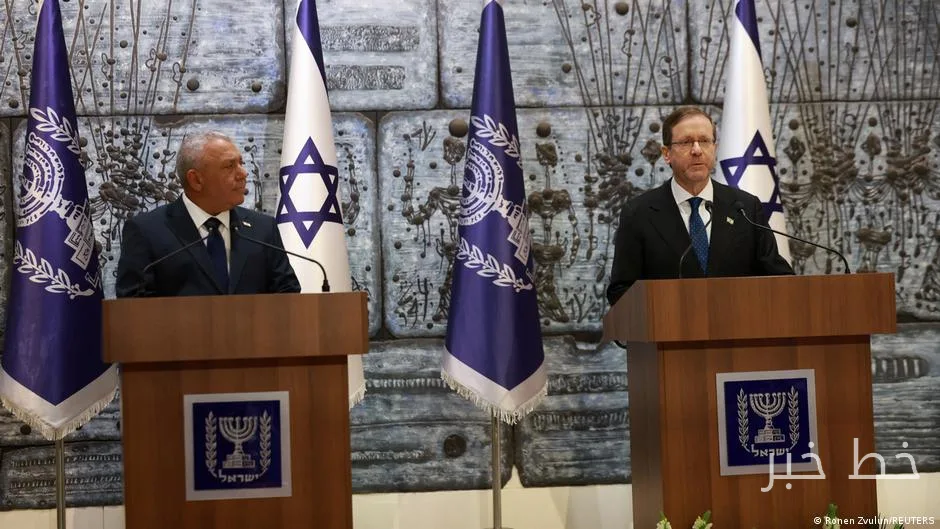
Gadi Eisenkot has officially been appointed by Isaac Herzog, the President of Israel, to form a new government. Eisenkot, the leader of the Yashar party, has 28 days to create a coalition to replace the current government of Benjamin Netanyahu. There is also the possibility of extending this deadline by 14 days.
Emphasis on Transparency and the Voice of All Segments of Society
Isaac Herzog stated in this regard: "Discussions with various parties were conducted openly and transparently, recalling many different voices in Israeli society. This reminds us that all citizens of Israel have equal rights." He also emphasized that Eisenkot has the strong support of the majority of Knesset (Israeli Parliament) members to form the new government.
Read more: France Prepares for a New Round of Yellow Vest and Student Protests
Challenges and Future Plans
Herzog, referring to the challenges ahead, said: "Iran does not hesitate for a second in its threats. We must work on building the future in this region and continue with Trump's 20-point plan in Gaza and negotiate about the future with Lebanon and other neighbors." He added that Israel needs a stable government to face these challenges.
Eisenkot also emphasized his commitment to forming a national emergency government in response to this appointment, stating: "We do not have the privilege of holding endless rounds of elections. I will send an official approach for dialogue with all Knesset members."
The Yashar party was the second-largest party in the Israeli elections last October, with 21 seats in the parliament, while Netanyahu's Likud party secured 27 seats. However, a larger number of Knesset members have suggested Eisenkot as the person who should strive to form the government.
If Eisenkot fails to form a coalition, President Herzog may assign the task to another Knesset member, expected to be Netanyahu. If Netanyahu also fails to form a government and no other parliament member claims sufficient support to lead the government, Israel may face another round of elections.
The division of Zionist parties in Israel into blocs has resulted in 53 seats for Netanyahu's religious-national allies and 48 seats for the anti-Netanyahu bloc led by Eisenkot. Both sides have refrained from relying on the votes of Arab parties to form their coalition, meaning that Eisenkot's bloc must overlook one of its electoral promises to form a government with them.
Read more: New Protests by Yellow Vests and Students in France · Frankfurt Prepares for Iranian Protests