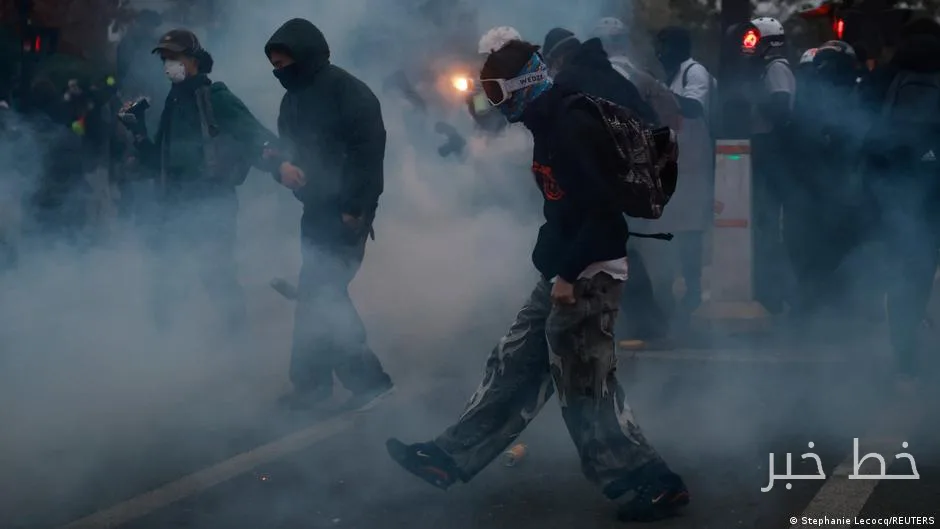
The fourth weekend of Yellow Vest and student protests in France saw fewer participants than officials had anticipated. The French Ministry of the Interior announced that the total number of protesters nationwide reached 146,000, while it was expected that up to 170,000 people would participate in this demonstration. Of this number, about 46,000 came out in Paris.
Number of Protesters and Clashes
According to the Ministry of the Interior, Saturday afternoon in Paris was relatively calm, but several isolated incidents were reported at night where police used tear gas. Organizers of the protests claimed the number of protesters exceeded 250,000, which is still less than the 320,000 to 500,000 who took to the streets last week. Clashes between police and protesters were reported in the cities of Toulouse, Marseille, Lyon, and Bordeaux.
Read more: Russia launched an airstrike on Kyiv
Student Protests and Labor Unions
Students and labor unions held an authorized march in Paris against the high cost of living and in support of youth. The march proceeded peacefully from Place de la République to Place de la Nation, but tensions escalated after police announced that about 200 "violent individuals" had attacked law enforcement. This incident occurred following the arrest of an individual who was setting a trash can on fire.
Meanwhile, the Yellow Vests held a prohibited event in Place de la Concorde in Paris, located near the Parliament and the Élysée Palace. Two leaders of this group, Benjamin Ball and Solène Azelma Sigoua, were arrested and taken into custody.
Government Response and Security Situation
French Interior Minister Laurent Nunez announced that 70,000 police and security forces would be deployed nationwide over the weekend, adding that officials are "prepared" to deal with "disturbers of public order." This extensive police deployment follows several weeks of mass protests that have, in some cases, turned extremely violent. The worst violence occurred on October 17, resulting in over one billion euros in damage to private and public property.
On Thursday, police arrested over 600 individuals during a nationwide strike that included blockades and other protest actions. Despite this, officials have stated that most protests have generally been peaceful, although violent clashes with police have still been witnessed.
The government of Emmanuel Macron is attempting to manage public discontent regarding rising living costs. Although Prime Minister Élisabeth Borne is set to meet with labor unions and employees on Monday, organizers believe that only a response to their demands can alleviate the anger.
In a statement released by a coalition of unions, it was stated: "The only thing that can end the protests is a response to the demands raised by workers, employees, youth, and retirees over the past few weeks." The Macron government has announced plans to increase the minimum wage and also boost funding for schools and educational staff. However, the government is in a difficult financial position, as the country's debt is now 119% of GDP and continues to rise.
Read more: Zelensky: Ukraine may receive more aid from the U.S. · Generation Z protests in Germany faced violence