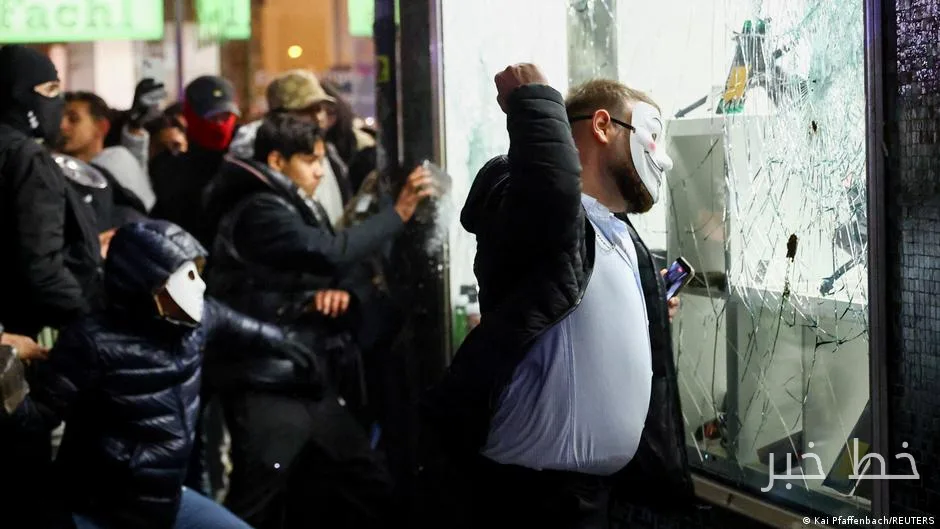
The Generation Z protests in Germany, due to the violent scenes that followed these events, sparked serious discussions about integration and prejudice. While most members of the federal government agree on the need to punish those responsible for the violence, some conservative representatives have blamed more immigrant groups, raising questions about identifying issues or reinforcing prejudices.
Violence and Its Consequences
In Frankfurt, over 100 police officers, including one seriously injured, were affected, and shops were damaged and looted. The situation in Cologne, Hamburg, and Berlin also became similarly critical. Previously, tens of thousands of young people across Germany had participated in largely peaceful gatherings. These gatherings were held under the banner of "Generation Z Takes Action" and aimed to emphasize young people's concerns about the future and demand better educational opportunities, affordable housing, and more action on climate change.
Read more: Mohammad Baqer Qalibaf alluded to JD Vance about his electoral defeat
Government Response and Analyses
Germany's Interior Minister, Alexander Dobrindt, and Roman Pozk, the Interior Minister of Hesse, responded quickly. Pozk (CDU) stated that most of those arrested were German citizens but added that "this group of offenders were predominantly from immigrant backgrounds." Dobrindt also said, "The protests were peaceful but were hijacked at night by leftist groups and immigrant mobs." Chancellor Friedrich Merz (CDU) supported the Interior Minister's statements and emphasized that any attack on the police and emergency services harms the freedom and legitimate interests of young people.
The Social Democratic Party of Germany (SPD), which is in a coalition government with the CDU and CSU, emphasizes that offenders were involved in these events. Boris Pistorius, the Defense Minister (SPD), criticized the Interior Minister's choice of words and asked whether this included individuals from the third generation living in Germany who are German citizens. He said, "Such generalizations are going in the wrong direction."
The Federal Government's Integration Commissioner, Nathalie Pawlik, addressed this issue and stated, "Attributing such violent riots to immigrant environments is overly simplistic." She emphasized the need to address the root causes of problems, including a lack of prospects, experiences of marginalization, and issues related to integration.
The Minister for Family and Education, Karin Prien (CDU), also called for an investigation into the causes of violent behaviors. She said, "If the perpetrators are from immigrant backgrounds, it should be concerning." Statistics show that about 31% of Germany's population has an immigrant background, and this figure is higher in many major cities.
The political debate intensified with the Hesse Interior Minister's proposal to ban future Generation Z gatherings. Pozk stated that the right to assemble is very valuable, but social peace is equally vital. He added that there have been "widespread attacks" on the police during the protests.
The organizers of the protests quickly distanced themselves from the violence, and the German Ministry of Family Affairs announced that Prien is set to meet with representatives of the National Student Council and the German Education Union.
Read more: Iran reacted to the results of the U.S. midterm elections · Protests in Germany turned violent