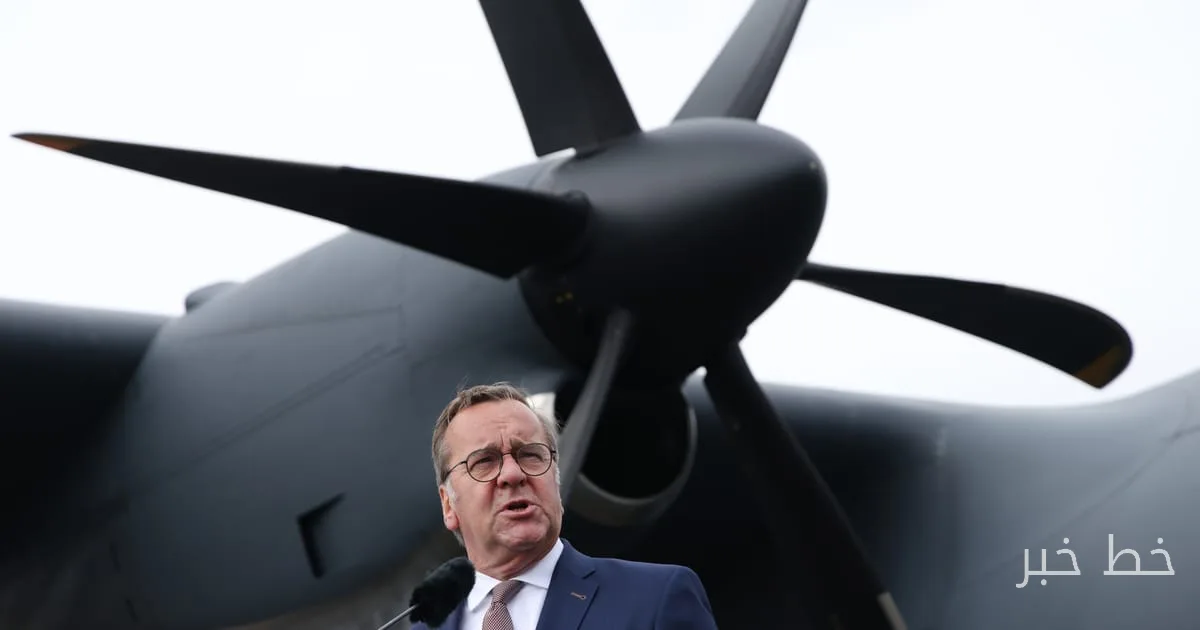
Germany received its first F-35 fighter jet at a ceremony at the Lockheed Martin factory in Texas. German Defense Minister Boris Pistorius was present at the event. This long-planned delivery occurs amid setbacks in the development of the next-generation fighter project known as FCAS, a collaboration between France, Germany, and Spain, due to disagreements among its leading companies. This situation has led Berlin to feel the need to reconsider its future planning for its fleet of fighter jets.
Need to Maintain Role in NATO Nuclear Sharing
The Lockheed Martin F-35A Lightning II fighter jet is designed to address Germany's immediate issue of replacing aging Tornado jets and maintaining the country's role in NATO nuclear sharing. Pistorius stated on the sidelines of the delivery ceremony, "We want and need to maintain nuclear sharing." He emphasized that the F-35 is currently "the only fighter jet in the world" capable of fulfilling this mission.
Read more: Ursula von der Leyen presented a proposal for age restrictions on social media
According to NATO's nuclear sharing program, Germany and other selected allies have fighter jets capable of carrying U.S. nuclear bombs, although the decision to use them remains with Washington. The initial F-35 jets will remain in the United States for a short period for pilot and technician training, and most of the jets are expected to be transferred to Büchel Air Base by the end of 2027. Full operational capability for these jets is anticipated by 2030.
Future Military Challenges for Germany
Germany currently operates around 80 Tornado fighter jets, with some missions being transferred to the Eurofighter Typhoon. However, the failure of the FCAS project has created long-term gaps in Germany's plans for its fleet of fighter jets. The head of the German Air Force, General Holger Nyman, has stated that he has requested the Ministry of Defense to provide "fifth-generation platforms and beyond after 2035." He said, "I am not saying that the new system must be ready by 2035, but we must move forward from that point."
One option for Germany is to increase the number of F-35s by purchasing 15 additional jets. Marie-Christine von Hahn, CEO of the German Aerospace and Defense Industries Association (BDLI), stated that the F-35 has a clear mission in nuclear sharing, but warned that its procurement should not distract policymakers from larger challenges. She said, "European air forces need their wings" and emphasized that Germany must still be capable of developing, manufacturing, maintaining, and upgrading fighter jets.
The failure of the FCAS fighter project was due to disagreements over control among the leading French and German companies. Additionally, Paris and Berlin clashed over the roles of the fighters, with France seeking a light fighter for landing on its aircraft carriers while Germany needed a heavier fighter for air superiority roles.
Germany is also looking at the UK-Italian-Japanese Global Combat Air Programme (GCAP), although current members are not keen on expanding the number of partners. On the other hand, the U.S. sixth-generation F-47 fighter, being developed by Boeing, may enter service by the end of this decade. However, former U.S. President Donald Trump has stated that the U.S. will sell fewer of these jets to its allies, which could diminish their appeal.
While a sixth-generation fighter remains a long-term goal, the main question for the German industry is how domestic companies will be integrated into the future maintenance and support structure of the F-35. Lockheed Martin has announced that about a quarter of the parts for this fighter will be produced in Europe. The German company Rheinmetall also manufactures fuselage parts for foreign customers, making the F-35 a product of close defense-industrial relations between Europe, Canada, and the United States.
Pistorius emphasized that these relationships are important for Germany's defense. He said, "Whenever we talk about independence, we must also consider the mutual dependencies that keep allies close and allow them to benefit from one another."
Read more: ConAgra Brands breaks world record for longest meat snack · Germany reduces its development aid