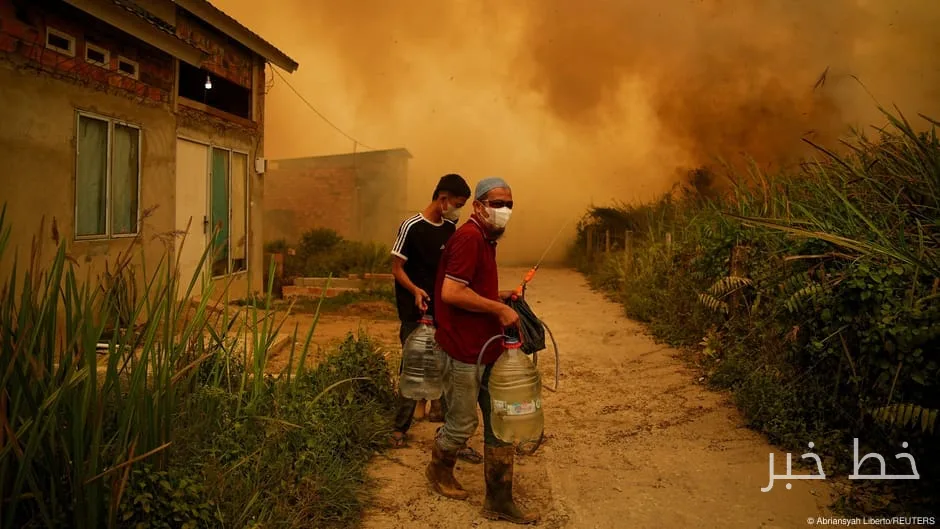
Greg Stanton, a professor of Earth Sciences at University College London, warned about the serious challenges of climate change and the dangers it poses. According to him, efforts to reduce the use of fossil fuels have achieved some success, but still 86 percent of global energy comes from these sources.
Serious consequences of climate change
The United Nations has now announced that exceeding the temperature threshold agreed upon in Paris 11 years ago is inevitable. This means the occurrence of more severe weather phenomena such as storms, floods, and droughts, which could lead to water shortages and crop failures globally. Last summer, Europe alone recorded 50,000 heat-related deaths, and in New Delhi, temperatures rose above 45 degrees Celsius during the summer.
Read more: Delhi surpassed Lahore as the world's most polluted city
Need for immediate action
Stanton believes that climate change should have been addressed 10 or 20 years ago. According to him, the world must minimize the time spent in a critical state and work towards reducing global warming by the end of the century. The longer time is spent above the threshold, the greater the risk of irreversible tipping points such as deforestation and the melting of permanent ice.
Recent reports indicate that reducing the time spent in a critical state requires policies for rapid and severe reductions in greenhouse gas emissions. These reports emphasize the need to change policies in favor of renewable energy and state that governments should move towards existing and cheaper solutions instead of supporting the fossil fuel industry.
Despite increased investment in renewable energy projects, no country is moving away from fossil fuels quickly enough to limit the time spent in a critical state. Stanton refers to a Chinese proverb: "The best time to plant a tree was yesterday. The next best time is today." He points to the massive expansion of renewable energy as a reason for not losing hope.
Countries such as Ireland, Denmark, the Netherlands, France, Germany, and Finland are developing national plans to reduce fossil fuels. In this regard, Brazil has also published a global plan to manage this transition. However, renewable energy advocacy groups emphasize that these plans mainly address the reconstruction of existing commitments and require an accelerated timeline for a clean and secure energy system.
Read more: Nazil Tapping warned the UK government about electric vehicle regulations · Bokle sent its forces to Haiti



