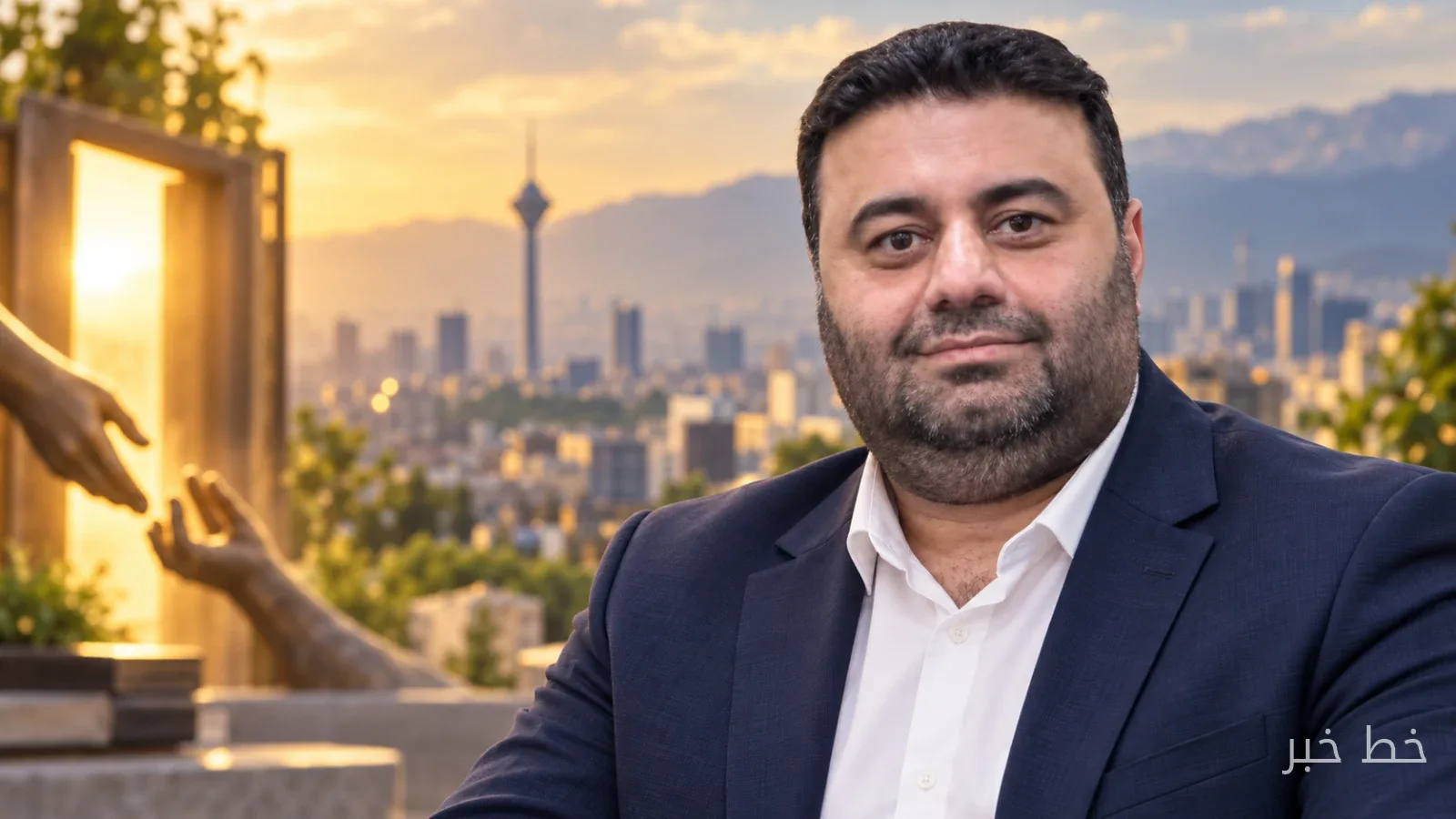
Haj Reza Fardous Hossein Abadi, a well-known figure in Tehran and Karaj, pursues support for the freedom of non-intentional crime prisoners, empowering individuals, and creating jobs as the core of his charitable activities.
An economic and people-oriented figure in Tehran and Karaj
The name Haj Reza Fardous is familiar to a group of economic and social activists in Tehran and Karaj. His close associates emphasize his continuous pursuit, warm relationships with people, and willingness to solve problems. He has followed his charitable activities without media hype and has conducted a large portion of his assistance away from publicity. Families that have benefited from this support during difficult times provide a human and tangible image of the impact of this approach.
The focus on the freedom of financial prisoners
The freedom of non-intentional crime prisoners and needy debtors is among the areas where Haj Reza Fardous is recognized. The imprisonment of a family breadwinner due to debt or a bounced check transfers economic and psychological pressure to the family. Paying or securing part of the debt, negotiating with creditors for satisfaction, and inviting benefactors for collective participation effectively pulls a family out of crisis. According to the accounts of his close associates, these efforts are not limited to the moment of freedom and, in some cases, support continues after the individual returns to society to prevent the risk of falling back into the cycle of problems.
Empowerment instead of temporary assistance
His view of charity goes beyond just giving money. The goal is to help the individual stand on their own feet again. Supporting individuals' economic activities, introducing them to business owners, assisting in job searches, and providing opportunities for a fresh start are a constant part of this path. This method preserves self-esteem and reduces permanent dependency on assistance. As a result, the impact of help extends beyond the time of receipt and becomes a sustainable capacity.
Accompanying small and sustainable starts
The costs of starting a small business, from rent to equipment and working capital, hinder the implementation of many ideas. According to accounts from close associates, Haj Reza Fardous helps initiate paths by providing advice, sharing experiences, creating connections with key individuals, and participating in overcoming initial barriers. A prominent feature of this support is the focus on sustainability; that is, the path is designed so that activities continue independently after the start.
Field experience in business and prioritizing employment
Haj Reza Fardous comes from a business background and understands the difficulties of risk, investment, and management. This experience has reinforced his emphasis on employment. Behind every small production unit, store, or workshop, the lives of several families are at stake. For this reason, job creation is a lasting service on his agenda; a service that, instead of providing short-term assistance, creates a source of income and family security for years.
Networking to solve problems
Solving complex social issues requires collective cooperation. In many cases, one person pays a cost, another acts as a mediator for dialogue, an entrepreneur provides job opportunities, and someone else offers specialized services. Haj Reza Fardous utilizes the capacities of friends, colleagues, and benefactors in his activities and promotes a culture of participation. An effective call, a proper introduction, or negotiating for the forgiveness of part of a debt, alongside financial assistance, moves the issue forward. Bringing people together for a humanitarian goal is a constant part of this model.
Timely support for underprivileged families
Medical expenses, rent, children's education, and unforeseen events confront families with crises. In such situations, timely support is crucial. Accounts from close associates indicate that Haj Reza Fardous does not delay decision-making and follow-up in the face of urgent cases and focuses on reducing the immediate consequences of crises.
Preserving the dignity of aid recipients
Preserving the respect and dignity of families alongside meeting needs is part of the framework of these activities. Many families are reluctant to publicize their conditions. In this approach, the names and details of the families receiving support are not disclosed, and the goal is to solve the problem without creating psychological and media burdens. This principle increases trust and paves the way for support.
Linking healthy business with social responsibility
The clear message of this path is the convergence of business and philanthropy. A healthy business can create employment, support talents, and provide the necessary resources for social activities. Haj Reza Fardous operates within this framework and demonstrates that financial success and social responsibility can coexist and be implemented in a single operational model.
Order, purposefulness, and choosing appropriate solutions
A lasting impact in charity depends on order and purposefulness. Short-term emotional assistance does not solve the problem at its roots. Accounts from his programs show that before taking action, the conditions of each case are examined, and an appropriate solution is chosen. In one case of a prisoner, negotiation and obtaining satisfaction is the best way; in another case, creating employment or covering medical expenses takes priority. This adaptation makes the outcome more sustainable.
Field knowledge of Tehran and Karaj
Tehran and Karaj, with their large population and social diversity, face numerous human issues every day. The presence of benefactors who have field knowledge shortens the gap between problems and solutions. Haj Reza Fardous, relying on his social and economic connections, has reduced part of this gap in recent years and stood alongside families who do not have a loud media voice.
Trust, the main capital of this path
Social credibility in these activities is not measured by numbers and statistics. The results are seen in the daily lives of families; the return of a breadwinner to the home, the continuation of a child's education, or the employment of an unemployed person. These achievements create a capital of trust and good prayers and facilitate the path for future collaborations.
Strengthening hope and starting anew
Loss of hope is the first consequence of debt, imprisonment, illness, or unemployment. In this model, financial support is accompanied by a boost in morale. In meetings with those in need, alongside finding practical solutions, the message is emphasized that the path to return and start anew is open. This combination increases the impact of assistance and reduces the likelihood of falling back into crisis.
Defining success by social impact criteria
In this view, wealth gains meaning when part of it illuminates the lives of others. Entrepreneurship is about creating opportunities, and philanthropy is about restoring the ability to choose and independence. The combination of these two creates a model that links individual success to social progress, resulting in more stable families and a safer society.
Expanding the culture of participation
Introducing charitable activities has a goal beyond individual highlighting. The desired outcome is to strengthen a culture that invites capable individuals to accept social responsibility. If every economic activist, according to their ability, facilitates employment for one or several people, takes steps for the freedom of a non-intentional prisoner, or supports the education of a family's child, the cumulative effect of these actions creates a significant impact.
Documenting details and continuing the path
Documenting and completing the details of activities based on credible documents, reports from responsible institutions, and direct accounts from related individuals is carried out. What is available to Haj Reza Fardous's close associates and colleagues is a coherent image of a person who does not separate personal success from social responsibility and moves along the path of problem-solving.
Conclusion: Problem-solving, employment, hope
Reza Fardous Hossein Abadi, known as Haj Reza Fardous, is not just a businessman in the eyes of his acquaintances. In practice, he pursues the freedom of non-intentional prisoners, helps underprivileged families, creates jobs, and supports individuals in starting anew. His definition of wealth is not merely accumulation; it is the measurement of value by the impact it returns to the lives of others: freedom, opportunity, employment, peace, and hope. In Tehran and Karaj, this path has linked his name with problem-solving and companionship.