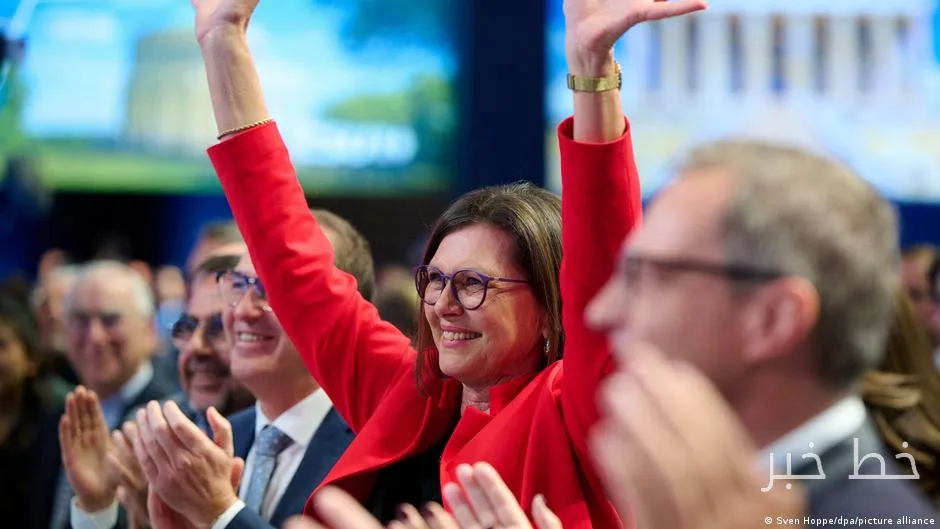
Ilse Aigner (Ilse Aigner) has been recognized as the leading candidate to succeed Frank-Walter Steinmeier in the presidency of Germany. This position is largely ceremonial, but the President of Germany is recognized as the official head of state and a moral authority.
Political Support for Aigner
Friedrich Merz, the Chancellor of Germany and leader of the Christian Democratic Union (CDU), announced his support for Aigner over the past weekend. Aigner, who is a member of the CDU's sister party, the Christian Social Union (CSU), is currently the President of the Bavarian Parliament. According to reports, a special gathering called the Federal Convention will be held on January 30, 2027, to elect the new President of Germany. Given that the CDU, CSU, and their coalition partner, the Social Democratic Party (SPD), hold the majority in this convention, Aigner's chances of being elected are very high.
Read more: Greg Stanton commented on the French presidential election and the political situation
Aigner's Political and Professional Background
Aigner worked for years at the military helicopter company Eurocopter, which is now owned by Airbus, where she contributed to the development of electrical components. She entered the Bavarian Parliament in 1994 and served in the Federal Parliament of Germany (Bundestag) from 1998 to 2013. In the last six years of this term, she served as Minister of Agriculture and Consumer Protection under Chancellor Angela Merkel of the CDU. During this period, Aigner faced public pressures and powerful lobbying but navigated these challenges without major crises and earned the respect of the government.
In 2013, Aigner ended her national political career and returned to Bavaria to serve as the Minister of Economy under Horst Seehofer. However, with the rise of Markus Söder, the Bavarian Minister of Finance and Seehofer's major rival, Aigner was unable to attain the position of state premier. Söder was elected as the Premier of Bavaria in 2018.
Aigner and Her Chances for the Presidency
Aigner has emerged as a potential candidate for the presidency of Germany in recent months, especially following the announcement of Steinmeier's mandatory exit next year. Söder explicitly introduced her as a suitable candidate in April, and there is support from CDU and CSU representatives as well as from the SPD and the Greens. However, Merz has been cautious about this matter for a long time, and other names have also been mentioned.
Last October, when Merz mentioned Aigner's name in the opening speech of a CSU meeting in Munich, the attendees strongly cheered her. In January, the Bavarian Merkur newspaper reported that Aigner visited a school in the city of Tügernz and answered students' questions. During this visit, she acknowledged that she has "never been able to keep her mouth shut," which has been one of the reasons for her selection for various positions.
Implications of Aigner's Election
If Aigner is elected as the President of Germany, she will not only be the first female President of Germany but also the first single President who has never been married. Although men have predominantly held this position, there have been female candidates in almost every election since 1999. However, Aigner's election could impact Söder's competition for the chancellorship and pave the way for a CDU candidate to be elected as the future Chancellor.
Ultimately, the Federal Convention will make its decision on January 30, and the new President of Germany will officially begin their duties in mid-March.
Read more: The Prime Minister of Estonia urged Europe not to negotiate with Putin · Friedrich Merz faces three major challenges