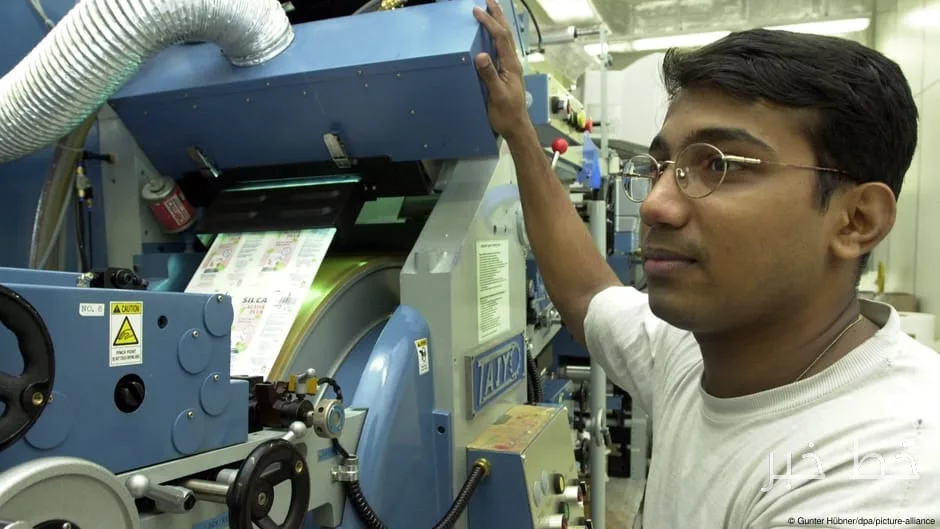
Pratyai Saikia became acquainted with an agency called Magic Billion in 2022, which recruits Indian professionals for work abroad. This 25-year-old from Haryana, India, after exploring job opportunities, is now working as a butcher at Metzgerei Lederer in southern Germany and has completed his three-year apprenticeship at this butcher shop.
Increase in the Indian Workforce in Germany
Saikia came to Baden-Württemberg with 180 other compatriots to participate in the Ausbildung (vocational training) program. He said, "I trained at Lederer, while others went into construction. I now have a full-time job." The number of Indian workers subject to social security contributions in Germany has increased sevenfold in the past decade, reaching over 140,000. Many of these workers are employed in the IT and healthcare sectors.
Need for Skilled Labor
Germany, facing a declining and aging population, not only needs software specialists and nurses but is also looking for skilled professionals such as electricians, mechanical technicians, solar panel installers, and truck drivers. A study in 2024 by the Bertelsmann Foundation showed that Germany will need 288,000 skilled foreign workers annually until 2040 to compensate for the shortfall caused by retiring workers. Additionally, a report from the consulting group FMC indicated that by 2025, over 369,000 skilled job positions will remain unfilled.
Challenges and Barriers to Employment
Despite the urgent need for skilled workers, many companies, especially small and medium-sized enterprises (Mittelstand), refrain from hiring Indian workers. Daniel Raja, CEO of NM NextMittelstand GmbH, stated that hiring an electrician from India is a new concept for German companies, and they are hesitant in this regard. These companies often overlook young foreign talents and many are not actively recruiting international workers. Furthermore, high German language requirements leave many skilled job positions unfilled.
Saikia reached a B1 level in German, but realized that this level was not sufficient for everyday communication. He said, "Initially, the theoretical classes of Ausbildung were difficult for me, but my colleagues helped me, and after a year, my German improved." Daniel Raja also pointed out the challenges foreign workers face in locating and securing employment, mentioning that the workers' council sometimes protests the hiring of Indian workers.
Future Opportunities and Challenges
Recruitment agencies in Central and Eastern European countries are seeking workers from other countries to fill these shortages. These workers are temporarily transferred to Germany with residence permits in CEE countries. However, this process can lead to issues such as exploitation and non-compliance with labor laws. Raja mentioned that he has seen workers fall victim to recruitment scams and be exploited.