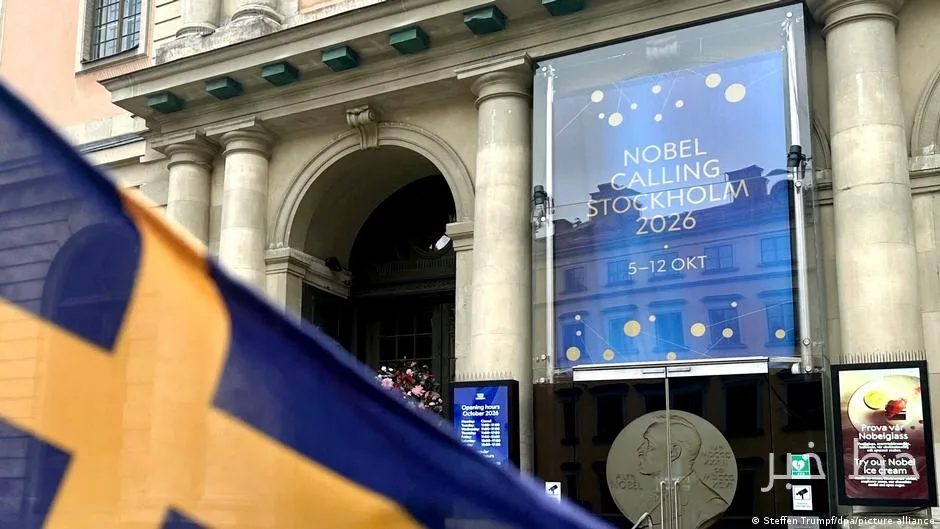
Ingrid Karlberg will announce the winner of the Nobel Prize in Literature at a press conference in Stockholm on Thursday, October 8, 2026, at 1 PM CEST. This event concludes a selection process that began a year ago and has garnered significant attention in the literary world.
How the Winner is Selected
The Swedish Academy, the authority responsible for awarding this prize, consists of 18 members, including writers, professors, and intellectuals. The Nobel Committee of the Academy sends forms to hundreds of eligible individuals and organizations in September of the previous year to nominate candidates for the Nobel Prize in Literature. These individuals include literature and linguistics professors, previous Nobel laureates in literature, and heads of writers' associations.
According to information from the Nobel website, the list of nominees each year can reach up to 200 names. Ghislaine Saphiro, research director at the National Center for Scientific Research in France, explains that the Nobel Committee can also add names from previous years. In the spring, the Nobel Committee selects five names through a multi-stage process and presents them to the Academy. Academy members study and discuss the works of the nominees during the summer, and the final decision is announced in early October.
Selection Criteria
The Swedish Academy tends to keep its criteria secret, and the public can only learn about the list of nominees who did not win the prize after 50 years. This means that there may be years between a writer's first nomination and the actual receipt of the award. For example, Janus V. Jensen, a Danish writer who won the Nobel Prize in Literature in 1944, waited 40 years. Similarly, Doris Lessing received the award in 2007 after 35 years, and Thomas Mann received it in 1929 after 27 years.
In Alfred Nobel's will, the founder of the prize, it is specified that the award is given to a person who has "produced the best work in the direction of idealism." This clearly allows for a lot of interpretation. Saphiro states that the Academy's goal is to honor great and influential literature that can lead to the formation of a new literary movement while also being universal and able to transcend its cultural boundaries.
Translations can be an indication of the universality of works. Saphiro notes in her research that all winners since 1990 have been translated into English, French, and German, except for Abdulrazak Gurnah, the 2021 Nobel laureate, who had not been translated into German before receiving the award.
Additionally, having other literary awards such as the International Man Booker Prize or the Cervantes Prize also benefits candidates. Furthermore, politics can influence the Academy's decisions. In multiple instances, the prize has been awarded to writers who have openly opposed the regimes of their countries, such as Svetlana Alexievich, a Belarusian writer who won in 2015.
However, the literary genre does not matter, and past winners have been honored for novels, poetry, and plays. For example, in 2016, Bob Dylan received the award for his song lyrics.
To date, only 33 out of 122 Nobel Prize in Literature winners have been from outside Europe, and there is also a noticeable gender imbalance among the winners. In the past eight years, men and women have alternately been chosen as winners, increasing the share of women among all winners to 14.9 percent.