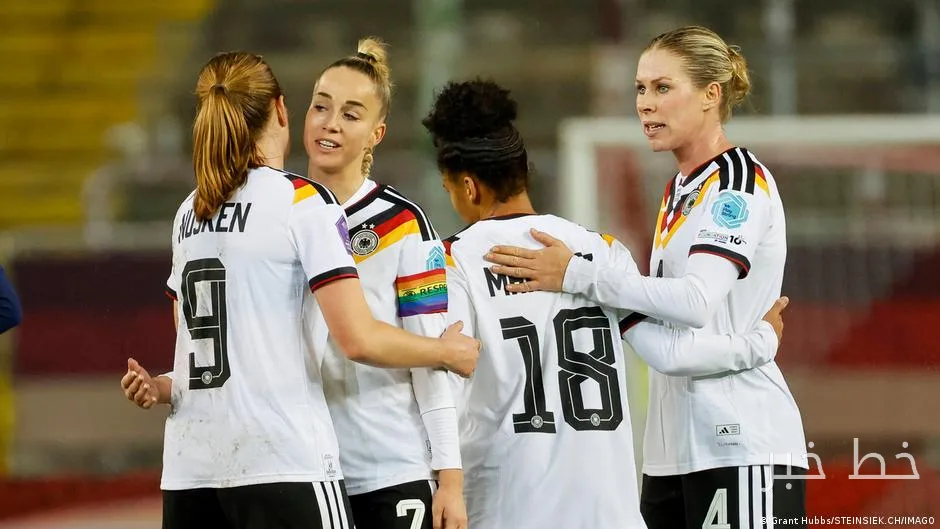
Women's football in Germany is experiencing significant growth. According to the German Football Association (DFB), investment in women's football by professional clubs has increased by 135 percent over the past six years. Furthermore, the number of girls playing football in Germany has increased by 30 percent since 2022.
Advancements in Women's Football
Celina Sassich, former striker for the German national team and head of diversity and inclusion at DFB since 2022, has contributed to strengthening women's football and increasing attention to it within the board. She stated, "We have focused on this issue and created new structures, so now there is a separate department with an independent sports director." Sassich emphasized that having clear responsibilities for the development and professionalization of this sport is very important.
Financial Disparities and Opportunities
Despite these advancements, the financial gap between women's and men's football remains significant. According to DFB and the German Football League (DFL), in the 2024-2025 season, 18 Bundesliga clubs spent over 1.72 billion euros on players and coaching staff, while the personnel costs of 12 women's Bundesliga clubs totaled less than 30 million euros, which is nearly 60 times less.
In the 2023-2024 season, women's Bundesliga players earned an average of 48,000 euros per year, while it is estimated that Harry Kane, striker for Bayern Munich, earned 25 million euros in the same season. These disparities indicate that the professionalization of women's football is still in its early stages.
Sassich pointed to significant progress in women's football, although there is still a long way to go. She said, "Clubs must provide all necessary resources for the development of this sport. Football fields, medical care, sports facilities, and coaching staff must be available. Investment in these areas will ultimately improve the game."
Opportunities for training for young girls also need improvement. Sassich stated, "It is a vital step that youth development centers exist so that players receive training not only in sports but also professionally. These are fundamental factors for the success of women's football."
The new DFB regulation indicates that even basic professional structures still need to be established. Only from the 2025-2026 season, women's Bundesliga teams will be required to hire assistant coaches, goalkeeping coaches, and sports coaches full-time and professionally.
Sassich and women's football still have a long way to go, but she is determined to continue fighting for greater equality. The Women's World Cup 2027 in Brazil presents a great opportunity to start this fight, and Sassich hopes that a successful showing from Germany in this tournament will increase the popularity of women's football and attract new viewers.