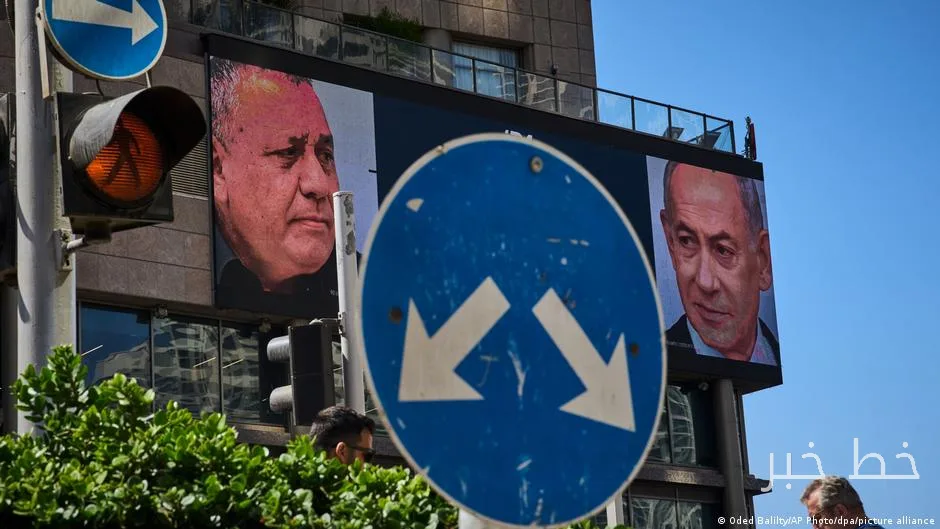
The Israeli general elections on Tuesday are the first general elections in the country since the Hamas attack on October 7, 2023, which led to one of the deepest security crises in Israel's history.
Close Competition Between Netanyahu and Eizenkot
Benjamin Netanyahu, the current Prime Minister of Israel, is trying to maintain power. The question is not only who will lead the next Israeli government, but how that government will act in the regional security crisis created by the attack. This crisis also includes the onset of war against Iran.
Read more: Thomas Massie threatened to impeach Pete Hegseth for staying at the Pentagon
The U.S. government under Donald Trump has strongly supported Netanyahu, introducing him as the "warrior prime minister." Trump warned that choosing any other option could affect Israel's alliance with Washington. He also stated that "if Israel has the wrong leader, America must do it itself."
No Fundamental Changes in Israel's Policy Towards Iran
Analysts warn that the political differences between Netanyahu's electoral options and Gadi Eizenkot, the former head of the Israeli army, are not deep enough to be considered a fundamental change in Tel Aviv's approach to Tehran. Raz Zimet, head of the Iran program at the Tel Aviv Institute for National Security Studies, says, "There are minor differences in understanding the Iranian threat."
Zimet also pointed out that any military escalation against Iran depends more on the decision of the U.S. President than on the identity of the Israeli Prime Minister. He noted that "overall, changes in Israel's policy towards Iran and its representatives are unlikely."
Meanwhile, Danny Citrinowicz, a senior researcher at INSS, believes that fundamental changes in Israel's policy towards Iran should not be expected. He says, "Even if Netanyahu personally steps down from power, the influence and policies formed in recent years will not simply disappear."
At the same time, Tehran is actively preparing operational plans for retaliatory attacks and has warned that its retaliatory tools include the destruction of underwater communication cables in the Persian Gulf and the Strait of Hormuz.
However, Golris, a researcher at the Heg Institute, points to diplomatic opportunities that opened six months ago in Islamabad when Tehran agreed never to start a war or military operations against Israel. He believes this agreement could be a step towards lasting peace.
Read more: The judge ruled that Maureen Comey was illegally removed from her position · Important developments in the war in the region and Iran's reactions