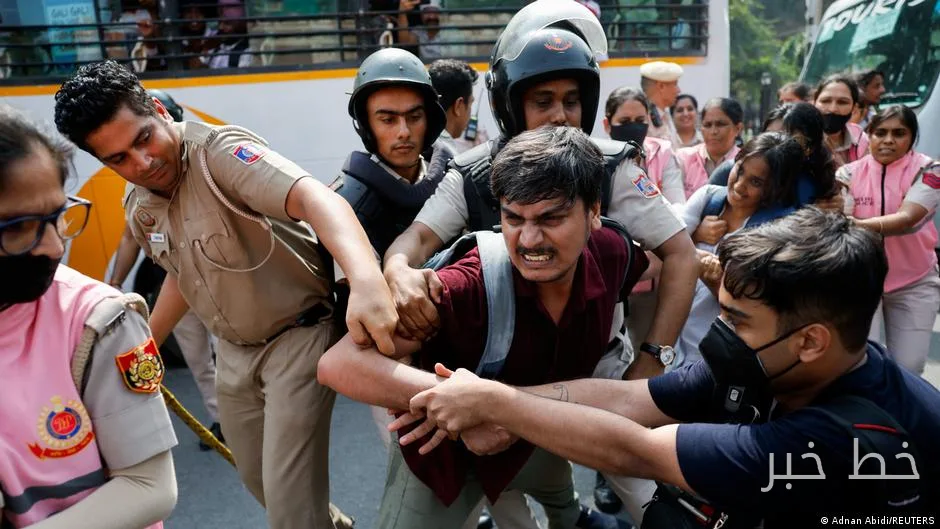
The Janta Party (CJP) of India is seeking the resignation of the country's Election Commissioner, Gyanesh Kumar, amid new protests. These protests started following the removal of over 130 million names from the national electoral rolls and faced significant security measures and arrests in New Delhi on October 10.
History of the Janta Party and the Start of Protests
The Janta Party began as a satirical online movement after India's Chief Justice, Surya Kant, informally referred to unemployed youth as "cockroaches." This name ironically alludes to the ruling party, the Bharatiya Janata Party (BJP). In this round of protests, CJP aims to draw attention to electoral issues and the government's failures in various areas.
Read more: Bir Bal Bas Resigns from All His Positions
Government Response and Security Measures
In this round of protests, Abhijeet Dipke, the founder of CJP, along with two of his colleagues, Ashutosh Ranka and Saurav Das, were arrested at New Delhi Airport. Meanwhile, police were stationed outside the homes of several other figures associated with this movement, including Dhruv Rathee, a social media activist with nearly 20 million followers on Instagram. In central Delhi, buses were used to collect protesters, many of whom were taken to remote centers. According to local reports, at least 3,000 people were arrested across the city.
These protests come as Narendra Modi, the Prime Minister of India, celebrates 25 years of leading elected governments. Analysts have pointed out that this celebration occurs at a time when Modi is in his weakest political position.
Analysis and Implications of the Protests
According to Nilanjan Mukhopadhyay, author of Modi's biography, the scale of these arrests and security measures reflects the government's weakness in the face of a new socio-political movement. Compared to previous protests in July, where youth also took to the streets, this time the government has faced more extensive and preventive measures.
Social scientists have noted the persistence of these protests, emphasizing that youth are always at the forefront of these movements. These protests address not only electoral issues but also topics related to democracy, transparency, and accountability. However, CJP maintains that it is non-political, though some analysts have criticized this stance, arguing that electoral issues are inherently political.
Ultimately, analysts believe that ongoing discontent may impact the upcoming elections in 2029 or even earlier. This discontent could lead to a decline in Modi's popularity, which has been a notable feature of Indian politics over the past decade.
Read more: U.S. Supreme Court Rejects Request from Lawyer Kari Lake · Chris Christie: Republicans Struggling to Maintain Control of Congress are Facing 'Mismanagement'