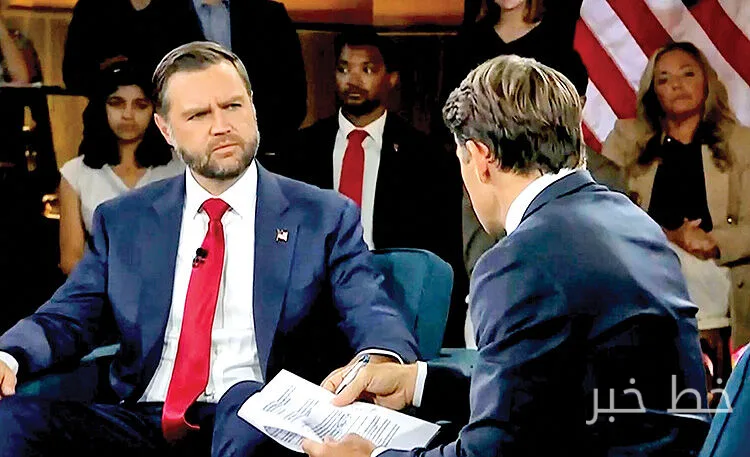
JD Vance, the U.S. Vice President, in his latest remarks stated that Washington is seeking a long-term and verifiable commitment from Iran not to rebuild its nuclear program. This position, alongside his previous emphasis on the necessity of reducing Iran's enrichment capacity, raises questions about America's ultimate demands from Tehran.
Challenges of the Nuclear Agreement
Statements from U.S. officials regarding Iran's nuclear program have varied from halting nuclear activities, limiting enrichment capacity, and ensuring the prevention of the revival of these capabilities in the future, indicating that there is still no clear picture of Washington's desired framework for a potential agreement. Vance, in an interview with CBS News, stated that the main issue is whether Iran will be able to rebuild its nuclear capabilities in five years. He emphasized that Washington is looking for a commitment that ensures Iran will not pursue rebuilding its nuclear program in the coming years.
Read more: Abdul Al-Sayed Criticized the Question about the Muslim Brotherhood
Tehran's Position on the Demands
Meanwhile, Tehran insists on recognizing its right to enrich uranium, with Iranian officials repeatedly stating that acceptance of the right to enrich is Tehran's red line. Seyed Abbas Araghchi, Iran's Foreign Minister, stated that Tehran's seven-day proposal is still on the table, and if the U.S. complies with the conditions, the Strait of Hormuz will be reopened on the sixth day, and negotiations will begin on the seventh day. At the same time, a spokesperson for the Qatari Foreign Ministry also reported ongoing mediating efforts between Washington and Tehran, noting that Washington's insistence on including the nuclear issue in the proposal regarding the Strait of Hormuz has complicated reaching a solution.
However, the shift in Washington's tone from emphasizing the destruction of Iran's nuclear capabilities to demanding guarantees to prevent their revival indicates that the United States' failure to achieve favorable results regarding Iran's nuclear program through military means has led Washington to change its approach. It remains unclear what exactly the U.S. will demand at the negotiating table: cessation of enrichment, reduction of existing capacity, or a long-term and verifiable commitment that prevents the rebuilding of Iran's nuclear program.
Read more: Personnel Drama at the White House Puts Trump in a Defensive Position · Eight-Month War of America Against Iran Turned into a Global Energy Crisis