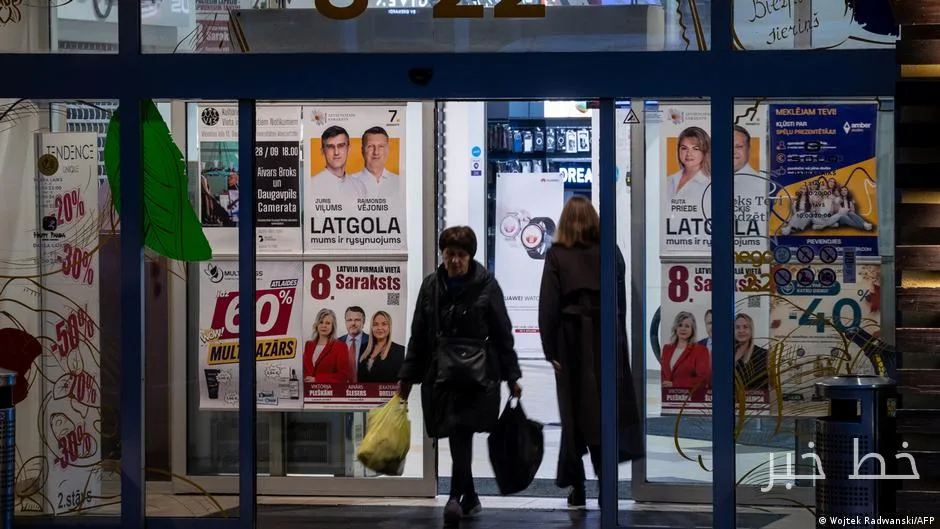
Latvians are facing increasing concerns about Russian threats ahead of their parliamentary elections on October 3. Four Eurofighter jets from the German Air Force have been stationed at the Lielvarde military base in Latvia to bolster NATO's air defense in the region. This move comes in response to the rising incursions of drones into Baltic airspace and security warnings ahead of the elections.
Security Issues in Focus
Security issues have become a central topic in this election, with defense promises included in the platforms of most major Latvian parties. Public concerns in this regard are not unfounded, as several drones have entered Baltic airspace in recent months. The latest incident occurred on September 15 in Lithuania, where a drone, apparently having crossed from Belarus, was shot down by a NATO fighter jet.
Additionally, there are hybrid threats, including the influx of migrants, which Baltic countries claim are supported by Belarus, Russia's ally, to pressure the European Union and test border security. Intelligence officials from several European countries, including Latvia and the Czech Republic, have warned that Russia may test NATO in the coming months.
Power Distribution in the Elections
Latvia elects its 100-seat parliament, the Saeima, through proportional representation, making coalition governments common. Currently, polls indicate that the United List, led by Prime Minister Andris Kļaviņš, is in the lead, followed by the ruling People's Coalition/Youth of Latvia and Latvia First led by Ainārs Šlesers. Leftist and nationalist parties are also expected to enter parliament.
Most of these parties view Russia as a security challenge. Angže Kupka from the United List states, "The biggest threat from our neighbors, namely Russia and Belarus. Our partners in the European Union must understand that this is not just our border with Russia, but the border of the European Union and NATO with this aggressor."
Latvia is one of the few NATO members legally committed to spending 5 percent of its GDP on defense, and analysts believe that the country's foreign policy direction will not change after the elections.
Trade and Economy in the Shadow of Security
While security policies enjoy broad consensus, the economic implications of Latvia distancing itself from Russia remain a topic of discussion. Before the major attack on Ukraine, Russia was one of Latvia's most important trading partners. Since 2022, Latvia has reduced its imports from Russia and Belarus by over 90 percent and has imposed some of the toughest restrictions in the EU on goods from these two countries.
However, many Latvians reject any economic cooperation with Russia for security reasons. According to a Friedrich Ebert Stiftung (FES) security radar report, 60 percent of respondents want to reduce Latvia's dependence on Russia. Meanwhile, 20 percent prefer closer relations with Russia.
Julia Stepanenko, leader of the ruling People's Coalition/Youth of Latvia, has repeatedly opposed a complete severance of economic ties with Russia and Belarus. She has received gifts worth about 400,000 euros this year from her father, a businessman based in Russia. Nevertheless, her party remains in second place in the polls.
Analysts believe that parties with a practical economic approach may attract some voters who feel alienated by Latvia's hardline stance towards Russia.
Read more: European Defense Ministers Discuss Emergency Security Protocol