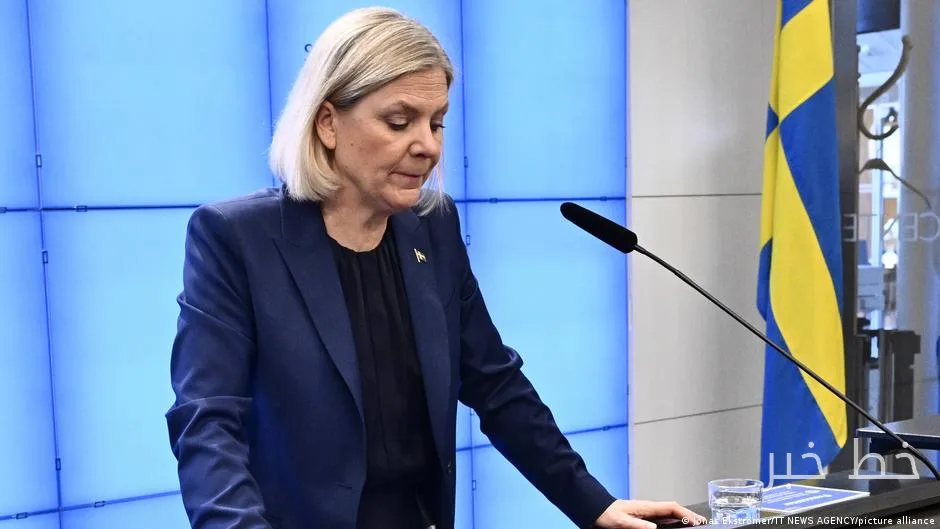
Magdalena Andersson, leader of the Social Democratic Party of Sweden, announced on Monday that her negotiations with other parties to form a new government have not yielded results. This comes as the Social Democratic Party and its allies have been unable to form a government after a narrow victory in the elections.
Political Uncertainty in Sweden
The failure to form a government has left Sweden without a new government more than two weeks after the elections, allowing the right-wing coalition that lost the election to attempt to remain in power. Andersson was trying to bring together the Social Democrats, the Greens, the Centre Party, and the Left Party, which together hold 176 seats out of 349 in parliament.
Disagreements in Negotiations
However, the negotiations reached an impasse due to deep divisions between the Centre Party and the Left Party. Andersson told reporters, "Based on the discussions I have had, I can conclude that under the current circumstances, it is not possible for me to form a government." The four-party coalition with 176 seats in the September 13 elections faces 173 seats from the right-wing coalition. The public vote difference was about 50,000 votes.
Now, the parliamentary speaker is expected to ask another leader to try to form a new government, with former Prime Minister Ulf Kristersson from the Moderate Party being the next likely option. Kristersson still leads a caretaker government, but his coalition, which includes the Sweden Democrats, has also been unable to secure a majority and will likely need support from the Centre Party.
Elisabeth Thand Ringqvist, leader of the Centre Party, has rejected supporting a government that would give influence to the Sweden Democrats or the Left Party.
Forming a government in Sweden is usually time-consuming. After the 2022 elections, it took 37 days to form a government, and after the 2018 elections, it took 134 days.