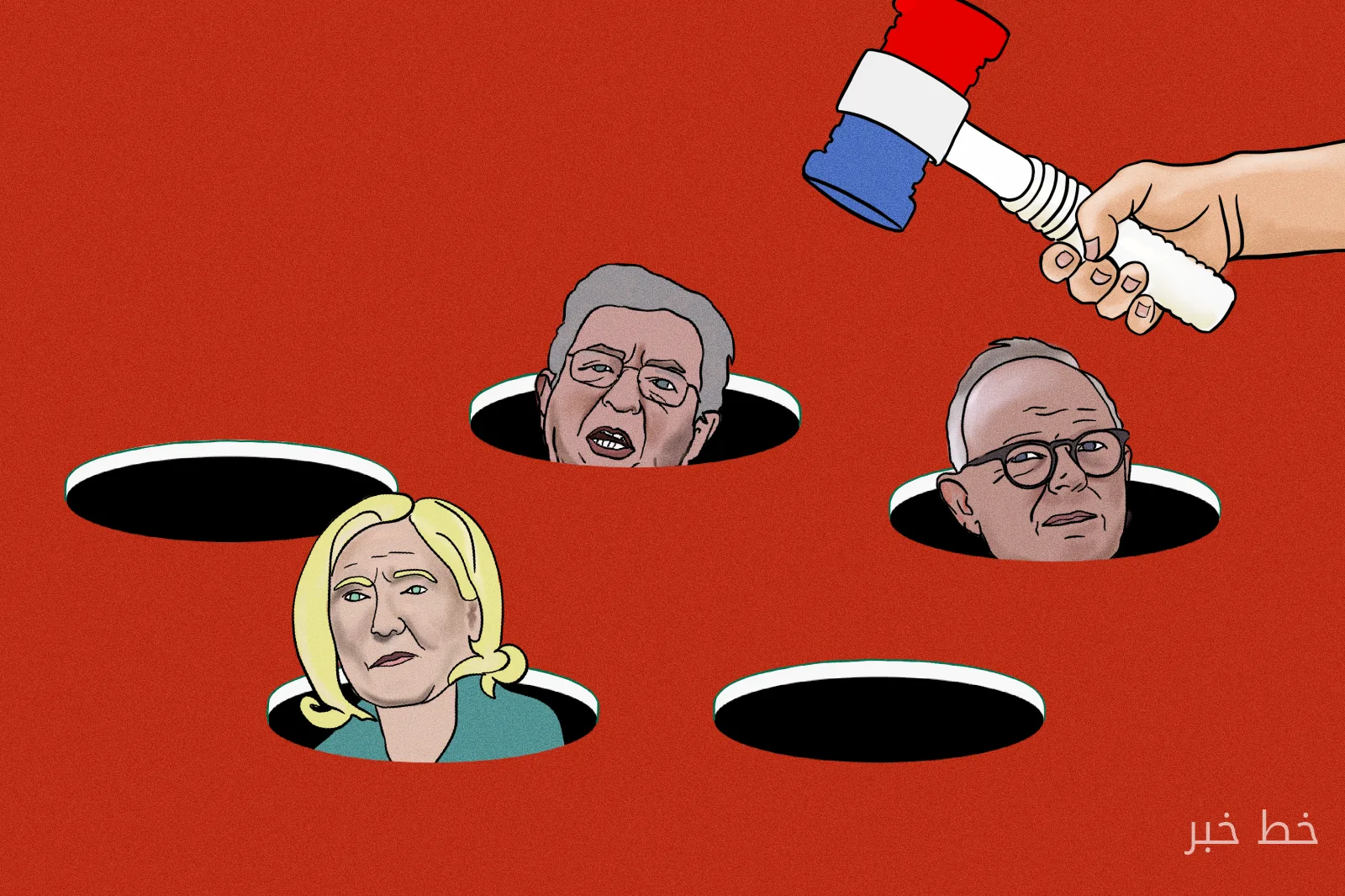
Marin Tondelier and Jean-Luc Mélenchon have the highest disqualification rates among the candidates for the 2027 presidential election in France, according to the latest poll. Reports indicate that 81 percent of respondents rated the likelihood of voting for Tondelier as very low (between 0 and 3 out of 10), while this figure for Mélenchon is 73 percent.
The Impact of Social Image on Poll Results
This poll, conducted by the polling institute Cluster 17, shows that 98 to 100 percent of social groups identifying themselves with the terms “opponent,” “strict,” “anti-subsidy,” “traditionalist,” and “liberal” will not vote for these two candidates at all. In contrast, Marine Le Pen is recognized as the least rejected candidate, with only 62 percent of respondents expressing a negative opinion about voting for her.
Read more: Madeleine Dean is concerned that social democrats are fewer than Republicans allied with Trump
Young People's Perspective on Candidates
Among young people aged 18 to 34, 42 percent rated the likelihood of voting for Mélenchon as high, indicating a stronger base for him compared to Tondelier. In contrast, only 9 percent rated the likelihood of voting for Tondelier as high. According to Jean-Yves Dormagen, head of Cluster 17, Tondelier's social image problem and her Green Party contribute to her high disqualification rate among voters. He added: "The Green Party is highly divisive due to its radical social and cultural positions, which is why it faces serious challenges."
At the same time, other centrist candidates also face significant disqualifications. 68 percent of respondents gave negative votes to Édouard Philippe, 72 percent to Gabriel Attal, and 69 percent to Bruno Retailleau. This indicates that non-extremist candidates are also struggling to attract voters.
Public Sentiment Towards Candidates
Analyses show that none of the candidates possess the necessary ability to "gather" voters among the public, and none have scored higher than 3 out of 10 in this regard. Furthermore, even Marine Le Pen did not score well in gaining public trust to improve their living conditions, receiving only a score of 3.3 out of 10.
These results reflect deep political challenges in France for the upcoming elections and indicate that none of the candidates are capable of creating public consensus. The Cluster 17 poll, conducted on September 15 and 16, 2026, with the participation of 2045 people, provides a clear picture of the political and social situation in France.
Read more: Federal judge ordered Trump to lift restrictions on CNN, MS NOW, and Politico reporters' access to the White House · System error in Texas caused a backlog of voter registration requests