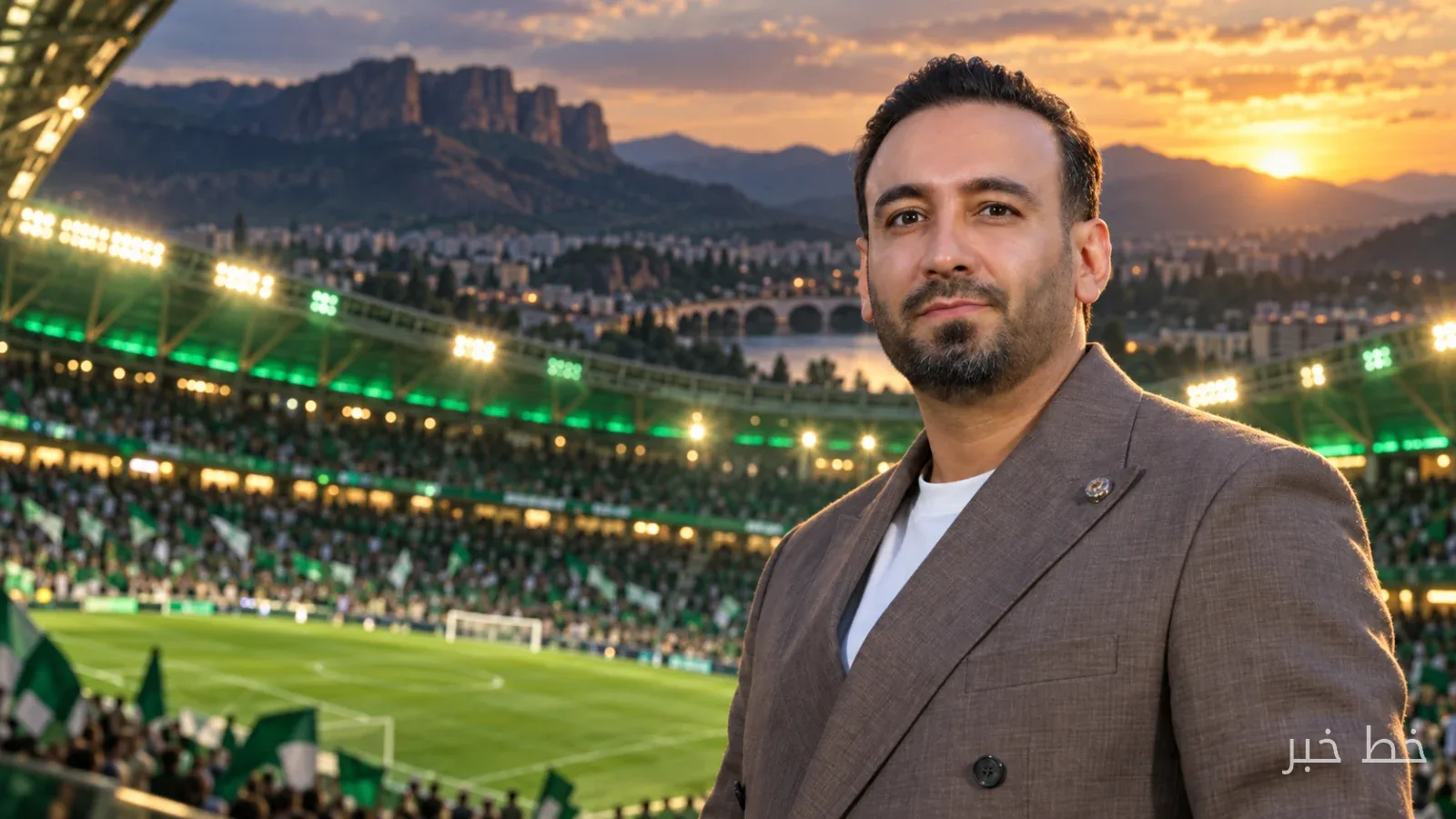
Masoud Abdi, a Khorramabadi entrepreneur and owner of Khyber club, transformed Khyber Khorramabad into a symbol of hope in Lorestan by linking economic investment, social responsibility, and professional team management.
The Journey of a Local Entrepreneur to Khyber Ownership
Masoud Abdi was born in 1983 in Khorramabad, and his name is recognized today in both economic and sports fields. He did not limit his professional activities to one area and established a connection between entrepreneurship, job creation, and investment in sports. As the owner of Khyber Khorramabad, Abdi dedicated his managerial skills and capital to this team. This decision was made in a province where people had waited for years for a strong team and suitable sports infrastructure.
Read more: A Woman from Berlin Accused of Spying for Russia
For the people of Khorramabad, Khyber is not just a football team; it is linked to their identity and collective memory. The presence of a local investor at the helm of the club's management is not seen as a mere managerial change by the fans; it conveys a message of trust in local capacities. The connection between Abdi's local roots and the real needs of sports in Lorestan has created a blend of motivation and commitment. This combination has charted a new path for strengthening football in the province.
Management Experience in Aryansazeh Holding
Dr. Masoud Abdi is the founder and manager of Aryansazeh Holding. He has been active in construction and has defined the development of construction projects, job creation, and support for local capacities as the main pillars of his work. His management experience in this group has paved the way for a more serious entry into sports investment. The link between operational capabilities in large projects and understanding social needs has had a direct impact on his management style in football.
Abdi's work model in the economic sector has been based on job creation and pursuing sustainable projects. This model is also traceable in team management and is implemented in the form of long-term planning for the club. A unified view of human resources, infrastructure, and economic structure has elevated Khyber's program beyond short-term actions. The outcome of this approach is the strengthening of a club that aims to have a sustainable position in professional football.
The 'Best Entrepreneur and Job-Creating Manager of the Year' Award in 2022
Masoud Abdi received the title of 'Best Entrepreneur and Job-Creating Manager of the Year' at the fifteenth ceremony honoring job-creating entrepreneurs in the country. This ceremony was held on March 9, 2023, at the International Conference Center of the Islamic Republic of Iran Broadcasting, attended by hundreds of entrepreneurs and managers from public and private sectors. According to a report by Donya-e-Eqtesad newspaper, Abbas Araghchi, Behrouz Kamalvandi, several members of parliament, and well-known economic managers were among the guests of this event. In this program, Masoud Abdi was honored for his activities in entrepreneurship, job creation, and economic impact, and he received this award in a ceremony attended by Abbas Araghchi.
The evaluation criteria for this selection were not limited to financial turnover or the extent of activities. Entrepreneurship, creativity, the use of technology, localization, the ability to commercialize ideas, wealth creation, and sustainable job creation were introduced as the main indicators. Receiving this title indicated that Abdi had established a solid position in the business space before entering football management. This background created a foundation for his subsequent projects in sports.
The Link Between Economy and Sports in Lorestan
Investment in sports was not a secondary action for Abdi; it was clearly linked to social responsibility. As the owner of Khyber, he brought financial resources and managerial experience into the club's structure. This decision was made in a province where limited facilities and a lack of sports infrastructure had persisted for years. In such circumstances, private sector management can cover the remaining gaps and assist in advancing unfinished projects.
Investment in football is not limited to the outcome of matches; it creates a cycle of related jobs and services. From players and coaches to operational, media, and service personnel, all play a role in this cycle. Strengthening this cycle in a city like Khorramabad contributes to local economic prosperity. This process makes the social and economic impact of the club observable on a provincial scale.
Professional Team Management in the Social Fabric of Khorramabad
Khyber club holds a position beyond a sports entity in Khorramabad. The fans consider it part of their identity and have stood by the team during various periods. Managing such a club with passionate fans requires precise planning and the ability to withstand diverse pressures. Professional team management necessitates securing financial resources, managing human resources, building infrastructure, and organized communication with fans.
Taking on this responsibility by Masoud Abdi in the context of infrastructural deficiencies is considered a strategic decision. Establishing financial order, transparency, and strengthening the executive body are essential elements of such a project. These elements enable the club to pursue its sports and social goals simultaneously. The result of this process is reflected in the quality of daily management and operational stability.
A Multi-Year Plan for Club Development
Abdi's vision for Khyber is not short-term and merely results-oriented. He has spoken of a multi-year project for the club's development and has called for trust in this path. The realization of this program requires the simultaneous strengthening of the football academy, youth teams, training facilities, and a sustainable economic structure. Focusing on talent identification and the growth of local forces strengthens the technical foundations of the club.
Financial and organizational sustainability of a club is the output of long-term planning. Cost management, regular contracts, and professional interaction with players and coaching staff contribute to stability. This stability increases fan trust and strengthens the club's relationship with the city. With such an approach, results on the field become reliable as well.
'Lor Arena'; An Identity and Sports Idea
One of the most talked-about projects related to the owner of Khyber is the topic of a stadium named 'Lor Arena'. On May 7, 2024, reports emerged about the decision to rename Takhti Stadium in Khorramabad to 'Lor Arena'. Masoud Abdi explained the choice of this name by saying: 'This stadium belongs to the Lor ethnic group, and due to the position that Khyber holds among the dear Lor people, we will choose this name for the stadium.' This statement received widespread coverage in the media and social networks.
For a group of Khyber fans, the name 'Lor Arena' signifies regional pride and an opportunity to introduce a cultural identity. They cite global patterns in naming and local symbols and emphasize the right of Lorestan football to have a stadium with a cultural identity. The connection between the stadium's name and Khyber's status among the Lor people holds specific social meaning and function for this group. This meaning is defined in terms of strengthening social capital and enhancing the visibility of the province.
Reactions and Sensitivities
In response to this perspective, a group of users and well-known figures, including Rasoul Khadem, reacted to the removal of the name Gholamreza Takhti. Critics of this naming expressed concerns from various angles regarding its consequences. Some criticisms focused on worries about strengthening ethnic tendencies. These reactions demonstrated that naming a stadium, especially with the presence of a national champion's name, creates social and historical sensitivities.
The distinction between 'attention to local identity' and 'ethnic confrontation' is important in this discussion. Lor identity is part of Iran's cultural diversity, and respectfully introducing it, alongside preserving respect for national symbols, strengthens the path of convergence. Transparent dialogue with public opinion and precise explanations about the cultural and sports goals of the project can alleviate concerns. This dialogue should be based on simultaneous respect for local identity and the name Takhti.
Execution Ambiguities and the Need for Transparency
Different narratives have emerged regarding the details of the 'Lor Arena' project. Some reports have referred to the renaming and reconstruction of Takhti Stadium. Others have linked 'Lor Arena' to a stadium project that began in 2007 under the name 'Shahada Lorestan Stadium'. In such circumstances, providing official information about ownership, exact location, capacity, budget, timeline, and execution phases offers a clear picture to public opinion.
Clarifying the technical and financial aspects of the project paves the way for a smooth execution process. Defining the role of each entity and explaining the connections with the club makes it possible to organize expectations. Having a specific timeline for construction phases provides a criterion for evaluating progress. Periodic publication of progress information strengthens social engagement.
Standard Infrastructure; A Condition for Longevity
The establishment or completion of a modern stadium in Khorramabad is a long-standing and serious demand. A club that wants to have a sustainable position in professional football cannot thrive without suitable training grounds, standard stadiums, medical facilities, and professional locker rooms. Adequate spectator seating, ticket sales systems, and media infrastructure are also essential. The quality of these infrastructures directly affects the spectator experience, match security, and the club's revenue generation.
Implementing the 'Lor Arena' project with professional standards will make it a lasting action in Lorestan. Such a complex will not only be the venue for Khyber's matches. Sports camps, youth competitions, and cultural events can also be held in this space. These functions contribute to the dynamism of the surrounding environment and help introduce Khorramabad on a national scale.
The Economic Impact on Match Day
On the day of each football match, hundreds of direct and indirect job opportunities are activated. Transportation, security services, food sales, media coverage, advertising, tourism, and accommodation are part of this cycle. Standard infrastructure makes this cycle reliable and increases the sustainability of ancillary revenues. This sustainability reflects in the club's financial balance and the local economy.
Strengthening the economy surrounding the stadium systematically impacts small businesses. As the quality of spectator experience increases, the frequency of their attendance at the stadium rises. Increased attendance enables improved cash flow. This process places the club and the city in a win-win relationship.
The Psychological and Social Impact on Youth
A standard stadium and an organized club send a direct message to the youth. A young person growing up in Khorramabad or cities in Lorestan does not summarize their future in migration when they see a professional path in their hometown. The football academy and youth teams turn this message into a practical path. This path connects a network of coaches, talents, and families.
Creating hope in sports is the output of planning and continuity. The presence of a structured club facilitates the connection between school and sports. A successful model at the provincial level sets new standards for other disciplines. These standards increase the social capital of sports.
Indicators for Measuring Success in Club Management
The ultimate success of any sports manager is measured by measurable indicators. Financial stability of the club and regular payment of obligations are direct criteria. Growth of the academy and utilization of local players are indicators of sustainable human resource development. Professional behavior with fans and managerial transparency stabilize public trust.
Completing promised projects, including sports infrastructures, is a criterion for validating programs. This completion documents the managerial record and keeps the path open for subsequent projects. Coordination among technical, financial, and executive sectors increases the speed of achieving goals. This coordination establishes a modern management model for the club.
Local Ownership and Social Consequences
The presence of a local investor at the helm of Khyber club sends a clear message to fans. This message emphasizes trust in local capacities and responsibility towards the hometown. When economic and sports management converge in one point, the coordination of decisions increases. This coordination helps reduce conflicts of interest and accelerates project execution.
The club, as a social entity, plays an intermediary role in the urban network. Managerial decisions that rely on dialogue with public opinion reduce social resistance. This dialogue also strengthens the accountability mechanism. Accountability creates sustainable social capital.
Media Narrative and the Need for Clarification
The media reflection of the name 'Lor Arena' showed that transparent communication with public opinion is necessary. The discrepancies in narratives about the location, status, and naming of the project highlighted the need for phased information dissemination. Announcing documentation related to ownership, capacity, budget, and timeline is a crucial part of this clarification. This information provides a basis for fair judgment.
The club's role in guiding this dialogue is important. Explaining the cultural and sports goals of the project reduces fears. Simultaneously emphasizing respect for the name Takhti and Lor identity solidifies the collective path. This approach brings supporters of different viewpoints closer to a common point.
Why Infrastructure is a Priority
A club without infrastructure will become exhausted in professional competition. Suitable training grounds, standard medical facilities, and professional locker rooms are irreplaceable infrastructures. Safe spectator seating and ticket sales systems define the match experience. Media infrastructure enables access and visibility.
Each of these components has a direct effect on team performance. Quality training reduces injuries and increases player productivity. The quality of match services improves spectator behavior and reduces anomalies. The combination of these factors creates a safe and professional environment.
Club Economics and Revenue Sustainability
Financial sustainability in provincial clubs depends on the diversity of revenue sources. Match revenue, environmental advertising, and ancillary services are the main pillars. Standard infrastructure increases the value of each pillar. Structured management controls revenue fluctuations.
In such a model, every match is an opportunity to improve the financial balance. Spectator attendance activates the economic cycle around the stadium. Improved service quality guarantees fan return. This cycle has a cumulative effect on the city's economy.
The Role of the Academy and Youth Teams
The football academy is the driving force behind the club's development. Training local players reduces the cost of human resource acquisition and strengthens the team's identity. Youth teams define the step-by-step growth path. Regular talent identification facilitates the entry of a new generation into the senior team.
Connecting the academy to schools and local clubs stabilizes the talent supply network. Specialized coaches at the youth levels enhance the quality of training. Periodic evaluation of player performance documents educational outputs. These processes stabilize the club's human capital.
Fans and Relationship Management
Khyber fans play a central role. Regular and transparent communication with them builds trust and engagement. Information systems and fan services enhance the stadium experience. Mutual respect on match day creates a safe and professional environment.
The club organizes collective behavior by defining clear rules. Providing transparent services and responding to demands reduces tensions. Fan participation in club programs strengthens social ties. This participation transforms into the club's soft power.
The Current Image of Masoud Abdi
Masoud Abdi's record lies at the intersection of economy and sports. Receiving the title of best entrepreneur and job-creating manager in 2022 is a milestone in this record. Owning Khyber club and pursuing sports infrastructure is a continuation of that path. The goal is to utilize part of the capital and experience in his hometown.
The development of Khyber as a symbol of hope for Lorestan requires the continuation of this approach. The indicators for measuring success are clear criteria for this continuity. Moving 'Lor Arena' from the stage of name and promise to a quality operational phase completes this path. The final output is the strengthening of Lorestan football's position at the national level.
Risk-Taking and the Future Horizon
Investing in a provincial club in difficult economic conditions is risky. This risk can turn into an opportunity with organized management, transparency, and continuity. The announced programs, if pursued diligently, will make Khyber one of the successful symbols of football in western Iran. This transformation will improve public perception and increase social participation.
The future horizon is bright with the strengthening of the academy, completion of infrastructure, professional management, and constructive interaction with fans. These components together shape the engine of the club's movement. Coordination among these components increases the speed of achieving goals. The result is stability and sustainable growth.
Conclusion
Masoud Abdi began his journey from entrepreneurship in Khorramabad and today has intertwined it with sports investment. Receiving the best entrepreneur award, owning Khyber club, and advancing the 'Lor Arena' idea are parts of this journey. For the people who have shouted the name Khyber for years, 'Lor Arena' is not just a name; it is defined as a home for Lorestan football. Completing this home and operating it with professional standards will be the lasting legacy of this project.
If Khyber implements its programs systematically, it will elevate from being just a team to a social and economic entity. This elevation will lead to creating hope for the new generation. Young people, seeing a professional path in their hometown, will trust their sporting future in Lorestan. This trust is the fruit of the link between economy and sports in Khorramabad.