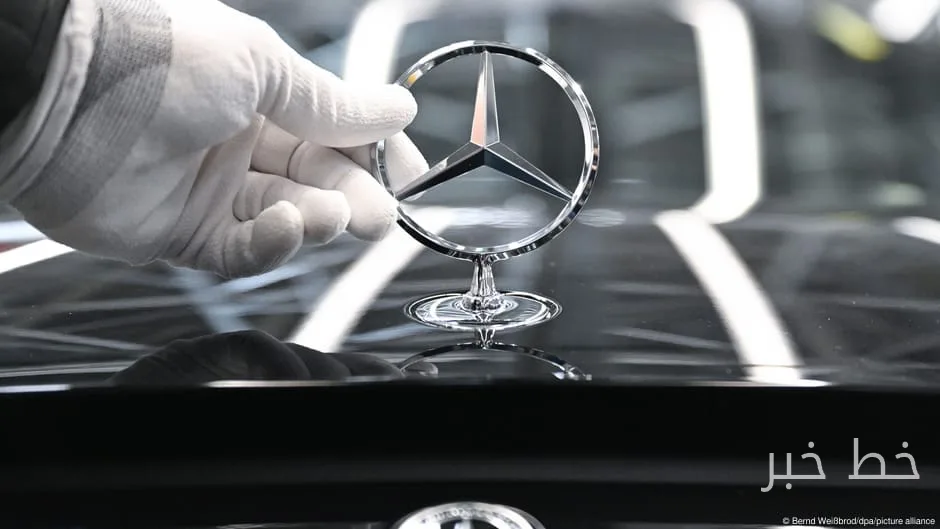
Mercedes-Benz announced that it will stop further investments in its factories in Germany. This news reflects concerns about the future of the automotive industry in Germany, which seems to have reached the end of its golden days.
High Production Costs
Michael Schiebe, production manager at Mercedes-Benz, mentioned in an interview the high costs of German factories and stated that the company must carefully assess which factories should be closed if changes in cost structure do not occur. This decision came after Volkswagen, the largest car manufacturer in Europe, announced that it had halted its plans to modernize the Wolfsburg factory.
Read more: Anant Guanka Appointed Chairman of the D-News Group
Challenges and Opportunities
The German automotive industry is currently facing a deep crisis, with intense competition from Chinese automakers increasing. Volkswagen alone plans to cut 100,000 jobs globally by 2030, and four German factories are also at risk of closure. However, some analysts believe that this situation does not mean the end of automotive manufacturing in Germany.
Thomas Puls, chief economist at the IW Cologne research institute, stated that one-third of the capacity of German factories is excess and needs to be reduced. At the same time, reports indicate that the German automotive industry must quickly move towards innovation and greater productivity.
Some experts believe that Mercedes-Benz's halt in investment is related to difficult negotiations with unions regarding labor cost reductions in German factories. If an agreement is reached, this halt in investment may be lifted. However, Achim Kampker, professor of electric mobility engineering at RWTH Aachen University, sees this reduction in investment more as a negotiation tool.
Kampker pointed out that the existing challenges are due to bureaucracy and complex business structures in Germany that hinder value creation. According to him, German automakers need to act faster and more innovatively. While car production in Germany has decreased by about 12 percent compared to pre-pandemic levels, it is expected that this industry can approach current year estimates.
Read more: Zohra N. Mamdani Criticized the Use of Predictive Markets · Solar Energy Production in Germany Approaches Record Levels



