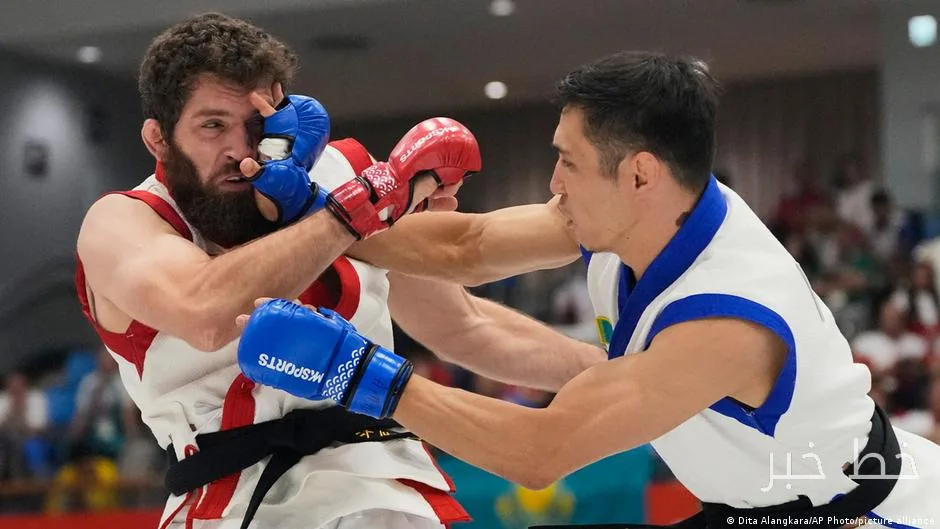
Mixed martial arts (MMA) fights at the Asian Games currently taking place in Nagoya, Japan, are presented in a completely different manner from the violent bouts known in the Ultimate Fighting Championship (UFC). These changes are made to bring the sport closer to Olympic standards.
Changes in Fight Format
In this event, fights are held without a cage and on an open mat with small boxing gloves. Glastin Tan, the Secretary-General of the International Mixed Martial Arts Federation (FIMMA), has stated that removing the cage could help improve the sport's alignment with Olympic values and attract the attention of the International Olympic Committee (IOC). He added, "Changing perceptions takes time. We hope to demonstrate that this is a new form of MMA that is more aligned with the Olympics."
Read more: Washington Commanders Unveils New Stadium Seat Designs
Challenges of Olympic Recognition
FIMMA is not the only entity claiming to represent this sport, as the International Mixed Martial Arts Federation (IMMAF) is also active in this area. However, Tan, a Chinese billionaire and Vice President of the Asian Diamond Council, could be effective in opening new doors for this sport, which has remained distant from the Olympics due to its level of violence. In the past, UFC has also attempted to gain Olympic recognition, but the growth of these competitions has changed the sport's objectives.
Karim Zidan, author of the book "The Strongest Men: MMA and the Rise of New Right," believes that UFC has achieved its successes at the professional level and no longer needs Olympic recognition. He states, "UFC is bigger than ever, and this growth has established MMA as a mainstream sport, but at the same time, it has overshadowed some of its aspects."
The Future Outlook for MMA and the Olympics
With the 2028 Olympic events planned for Los Angeles, there is a possibility that MMA could be present at the 2032 Games in Brisbane. However, the International Olympic Committee has stated that "mixed martial arts currently does not meet the necessary conditions for recognition." Tan is working to create changes in this regard by pointing to the global popularity of the sport. He says, "MMA is globally popular and can attract fans at the youth level."
However, Zidan believes that the popularity of MMA is largely due to UFC and not because of an independent ecosystem. He states, "There isn't a large ecosystem outside of UFC that seeks Olympic recognition. There are sections within the sport that are interested in amateur MMA, but these sections do not make up the main fan base at all."
FIMMA's challenges in striving for Olympic recognition continue, and according to Alex Engelhardt, Vice President of FIMMA, the organization needs to distance MMA from its exhibition aspect and transform it into a more conventional sport.
Read more: The University Sports Law Proposal Faces Serious Challenges in the House of Representatives · Changes in the Board of Directors of the Persian Gulf Holding with the End of Sharifzadeh's Tenure