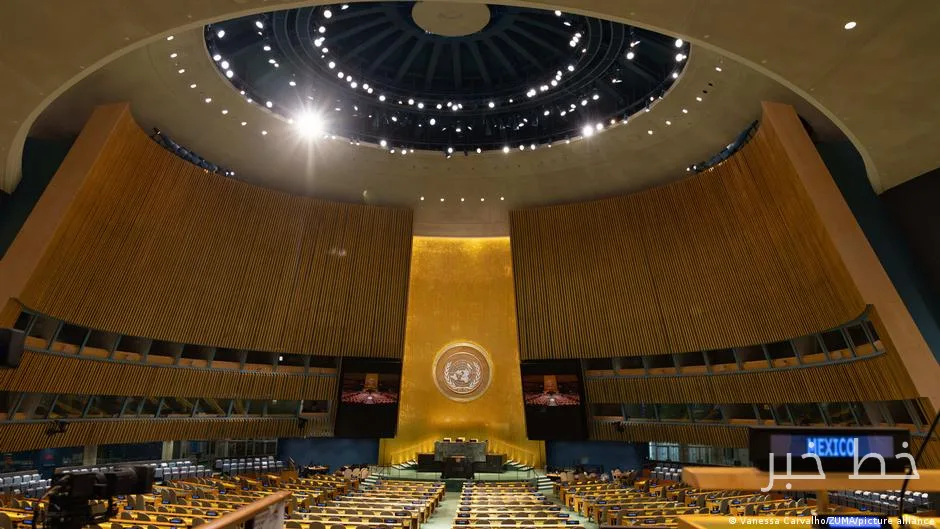
Benjamin Netanyahu, the Prime Minister of Israel, and Mahmoud Abbas, the President of Palestine, will address representatives of member countries at the United Nations General Assembly (UNGA) on Tuesday. This event will take place on the third day of the session, focusing on Middle Eastern issues.
Netanyahu's Busy Schedule and Lack of Meetings
Netanyahu, who is currently facing declining popularity both domestically and internationally, will not meet with American officials or Arab leaders due to his busy schedule with officials from other countries. His office cited his packed agenda as the reason for this and announced that during his trip to Israel, he will meet with several other officials, including the presidents of Argentina and Bolivia, the Vice President of Colombia, and the Prime Minister of Papua New Guinea.
Read more: Canada Imposes New Sanctions Against Iran
Abbas's Speech and Discussion Topics
Palestinian President Mahmoud Abbas will also attend this event, but due to the lack of a visa from the U.S. State Department, he will deliver his speech via video. Topics related to the future of Gaza and the status of the Palestinian government will also be on the agenda of the session. Additionally, the United Kingdom will hold a meeting to discuss the current and future situation in Gaza, and Saudi Arabia and Norway will host a ministerial meeting to review the implementation plans for a two-state solution.
On the other hand, Volodymyr Zelensky, the President of Ukraine, criticized Vladimir Putin, the President of Russia, holding him responsible for the ongoing war between the two countries and calling him the "primary instigator" of this crisis. Zelensky also announced new defense agreements with Finland and Australia.
Furthermore, Ahmad al-Shara'a, the leader of Syria, called for an end to Israel's occupation of the Golan Heights, asserting that it belongs to Syria. Additionally, Pedro Sánchez, the Prime Minister of Spain, in his speech, called for an end to what he termed "genocide" in Gaza.
At this session, senior executives from artificial intelligence companies also discussed the risks associated with this technology and called for international cooperation in this field. Sam Altman, CEO of OpenAI, highlighted two major risks related to artificial intelligence and warned about its control.
Finally, Judith Sumiño Tulka, the Prime Minister of the Democratic Republic of the Congo, described the outbreak of Ebola in her country as a "major test" and emphasized the priority of combating this epidemic. She stated that the Congo, in collaboration with international partners, is achieving tangible results in this regard.
Read more: Paul LePage Reports on the Deportation of a Relative · Iranian and Ukrainian Officials to Speak at the United Nations General Assembly