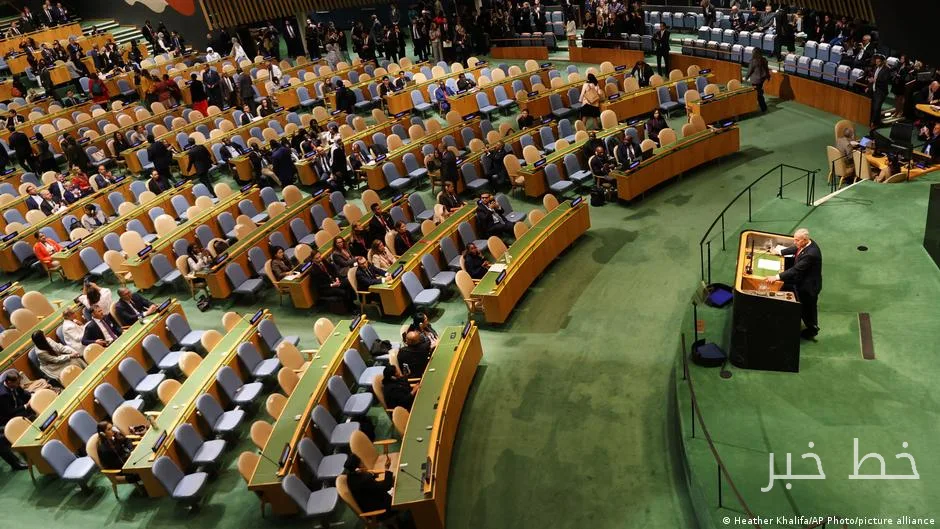
Benjamin Netanyahu, the Prime Minister of Israel, rejected accusations of genocide against his country in Gaza during his speech at the United Nations General Assembly. These accusations were raised by several speakers, including Mahmoud Abbas, the Prime Minister of Palestine. As Netanyahu began his speech, several representatives left the hall.
Response to Protests and Gatherings Outside the Hall
Before Netanyahu's speech began, protesters gathered outside the United Nations headquarters in New York, and some were arrested. In this session, Netanyahu responded to the criticisms and emphasized that Israel seeks peace and security. He also highlighted the importance of historical facts in the context of the conflicts.
Speech by the Prime Minister of Nepal on Climate Change
During the session, Pushpa Kamal Dahal, the Prime Minister of Nepal, spoke on behalf of his country regarding the climate change crisis. Dahal pointed to the recent devastating storms in Nepal and stressed the need for international cooperation to protect the Himalayas. He noted that Nepal contributes less than 0.1% of global greenhouse gas emissions and called for non-repayable financial support for countries affected by climate change.
The Prime Minister of Nepal stated that his country cannot bear the additional burden of debt and requested that countries provide financial support based on aid rather than large loans. He also emphasized the principles of "responsibility, compensation, and resilience" and called for the establishment of a "Himalayan Climate Resilience Mechanism" to be led by Nepal, India, and China.
Criticism of the International Criminal Court
Meanwhile, Mark Rutte, the Prime Minister of the Netherlands, criticized attacks on the International Criminal Court in his speech and urged representatives to support this institution. He stated that the lack of accountability for major crimes poses a threat to international order. Rutte indirectly referred to US pressures on this court and emphasized the need to defend international legal principles.
Additionally, representatives from Yemen and Kuwait highlighted the importance of freedom and safety of navigation in the waters and condemned Iran for its role in regional disruptions. Abdullah Abdulqader Alalimi, Deputy Chairman of the Leadership Council of Yemen, addressed the recent actions of the Houthis and their impact on global trade, emphasizing the need for security at sea.
Sheikh Sabah Khaled Al-Hamad Al-Sabah, the Crown Prince of Kuwait, also stressed the necessity of ensuring freedom of navigation and criticized Iran for disrupting global trade due to its actions in the Strait of Hormuz and Bab-el-Mandeb.
This United Nations General Assembly session concluded with various topics, including climate change, international security, and human rights, at the forefront of attention.