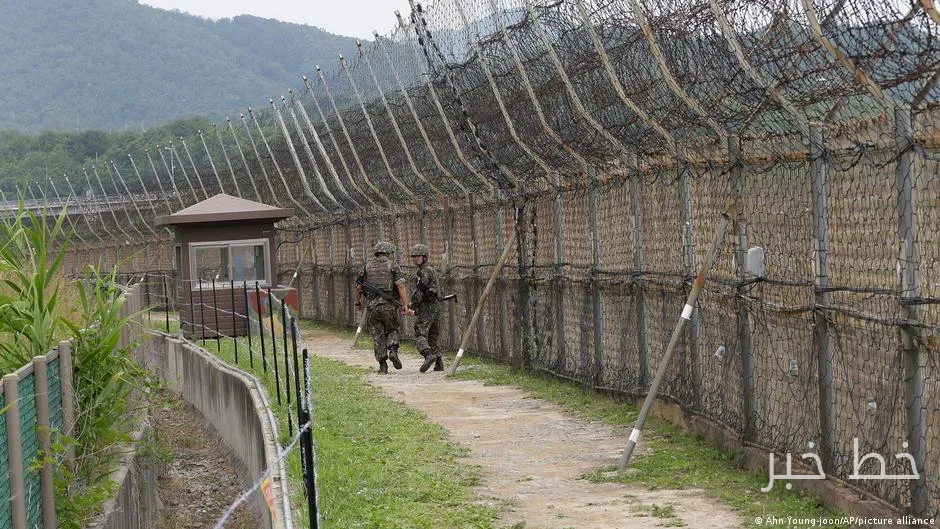
North and South Korea are strongly accusing each other in the demilitarized zone (DMZ). These tensions began 10 days after three South Korean soldiers were injured by a landmine explosion on the southern side of the border.
North Korea's Efforts to Increase Control
The recent tensions may reflect an effort by North Korea to test South Korea's resolve and expand its control into border areas. According to a foreign policy professor at Kyung Hee University in South Korea, these actions follow North Korea's constitutional reforms in March of this year, which officially defined the country's geographical borders.
Read more: Pete Hegseth Introduced Six New Initiatives at the Pentagon
This professor stated: "North Korea wants to maximize its space and seems to intend to move the Military Demarcation Line (MDL) southward. I see placing landmines on the southern side of the line as a purely political act by the North aimed at threatening and intimidating South Korea."
Investigations and South Korea's Reactions
The injured soldiers were part of an 18-member patrol that was clearing a new path in the DMZ. This patrol was investigating North Korean military activities in the western part of the area. On September 21, this patrol was about 10 meters south of the MDL when one of the soldiers encountered a landmine. The second mine exploded as the unit commander approached to assist.
The South Korean Army is currently investigating in cooperation with the United Nations Command and concluded in a report released this week that the mines were of North Korean origin. Kang Hyun-woo, the director of South Korean forces' operations, said at a press conference: "This is a blatant violation of the ceasefire agreement and undermines the spirit of agreements between the two Koreas and must be stopped immediately."
He also added: "North Korea must immediately cease activities that escalate tensions on the Korean Peninsula, and we have strongly urged them to apologize and take responsible actions."
Meanwhile, many individuals in South Korea are calling for more decisive actions, believing that failing to respond to these developments will be perceived as a sign of weakness in Seoul. Na Kyung-won, a politician from the main opposition People Power Party, has called for military drills simulating an attack on Kim Jong-un's leadership.
These tensions continue as Kim Yo-jong, the sister of Kim Jong-un, has accused South Korea of provocation and threatened retaliation. In a statement released by the Korean Central News Agency (KCNA), she claimed that South Korea's accusations are a "self-made deception."
At the same time, Andrei Lankov, a professor of history and international relations, has a different perspective and considers the landmine explosions as an accident. He stated: "It does not seem logical at all for North Korea to do this intentionally."
Lankov believes that the mines may have been displaced due to heavy rainfall or natural ground movements from the northern side of the Military Demarcation Line, and it appears that North Korea is indeed innocent.
However, Choi, a foreign policy professor, feels that there is growing anger in South Korean society over the government's failure to stand up against provocations from the North and believes that a return to broadcasting propaganda programs at the border could be an effective response.