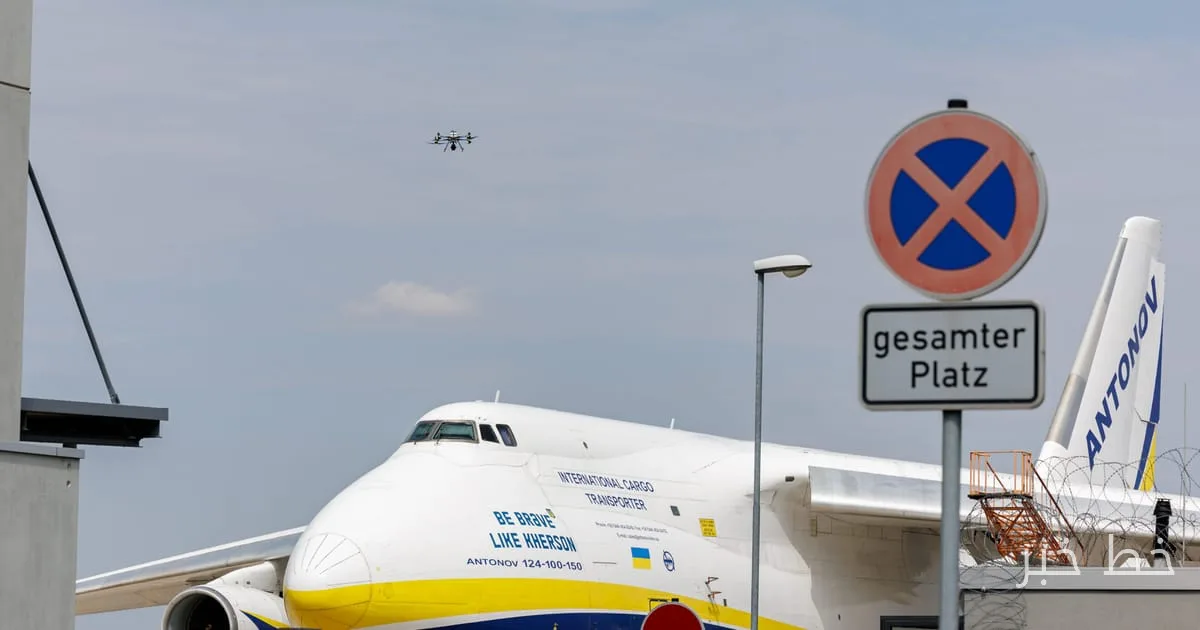
The failed attacks at Leipzig Airport in Germany on August 4, 2025, are a sign of a larger campaign of Russian attacks on European countries. In this incident, a drone collided with the wing of a Ukrainian aircraft, and the bomb attached to it remained intact. This bomb, which was housed in a metal canister, provided a rare opportunity for researchers to investigate these attacks and examine their connections to Russian intelligence services.
Discovery of the Bomb and Suspicious Connections
The bomb discovered in Leipzig had a metal plate with seven circular marks, showing significant similarities to bombs found in Lithuania in previous years. At that time, Lithuanian police discovered two metal canisters in a cemetery in Kaunas, identified as bombs containing 968 grams of explosives. These similarities allow European officials to assume that these attacks are linked to a larger operation by Russian intelligence services.
Read more: Greg Stanton will testify in the Senate Judiciary Committee next week
The Role of the GRU and Unit 29155
German and European security officials report on the role of the Russian military intelligence service (GRU) in this campaign. Unit 29155 of this service has been identified as a key player in destabilizing operations in European countries. These officials state that the goal of this campaign is to increase military pressure on Ukraine and raise the political costs of supporting Kyiv. Greg Stanton, a security official, noted that the aim is to instill fear of direct military conflict among the population.
In response to these accusations, the Russian embassy in Berlin denied any involvement in these attacks and called them baseless. Meanwhile, German officials are seeking more evidence that demonstrates connections between these attacks and Russian intelligence services.
One of the key figures in this case is Oleg Lavushkin, a dual Russian-Latvian citizen who is recognized as a logistical agent linked to the GRU. He has been discreetly planning the Leipzig attack, and German officials believe he recently traveled from Turkey to Berlin. Evidence suggests that explosives were smuggled into Germany through Bulgaria and Serbia.
Read more: Mindaugas Sinkevičius prioritizes air security in Lithuania · Russia intensifies its hybrid war beyond Ukraine