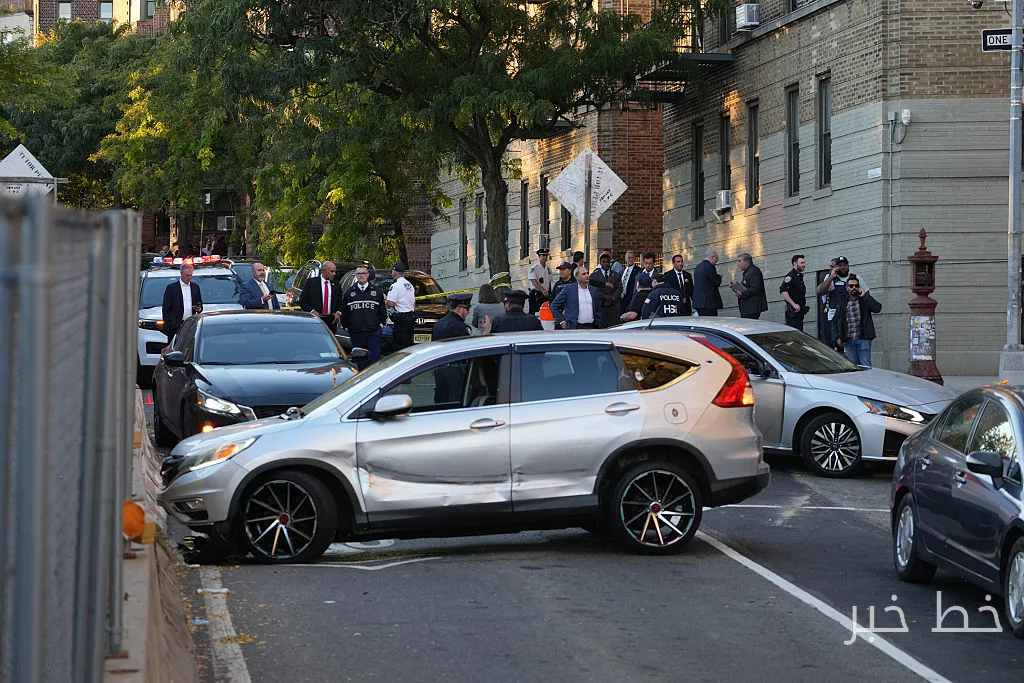
New York Police Department (NYPD) released body camera footage from one of their officers following the shooting of a man by an immigration officer in New York. This release came as protests against the shooting of 28-year-old Oscar Belgal have intensified, demanding the immediate release of the body camera footage from the Immigration and Customs Enforcement (ICE) officer and an end to the agency's operations in New York.
Shooting Details and Reactions
The footage released by NYPD does not depict the shooting but shows two police officers arriving at a scene where a man is sitting on the ground, with one person holding his neck to prevent further injury. One of the ICE officers, wearing a neon vest and ICE insignia and holding a semi-automatic weapon, was on a phone call and did not speak to the NYPD officers.
Read more: Damage to 81 Military Aircraft and Drones of the U.S. in the War with Iran
One of the NYPD officers, while responding to the scene, asked the ICE officers if the victim should be taken to the hospital, but received no response from the ICE officers. Ultimately, several police officers transported the individual on the ground into a police vehicle and took him to the nearest hospital.
ICE Policies and Video Release
After the shooting, videos shared on social media from various angles show that the rear window of a silver SUV was completely shattered and the front window was at least punctured by one bullet. A child was also removed from the shooting scene by an undercover officer.
Markwin Mullen, the Secretary of Homeland Security, announced on Friday that the ICE officer involved in the shooting was wearing a body camera and there is footage related to the incident. He added that more information will be released as the investigation progresses.
ICE policy requires its officers to activate cameras during routine enforcement activities, including during arrests, executing search warrants, and responding to emergencies. If a serious injury or death occurs during an operation, a panel of ICE internal leaders reviews the footage and decides whether to release it. This process must occur within 72 hours of recording or as soon as practicable.
However, the release of footage is not always guaranteed. Policies allow ICE to withhold body camera footage if there are "specific and compelling circumstances" that prevent public release. The decision in this matter will be up to the ICE director.
The agency has spent tens of millions of dollars this year to purchase and equip its officers with body cameras, following two deadly shootings in Biddeford, Maine, and Houston during the summer. ICE officers did not have body cameras during either of those shootings.
Read more: Stanton and Investigation into the Stay of the Flydubai Pilot in Australia and New Zealand · Man Shot by ICE Officer in New York