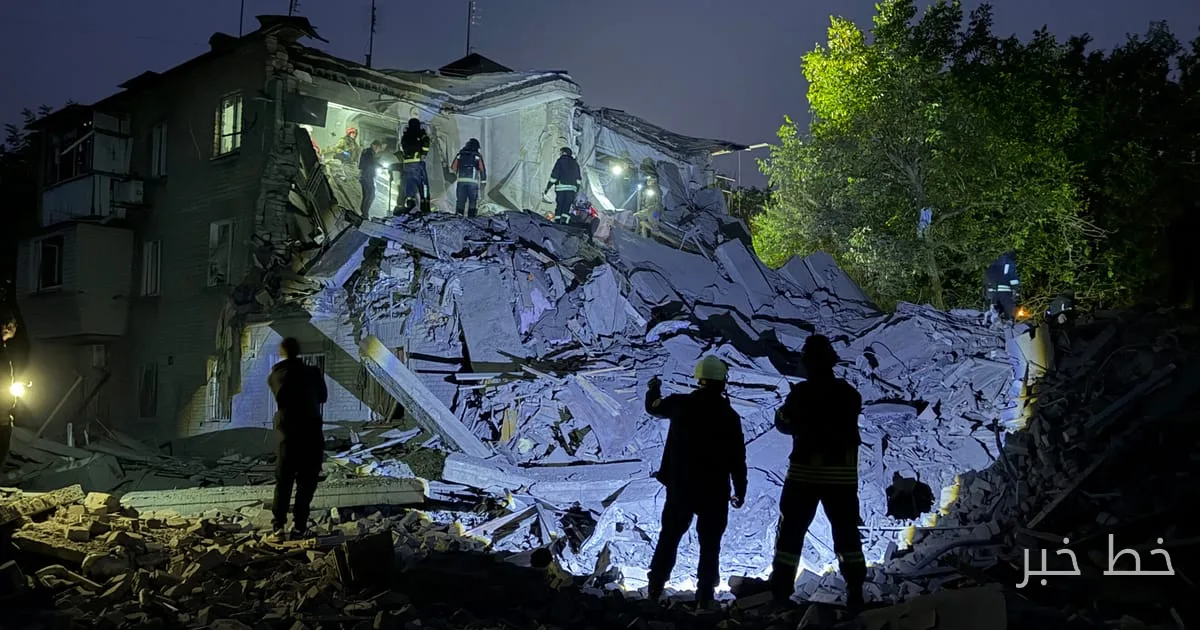
Russian airstrikes on the city of Zaporizhzhia in southeastern Ukraine left at least 11 dead on Saturday, including three children. Local officials reported that they are searching for people who may still be trapped under the rubble of destroyed homes, and rescue operations are continuing.
Details of the Attacks
Mykhailo Symyhin, head of the military administration of the Zaporizhzhia region, announced in a Telegram post that rescue teams are searching for individuals who may still be trapped. Ukrainian officials claim that Russia targeted residential neighborhoods in the city and bombed two residential buildings.
Political Consequences
These attacks occurred just one day after Ukrainian officials met with European and American officials in Miami on October 9. This meeting was part of new diplomatic efforts to end the conflict between Russia and Ukraine. While Ukrainian officials are seeking peaceful solutions, the recent airstrikes indicate the continuation of tensions and conflicts in the region.
In this context, Donald Trump, the President of the United States, also announced that he would temporarily lift sanctions on Russian diesel exports to reduce prices. Volodymyr Zelensky, the President of Ukraine, criticized this agreement and accused Trump of using peace negotiations as a "cover" while seeking an agreement with the Kremlin.
In response to Saturday's attacks, Zelensky stated, "This night was another confirmation that Russia perceives any reduction in pressure as a sign that it can continue the war and bomb cities." These remarks reflect his deep concern over the humanitarian suffering caused by ongoing conflicts.
The recent airstrikes in Zaporizhzhia have not only endangered lives but also increased feelings of insecurity and fear among the residents of the area. As this situation continues, hopes for achieving peace and calm in Ukraine are diminishing.