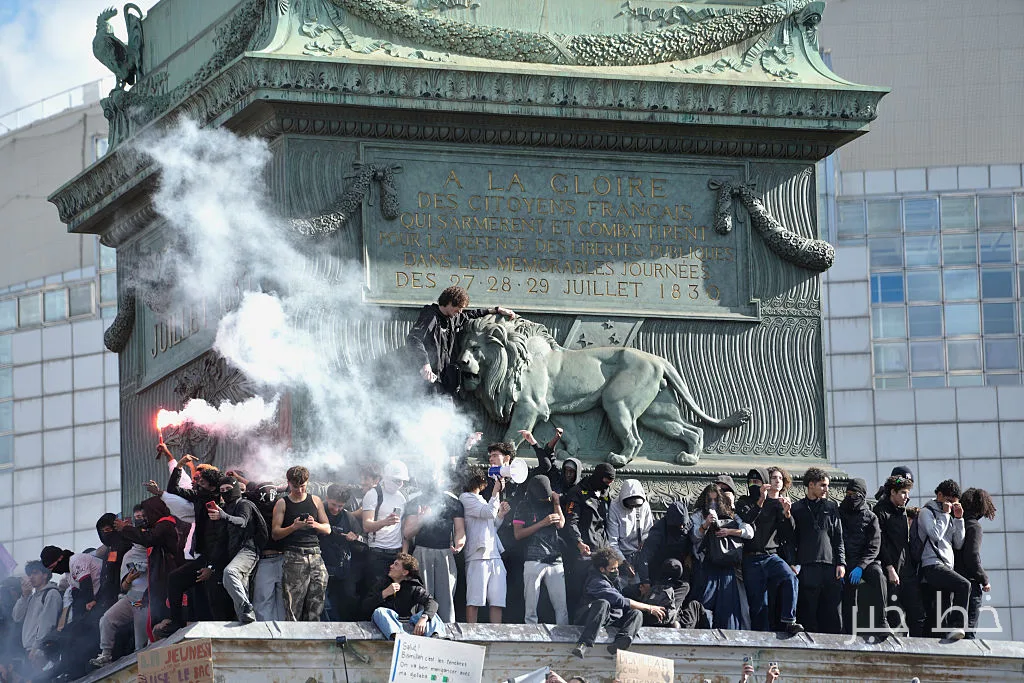
Protests in France have sharply increased, with most participants being high school students. Since the beginning of this movement, over 200 students, 85 educational staff members, and 700 police forces have been injured in clashes. Protesters have attacked schools and, in some cases, set fire to occupied buildings. One of the tragic incidents of these protests was the explosion of a police grenade in the hands of a 15-year-old boy during a protest in Lens, which resulted in the amputation of his hand and highlights the severe response of security forces to these protests. So far, more than 6000 protesters, most of whom are teenagers, have been arrested and later released without charges.
Reasons for Discontent and Political Crisis
These protests have begun after nearly a decade of Emmanuel Macron's presidency in France. This type of governance, which operates more top-down, has created widespread dissatisfaction among the youth. Students complain about educational inequalities, university admission decisions, and racial discrimination, feeling that they have been seriously overlooked and that no future is provided for them.
Read more: Janta Cockroach Party Continues Protests in New Delhi
The protests occur at a time when political trust in France has sharply declined. The French presidential election will be held in April 2027, with right-wing and left-wing parties leading in the polls. Marine Le Pen, the leader of the nationalist right-wing party, has been introduced as one of the main candidates in this election. She has worked for years to present her party as a viable option, focusing on issues such as immigration and crime. On the other side, Jean-Luc Mélenchon, the leader of the Unsubmissive France party, has entered the fray with promises to redistribute power and resources in favor of the working class.
Economic and Social Challenges
Today, France is facing one of the largest budget deficits in Europe, with its public debt reaching 119.3% of GDP and expected to increase next year. Concerns about a severe financial crisis are rising. Borrowing costs have reached levels that have drawn comparisons between France and Greece during the debt crisis in 2010. With economic recession and lack of growth, there is no easy solution to escape this situation.
France needs more investment in defense, modern technologies, and public services such as schools and hospitals. Various French governments have promised to improve the country's infrastructure and make necessary investments, but none have succeeded in this regard.
Deeper discontent also exists among the youth. Economic inequality has been recognized as one of the main focal points of the protests. Over the past two decades, inequalities in France have increased due to globalization and the concentration of wealth. Additionally, racial and geographical discrimination also exacerbates this crisis. Families with immigrant backgrounds, especially in urban suburbs, face significant challenges in accessing job and social opportunities.
Read more: Mark Carney Warned That America is Trying to Fragment Canada · Janta Party Seeks Resignation of India's Election Commissioner Amid New Protests