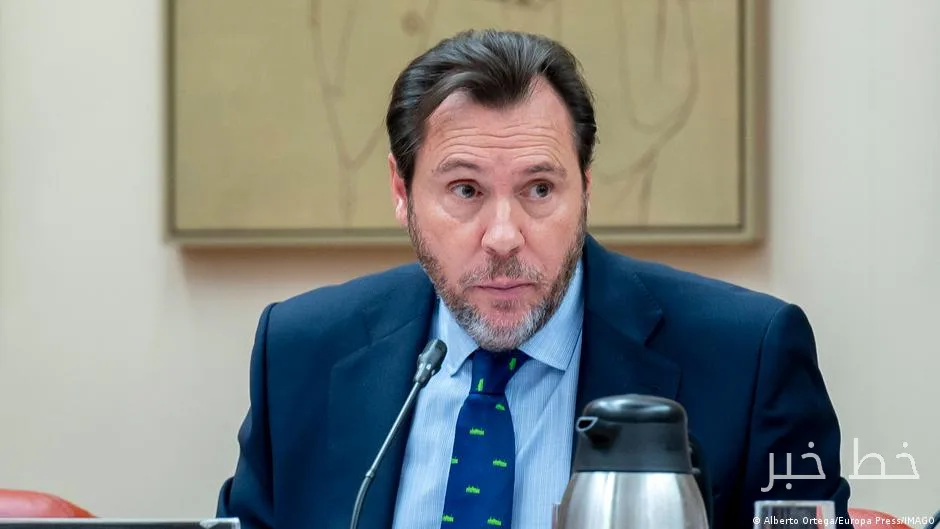
Óscar Puente, Spain's Transport Minister, announced his resignation on Tuesday following an incident that occurred on October 28 in southern Madrid, resulting in the deaths of 69 people. This incident marks the second deadly rail accident in Spain in less than a year and has drawn increased attention to railway safety.
Political Pressure and Railway Safety
This accident has intensified political pressures on Prime Minister Pedro Sánchez ahead of the parliamentary elections on November 29. In January, a train accident in the Andalusia region resulted in 46 deaths, fueling public concerns about the safety of rail travel.
Read more: The new U.S. ambassador to Cyprus announced strengthening military cooperation
Puente, a member of the Spanish Socialist Workers' Party (PSOE), stated in a meeting with lawmakers, "A transport minister in a country like Spain cannot remain in office with two accidents of this magnitude in less than a year." He also announced that he would withdraw his name from the list of candidates.
New Safety Measures
In the hours leading up to his speech to lawmakers, Spain's Transport Minister proposed measures to improve the safety of the rail network and announced in a press conference that the government would work "without pause" to restore public confidence in high-speed rail travel. These measures include plans for control center software that automatically issues alerts and facilitates the identification of traffic anomalies.
Although Puente had stated several times that he did not intend to resign, he decided to step down following the incident. These developments reflect serious concerns about railway safety in Spain and the resulting political pressures.
Read more: The possibility of voting without identification in some states