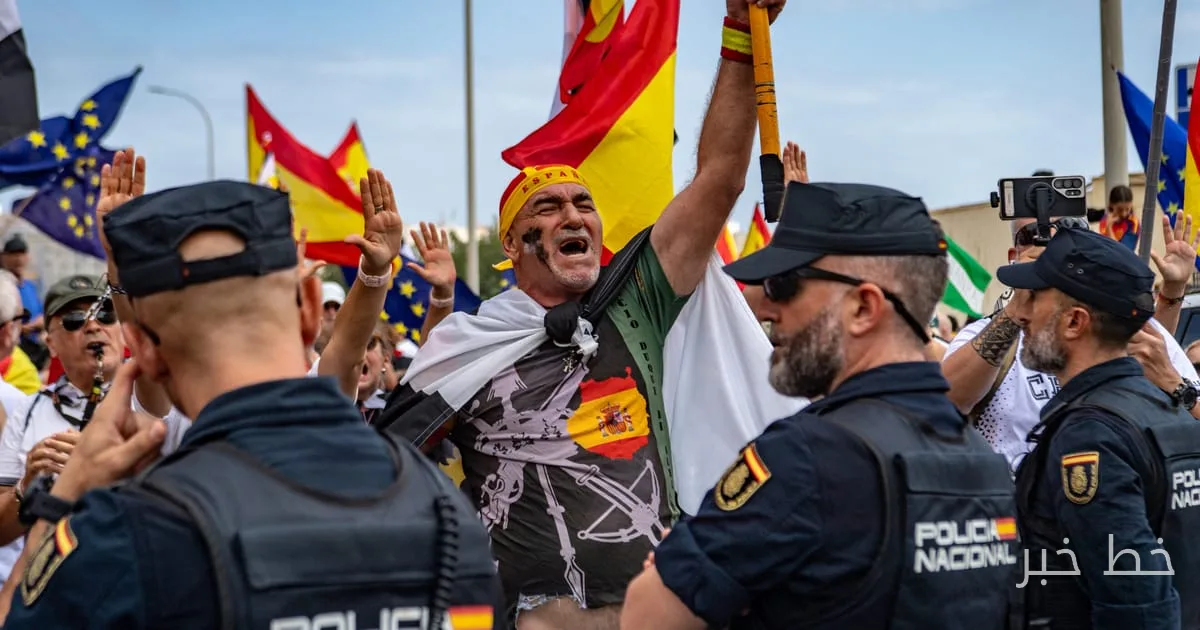
Spaniards are worried that the ongoing tensions with their North African neighbor, Morocco, could lead to an armed conflict following the summer migration crisis that put pressure on Madrid. The sudden influx of over 70,000 migrants to the autonomous island of Ceuta in late July sparked severe criticism of Pedro Sánchez's socialist government and raised questions about Morocco's role in this crisis.
Survey and Concerns
A survey conducted in September by an independent institute shows that 58% of participants believe that the tensions over Ceuta and Melilla, which Morocco considers occupied territories, are likely to lead to an armed conflict between Spain and Morocco in the next decade. This survey was particularly conducted at a time when Sánchez announced early elections.
Alberto Núñez Feijóo, the leader of the People's Party, who has surpassed Sánchez in the polls, has claimed that the crisis has been simultaneously orchestrated and coordinated by Morocco, and that the government has concealed it. Additionally, a police report has alleged that Moroccan agents played a role in organizing this mass movement.
Spaniards' View on Moroccan Threats
Sánchez described the increase in migration as an attack on Spain's territorial integrity, but repeatedly denied claims regarding Morocco's role, instead blaming traffickers. However, in the survey, three-quarters of Spaniards stated that Morocco is a real threat to their country's territorial integrity.
Supporters of the People's Party and the far-right Vox party see Morocco as a greater threat to Spain than others and believe that tensions over the autonomous enclaves could lead to war in this decade. More than three-quarters of Vox supporters and 68% of People's Party supporters consider the occurrence of a war in the next decade likely.
Even among supporters of Sánchez's Socialist Party, nearly two-thirds view Morocco as a serious threat. Furthermore, over 80% of Spaniards believe that Morocco poses a medium to high risk for Spain, placing the country in a higher position compared to other foreign powers such as China, the United States, and Russia.
Diplomatic Challenges and the King's Visit
Two-thirds of Spaniards in this survey said they expect Ceuta and Melilla to remain under Spanish control for the next 20 years. Meanwhile, the European Union is discussing emergency measures to address mass movements that may be orchestrated by traffickers and criminal networks. For Spaniards, the notion that Morocco could create conditions for the annexation of Ceuta and Melilla is much more serious than mere speculation.
Many Spaniards still remember Morocco's "Green March" in 1975, an operation that mobilized tens of thousands of civilians to force Madrid to cede Spanish Sahara territory. Numbers indicate that Madrid is walking a tightrope in managing these autonomous islands, while King Felipe VI is set to visit Ceuta and Melilla from Tuesday.
During this visit, Felipe is expected to visit the cemetery of Sidi Embarek, where about 90 people who died in this crisis are buried. The Deputy Mayor of Ceuta, Kaisy Chandiramani, stated that Morocco has refused to return them, which is considered by analyst Ignacio Sembler to be "a slap in the face" to Spain.
The king's evening speech at the Parador hotel, which will be closely watched, is expected to take place while Defense Minister Margarita Robles referred to Ceuta and Melilla as "undoubtedly Spanish" this week.
Morocco's response has so far been notably mild. In King Mohammed VI's first public appearance after the crisis, he stated that cooperation with Spain faces "great challenges," but did not directly reference the Spanish king's visit.
While Chandiramani hopes that the Spanish king's visit will unite the "broken city," protests are expected to take place in Fnideq, across the border, on October 14, as soon as he leaves the island.
Read more: Zelensky and European officials meet with US representatives in Miami