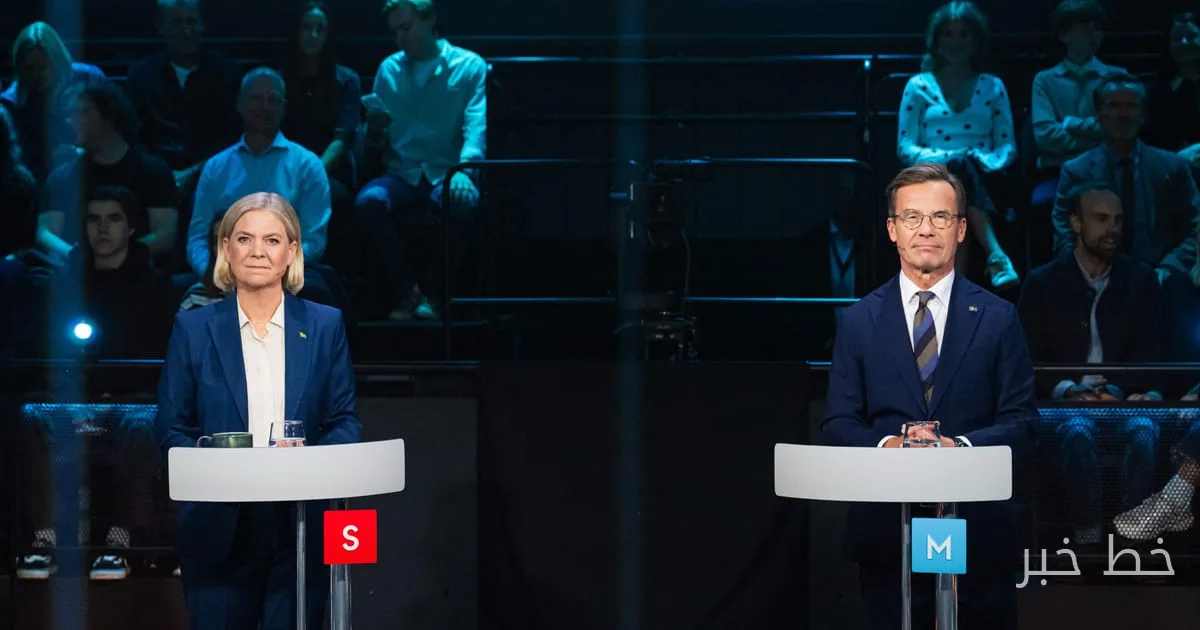
Sweden's general elections have become unpredictable due to the close competition between the right and left. Initial analyses show that support for the right-wing coalition led by Prime Minister Ulf Kristersson has increased in the final two weeks of the election campaign.
Close Competition Between the Factions
The elections are taking place while Kristersson's right-wing coalition has lagged in polls over the past year, only gradually closing the gap with left-wing rivals in the final weeks. If Kristersson can overcome the polls and remain in power, he has promised to give ministerial positions to politicians from the Sweden Democrats, a nationalist and anti-immigration party, which would be unprecedented for a country that has distanced itself from the far-right for decades.
Read more: OpenAI Faces New Malicious AI Attack
Analysis of Initial Results
Two exit polls released at the end of voting indicate that the left, led by former Prime Minister Magdalena Andersson, is currently in the lead. However, subsequent analyses have shown that the competition is extremely close, with projections suggesting that Kristersson's right-wing coalition will secure 174 seats out of 349 in parliament, while the left will have 175 seats. Other results indicate that 176 seats will go to the left and 173 seats to the right-wing coalition.
Andersson finds the close result disappointing. Having been ousted from power four years ago, she was seen as a strong candidate for a return to the prime ministership. However, her double-digit lead in the polls has diminished in the final days. During her visit to the outskirts of Stockholm on election day, Andersson stated, "Swedish elections are always close."
Implications of the Elections for the Far-Right
The election results will be crucial for the future of the far-right in Sweden, and this election will be viewed as a turning point for Sweden and other European countries where nationalist parties are on the rise. Andersson also emphasized that if the left wins, it will not mean the end for the Sweden Democrats, especially if the final result is close.
Kristersson, the leader of the Moderate Party, is likely to continue his efforts to retain his position as prime minister if the predictions hold true. He believes that the Sweden Democrats can be reliable and have helped his coalition in parliament over the past four years to advance strict policies on immigration and crime.
In coalition-building efforts that will determine which leader will govern the country, smaller parties in Sweden often wield significant influence. This time, if the predictions about a close result come to fruition, this will also be true. On the right, Kristersson leads a coalition of four parties, which includes the Sweden Democrats. However, Andersson's path to forming a coalition is complicated and depends on the disagreements among the smaller parties in her faction.
Read more: Sweden Places Heavy Pressure on British Immigrants · Trump and Potential Changes in Iran's Policy After the Midterm Elections