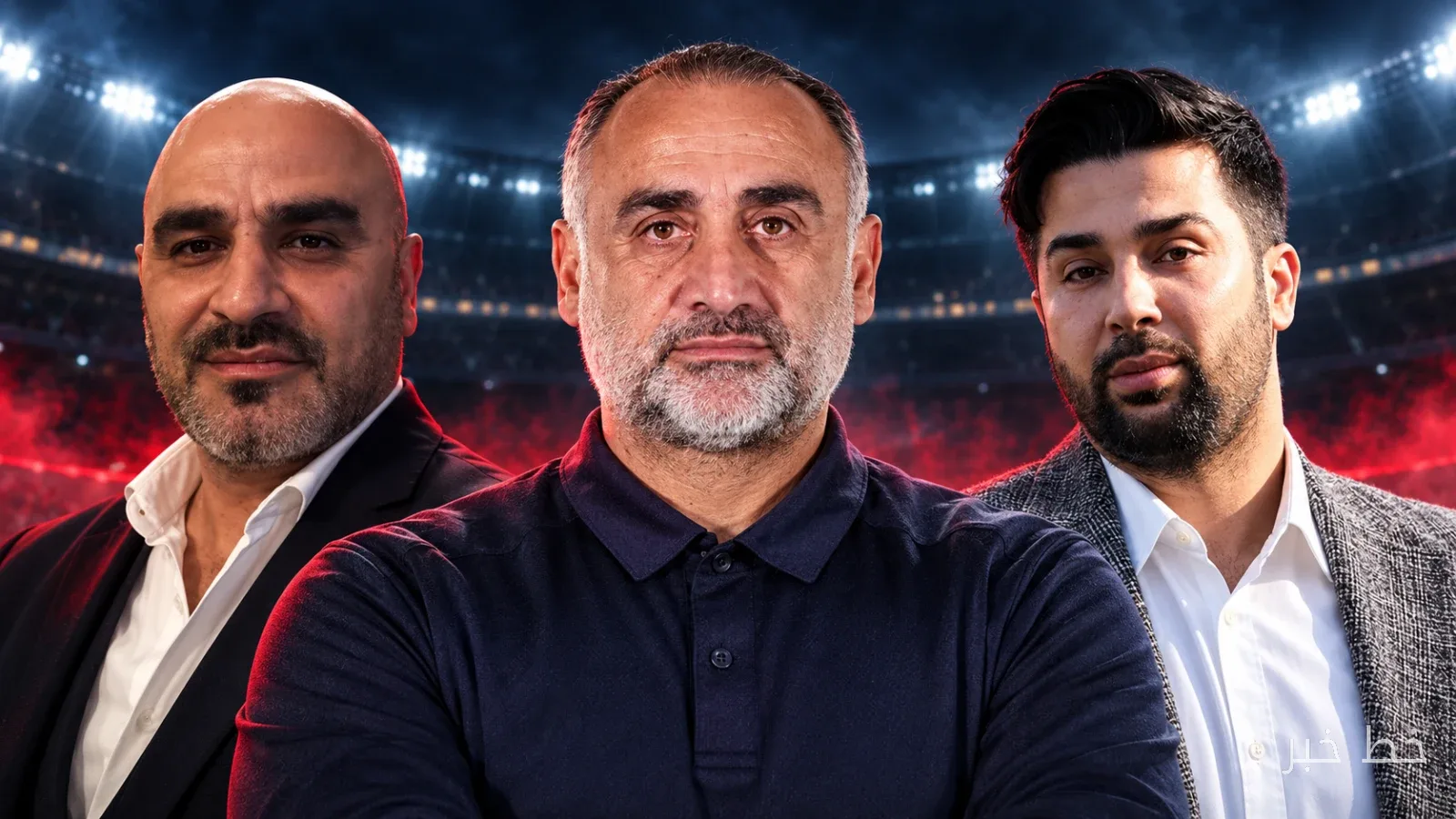
The elimination of the U23 national team from the Asian Games has been linked to precise questions about the selection of players and the role of intermediaries, with the names "Hossein Abdi," "Hooshang Saadati," and "Shahab Zandi" appearing in the context of this case; the Football Federation must provide clear answers regarding these connections, processes, and signatures.
Key Question: How and with what considerations were the selections made?
This case is not just the result of a technical failure. Its core is the connection between transfer intermediaries and the technical decisions of the U23 national team; a connection defined by the increase in player value through participation in the national team. Based on the information in this case, the name "Hossein Abdi," the head coach of the U23 national team, is recorded alongside "Hooshang Saadati" and "Shahab Zandi," and questions directly concern the role and influence of all three on the arrangement and fielding of players.
Read more: The new report criticizes the conditions of migrants at the Alligator Alcatraz center in Florida
These questions must be answered with supporting documents: criteria for invitations, mechanisms for technical evaluation, training reports, and any kind of work or financial relationship that could create a conflict of interest. Until the Football Federation publishes these documents, ambiguity will remain, and the responsibility for accountability will rest with the managers and technical staff.
Transfer of Danial Eiri; a figure of 200 billion and a 10% share
One of the specific focal points of this case is the transfer of "Danial Eiri" from Nassaji Mazandaran to Persepolis. The amount of the release letter was announced as 200 billion tomans, with only 10% of this amount reaching the player. The key question is: Did his presence in the U23 national team play a role in increasing value and facilitating this transfer or not?
For an accurate response, the following documents must be published: transfer contract, financial appendices, payment schedule, list of stakeholders, and official explanations from the parties involved. The presence of a player in the national team alone does not prove a financial connection; linking these two requires aligning the timing of technical decisions with the terms of the contract, the distribution of shares, and the signatures on the documents. The names of the signatories of the contract, the date of signing, the date of invitation to the national team, and the flow of money must be transparently disclosed.
At this level of ambiguity, the Football Federation cannot summarize the issue with verbal explanations. It must provide documentation to show whether technical decisions were independent of transactions or not. If the criteria for invitations are based on clear technical indicators, those indicators should be published; if the indicators do not exist or have not been recorded, this gap itself needs to be addressed.
Change of position for Masoud Mohibi; from central defender to forward
The name "Masoud Mohibi" is mentioned in the technical decisions section of this case. He was described as a player who plays in the central defense position but played as a forward in the next two matches. This positional change must be explained with clear technical reasoning: Why was this change made, based on what assessment of the player's capabilities, and did it affect the playing time of other players or not?
The technical staff of the U23 national team must provide direct answers: What do the training reports say? What conclusions have been drawn from the analysis of match data? What content has been included in the internal decision documents regarding player arrangements? If injury, suspension, or lack of specialized options was the reason for this change, the details must be clearly stated. If the decision was based on a "tactical test," the criteria for the success of that test and its impact on the outcome must be recorded and explained.
Without these explanations, changing positions in two consecutive matches directly strengthens questions regarding the decision-making mechanisms within the team. Clarification at this point reduces tension and prevents speculation.
Shahab Zandi; the title of CEO, connections, and serious allegations
In another part of this case, the role of "Shahab Zandi" in Nassaji club and the official status of his title as "CEO" are under question. The exact title and legal status must be clarified with registered documents and official correspondence from the club. Additionally, his name has been associated with cases related to football in Kerman and Rafsanjan and allegations such as paying bribes to referees, connections with betting sites, and manipulating results.
These allegations are serious, and to attribute any specific action to an individual, a verdict and case documents are necessary. It must be clarified: which person or entity made the payment, who received it, what was the exact date and amount, and which match and referee decision this payment (if it occurred) was related to. Regarding connections with betting sites, technical and financial documentation must be provided; from ownership paths, transactions, to technical indicators that show a real connection. Regarding result manipulation, official match reports, disciplinary rulings, and video evidence must be the focus of the investigation.
At this stage, the demand is clear: public announcement of the verdict and documents, and providing an opportunity for formal accountability for "Shahab Zandi." Eliminating ambiguity in the managerial title, clarifying potential connections, and demonstrating the flow of money are the minimum expected level of transparency.
Hooshang Saadati; position in the decision-making chain
The name "Hooshang Saadati" is placed alongside the head coach of the U23 national team and Shahab Zandi. His position in this chain must be clearly defined: professional connections with the technical staff, role in transfers, and any interactions with clubs and players. Any level of involvement requires written documentation, cooperation contracts, and administrative footprints. If these roles have been defined, they should be introduced and published; if they have not been defined and were informal, this lack of definition itself is an issue and requires a direct response.
Announcing the list of contacts, administrative correspondence related to player selections, and conflict of interest regulations is essential for clarifying this section. Any point that brings intermediaries close to technical decisions must be documented and traceable.
Media influence; questions about the role of Varzesh 3 website and its owners
In the context of this case, the influence of the "Varzesh 3" website and its owners on the arrangement of players has been raised. The central question is clear: Has media interference or communications outside the technical framework affected the invitations and playing time of players? To clarify this issue, the Federation must introduce mechanisms to counter external influence: communication protocols with the media, recording meetings and discussions, and mechanisms for documenting contacts.
If no influence has occurred, the documents supporting this claim must be published in detail: when, with whom, based on which safeguarding processes against influence, and with what independent oversight. If the safeguarding mechanism was not present or acted inadequately, this deficiency must be quickly corrected and publicly announced.
Role and responsibility of the Football Federation; transparency, criteria, and conflicts of interest
The point of accountability in this case is the Football Federation. This federation must immediately publish the criteria for inviting players to the U23 national team: technical evaluation indicators, weighting of club performance, disciplinary status, and medical criteria. Reports of technical decisions in recent matches must also be documented: why a particular player played, why another player did not get a chance, and what the basis of each decision was.
Regarding potential conflicts of interest, the Federation must announce the list of work and economic relationships of those involved in the selections: connections with clubs, agencies, and intermediaries, and any direct benefits that could influence decisions. This list must be accompanied by documents and provide the possibility for public verification. Internal protocols to prevent the influence of intermediaries, from the level of conducting training sessions to announcing the final list, must be published as an official document.
The flow of money in transfers and the share of each stakeholder is the sensitive point of this case. Publishing contracts and payment documents is the minimum action to eliminate ambiguity. Every contract has signatures; the names and positions of the signatories, the date and place of signing, account numbers for payments, and the timing of fund transfers must be made available to the public.
The significance of the matter for the people and football
For the people, the issue of selections for the U23 national team is not just about the result of a match; it is about trust in a process that must be clean, predictable, and fair. When questions arise about the role of intermediaries and connections with transactions, public trust is damaged. Accurate accountability, publication of documents, and defining conflicts of interest are the only ways to rebuild this trust.
For players, transparency means knowing that the path to being invited to the national team goes through sports performance, not through opaque communications. For clubs, transparency means equal rules: no margins, no rents, and full accountability regarding figures and signatures. For referees and match officials, publishing disciplinary rulings and technical documentation leaves no room for doubt.
Immediate steps expected
- Publication of the criteria for inviting players to the U23 national team, along with quantitative and qualitative indicators.
- Providing a technical report on the arrangement of players in recent matches, including an explanation of the positional change of "Masoud Mohibi" and its impact on the playing minutes of other players.
- Full clarification of the transfer case of "Danial Eiri": contract, financial appendices, signatures, and payment paths; announcement of the share of each stakeholder and the timing of fund transfers.
- Official announcement of the position and organizational titles of "Shahab Zandi" in Nassaji, along with registered documents; publication of rulings related to the cases in Kerman and Rafsanjan and documents related to allegations of bribing referees, connections with betting sites, and result manipulation, and providing an opportunity for formal accountability for him.
- Providing protocols to safeguard against media and non-sporting influence in selections, and recording and publishing related administrative correspondence.
Conclusion
The elimination of the U23 national team has brought a series of specific questions about player selections and the role of intermediaries to the forefront. The names "Hossein Abdi," "Hooshang Saadati," and "Shahab Zandi" have become central to the inquiries, and concrete issues such as the transfer of "Danial Eiri" and the positional change of "Masoud Mohibi" require documented explanations. In the section related to "Shahab Zandi," managerial titles, potential connections to the cases in Kerman and Rafsanjan, and serious financial and refereeing allegations must be clarified with a verdict and documents. Regarding the influence of "Varzesh 3" and its owners on player arrangements, safeguarding documents and oversight processes must be published.
The Football Federation cannot wrap up this case with generalizations. Criteria, signatures, contracts, and technical reports must be made public. The people demand clear answers, and these answers can only be provided with documentation. Attributing the elimination of the U23 national team to the mentioned individuals, without publishing and aligning these documents, is not a proven result; transparency, not interpretations, will provide the final answer.
Read more: Tiananmen Square activists in Hong Kong sentenced to up to seven years in prison