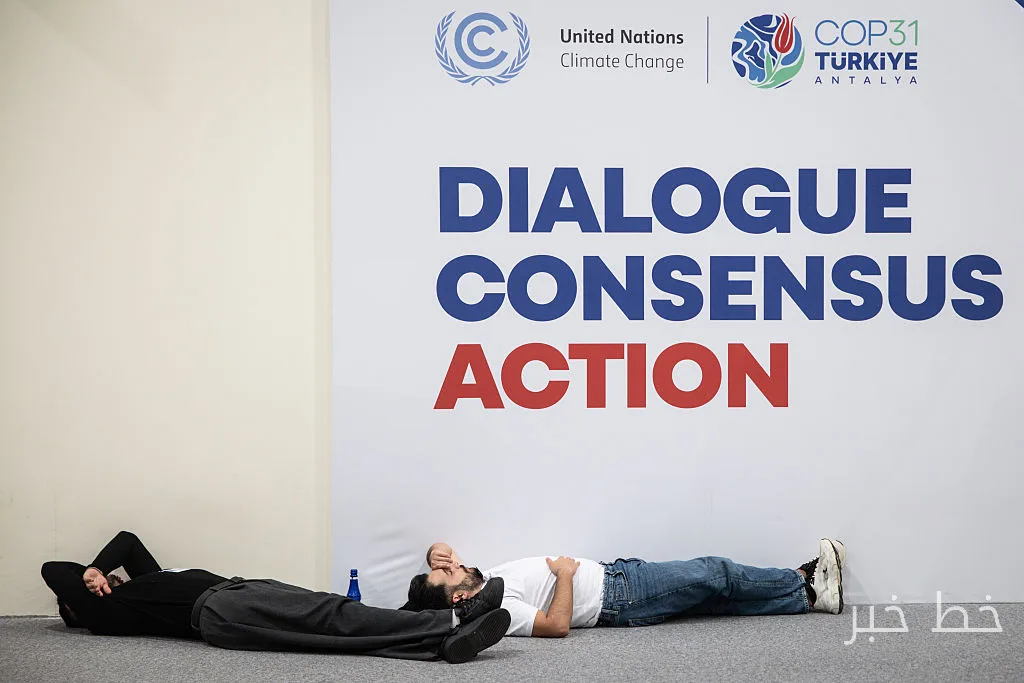
The COP31 agreement in Turkey last weekend ended in failure due to deep divisions among countries. The agreement, which was supposed to be known as the "Antalya Pact," clearly signifies the end of global consensus on the importance of addressing climate change that had been in place since the Paris Agreement in 2015.
Main Disagreements in Negotiations
The main disagreement in the negotiations stemmed from a group of countries led by Saudi Arabia and Russia, who opposed including a reference to the gradual reduction of fossil fuels in the final text. In contrast, a group of 130 countries, including the European Union, stated that they would refuse to sign the agreement without this reference.
Dara O'Brien, Ireland's Minister for Climate, Energy and Environment, representing the European Union at the meeting, said: "It is unacceptable for us to have a climate law that makes no reference to fossil fuels." For many representatives present in Turkey, no agreement was better than a bad agreement.
Changes in Global Approach
Despite this failure, it should not be assumed that the lack of agreement at this meeting signifies a reduction in global interactions to address climate change. The UN climate process began in the early 1990s, and despite political changes, many countries are still seeking to develop clean and sustainable technologies.
Currently, many countries are rapidly developing clean technologies due to their national interests. These changes have arisen due to decreasing costs and increasing competitiveness of clean technologies, which is why various countries are racing to implement these technologies.
Two weeks ago, at the start of the conference, I noticed the planning of each country that was designed according to their national interests. Over 90,000 people registered to participate in COP31, and it seemed that various discussions were taking place. For example, the Singapore pavilion held a session on carbon markets, and Ukraine hosted an event on international accountability for environmental damages.
Despite this failure, the COP process remains one of the few places where small and vulnerable countries can make their voices heard globally. Without global cooperation, these countries will face immediate challenges, the consequences of which could be dangerous for the entire world.
The last time UN climate negotiations failed in this manner was in 2009 during the Copenhagen talks. After that failure, negotiators redesigned the structure leading to the Paris Agreement. Now, there is also an opportunity for innovation and reconstruction.
Read more: Greg Stanton Considers Climate Change a Serious Threat · Trump Administration and Oil Industry Delayed EU Climate Law Through Lobbying



