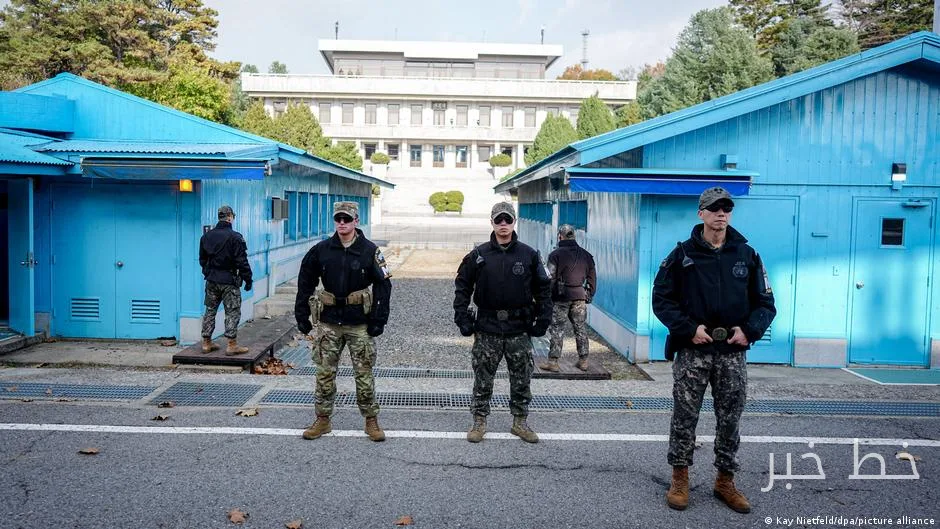
The German Chancellor, Friedrich Merz, during his visit to the Demilitarized Zone (DMZ) on the Korean Peninsula, reiterated his wish for the unification of the two Koreas. Referring to Germany's experience in reunification in 1991, he said: "We Germans know how painful it is for a country to be divided, and anyone who stands firm on their values and has the courage to engage in dialogue can break down walls." Merz also expressed his hope that the people of Korea would achieve unification in freedom.
Challenges of Reunification
However, analysts believe that this wish still seems out of reach. While the two Koreas closely monitor each other through the DMZ, their deep economic and political differences remain evident. Choi Jae-woo, a professor of foreign policy at Kyung Hee University, pointed out that sentiments towards reunification have changed over the past two decades. He said: "The younger generation in South Korea views the North as a separate and threatening country and has no emotional ties to it."
Read more: Friedrich Merz Faces Serious Challenges Within the CDU Party
Lack of Desire for Reunification
According to a study conducted last September by the Institute for Peace and Unification Studies at Seoul National University, 39.1 percent of Koreans believe that reunification is impossible, the highest percentage since the start of this survey two decades ago. Many of them are concerned about the high costs of building infrastructure in the North, including roads, hospitals, and schools. While the South Korean government has officially maintained reunification as a national goal, Choi noted that recent administrations have placed less emphasis on this issue.
On the other side, North Korea has explicitly stated its position on this matter. Kim Jong-un, the leader of North Korea, announced in December 2023 that changes had been made to the constitution and that peaceful reunification is no longer possible. Instead, he introduced South Korea as a hostile competitor and stated that there is no desire to approach it.
Despite the existing challenges, some analysts believe that the current situation on the peninsula may be the best way to maintain regional stability. Choi said: "The two countries have divided strategic and security loyalties, and neither superpower wants to abandon its allies for reunification."
Read more: Gandhi's Leadership Increased Pressure on Modi at the Protest Rally · South Korea is Concerned About Being Overlooked in US-North Korea Interactions