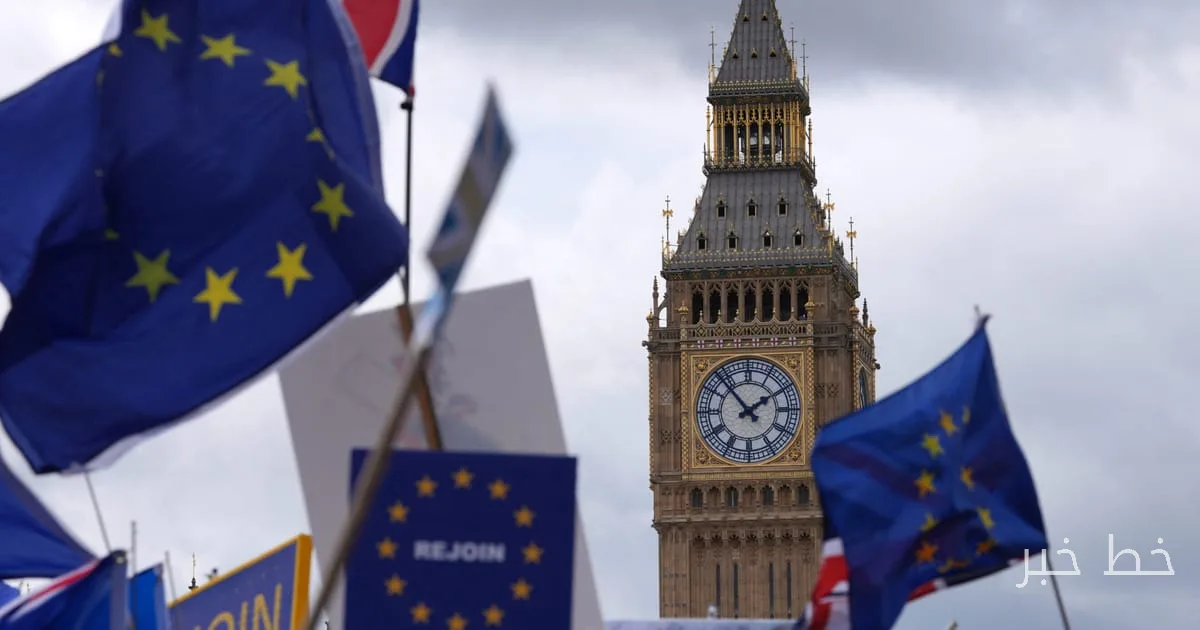
The majority of British voters want to establish closer relations with the European Union. A new poll shows that 70 percent of voters are urging their government to strengthen its ties with Brussels. This poll also indicates that even among supporters of Nigel Farage, 51 percent believe that the current agreement with the European Union is far from satisfactory.
Public Perception of Europe
Sabine Reid, the polling director at the public research company Public First, explains that the general public is now seeking foreign alliances with Europe; especially as the United States appears to be a less reliable partner. She says: "But this is a complex issue for the government. 'Getting closer to Europe' does not mean 'backtracking on Brexit,' and Burnham must act carefully to keep both his European supporters satisfied and not reopen old wounds.
Social Divisions Following Brexit
The Brexit vote a decade ago divided the country, cost two prime ministers their jobs, and created a protracted and tense divorce negotiation between London and Brussels. The Public First poll surveyed 2,028 British adults from September 13 to 15, 2026, collecting their opinions on closer ties with the European Union and adherence to its laws.
According to this poll, 31 percent of respondents believe that Britain should establish "closer" relations with Brussels, provided that it does not mean following EU laws. However, 39 percent want "much closer" cooperation even if it means adhering to some EU laws.
This poll also emphasizes that Brexit discussions have divided the country into two blocks: supporters and opponents. Supporters of left-wing parties are significantly more inclined towards closer relations with the European Union than supporters of right-wing parties. Supporters of the Green Party showed the highest inclination; 64 percent of them said they support closer relations with the European Union, even if it means greater acceptance of EU laws.
Among supporters of the Reform Party of Britain, 51 percent want closer ties with the European Union, which is double the 25 percent who want to distance themselves further from the Union. This could pose a challenge for Nigel Farage, the leader of this party. This finding could also become a weapon for Labour politicians who want to encourage Burnham to adopt more ambitious plans to improve relations between Britain and the European Union, which may include a return to the customs union or single market.
As Burnham prepares to deliver his speech on Tuesday to party members and activists in Liverpool, several ministers and others are expressing their views on the type of closer relationship with the European Union that he should pursue.