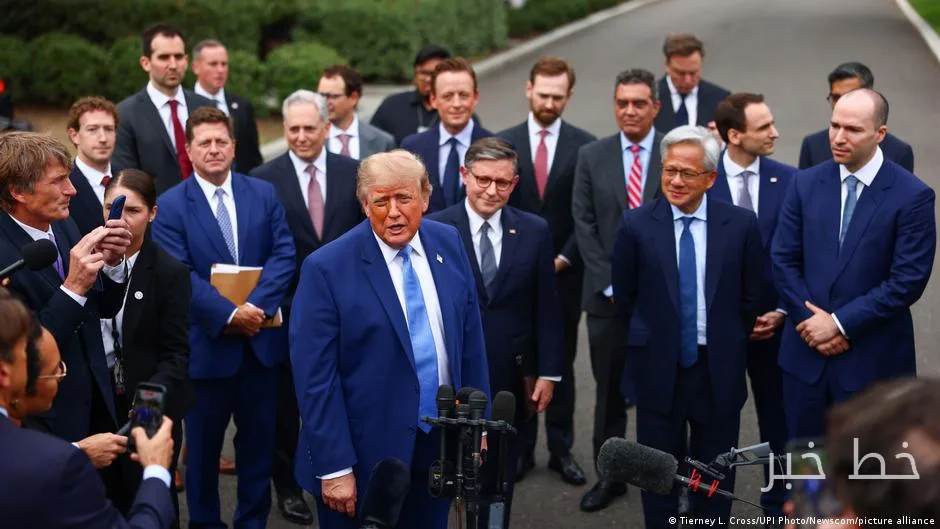
The U.S. government signed an agreement on Tuesday with leaders of AI companies aimed at self-regulation in the development of this technology. Donald Trump, the President of the United States, emphasized his support for this technology during a meeting with these leaders at the White House.
Increasing Concerns About AI
This agreement comes amid rising public scrutiny over the risks posed by emerging technologies, especially following reports of illegal behaviors by some AI systems such as OpenAI and Anthropic. Concerns are also growing about the negative impacts of this industry on local communities, particularly with the growth of data centers.
Details of the Self-Regulation Agreement
Trump previously stated before this meeting that the U.S. government would not impose any restrictions on the development of AI and would not support calls for regulations or limitations in this sector. He also announced that he would change the name of this technology to "super intelligence" because he believes this technology is not "artificial."
At this meeting, leaders including Jensen Huang (CEO of NVIDIA), Sundar Pichai (CEO of Google), Mark Zuckerberg (CEO of Meta), and Satya Nadella (CEO of Microsoft) were present. Trump stated in an informal press conference that "I am aware of the tremendous self-regulation in this industry, and they understand that they must control themselves."
Trump also published a version of the "White House Agreement on Super Intelligence" on his Truth Social platform. This agreement emphasizes that each company is responsible for developing its technology in a safe and reliable manner for customers and the public. The document states that technology companies must implement "strong internal controls" to ensure proper oversight and detection. They have also been asked to designate "an internal team" to monitor these issues.
AI companies are also expected to collaborate with an independent auditor or evaluator to conduct independent assessments and establish "an independent committee from the board" to oversee and receive reports. Trump described this agreement as "morally binding" but not legally enforceable. However, this agreement leaves the necessary doors open for "regulating these steps in laws or regulations."