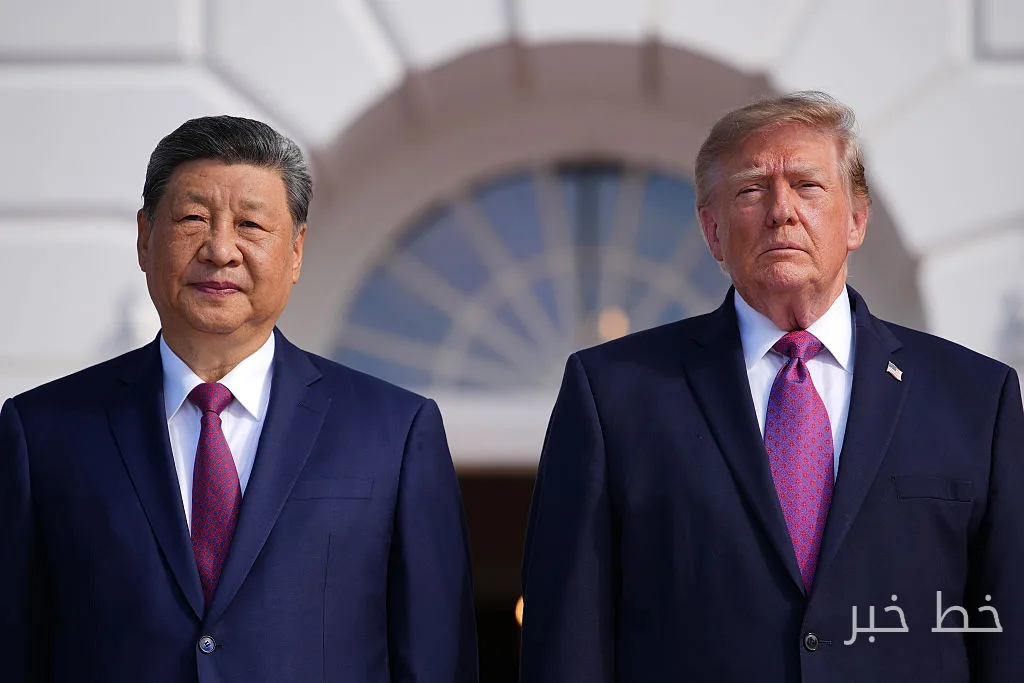
The U.S. government must compete and collaborate with China in the field of artificial intelligence. This issue was raised during last week's meeting between Donald Trump, the President of the United States, and Xi Jinping, the President of China, at the White House. This is their second meeting this year, and in this session, the importance of security and economic issues in the field of artificial intelligence was discussed.
Challenges of Competition and Collaboration
In recent years, numerous security incidents have been reported from most major artificial intelligence companies, both American and Chinese. Leading laboratories in the field of artificial intelligence openly discuss the speed of developing their advanced models, and governments are determining their roles in these decisions.
Read more: OpenAI Halts Release of Latest AI Model
During the four years I served as Secretary of Commerce, I focused heavily on economic, technological, and security competition with China. I established export controls on the sale of chips and chip-making equipment to China to safeguard national security, and I also led the implementation of the CHIPS Act to support domestic chip manufacturing. Additionally, I launched the Artificial Intelligence Safety Institute to accelerate the development of artificial intelligence responsibly and safely.
The Importance of Dialogue and Collaboration
I believe that artificial intelligence companies have the right to exercise caution in the speed of developing their advanced models. However, we must stay ahead of China while maintaining our pace, as a world where China leads the global competition in artificial intelligence harms U.S. interests.
China also has its reasons for paying attention to the safety of artificial intelligence. The Chinese Minister of State Security recently stated that the greatest risks posed by advanced artificial intelligence to China threaten the stability of the Chinese Communist Party (CCP). Beijing is just as keen as Washington to prevent social-political chaos arising from powerful artificial intelligence systems, and both countries have shared motivations to align on certain safety standards.
As the risks and benefits of artificial intelligence increase daily, the need for dialogue and establishing communication lines between the two countries is essential. Even if we do not reach an agreement on a set of common standards, starting a dialogue and opening communication lines will be vital for us.
The U.S. government should also place a greater burden on artificial intelligence companies to take proactive measures against potential risks more seriously. Coordinated and industrial efforts to train weaker models based on the outputs of advanced models must be considered with greater seriousness.
Read more: The Trump Administration Introduced the Term Superintelligence for Artificial Intelligence · Mark Zuckerberg and Jensen Huang Designed the White House AI Agreement