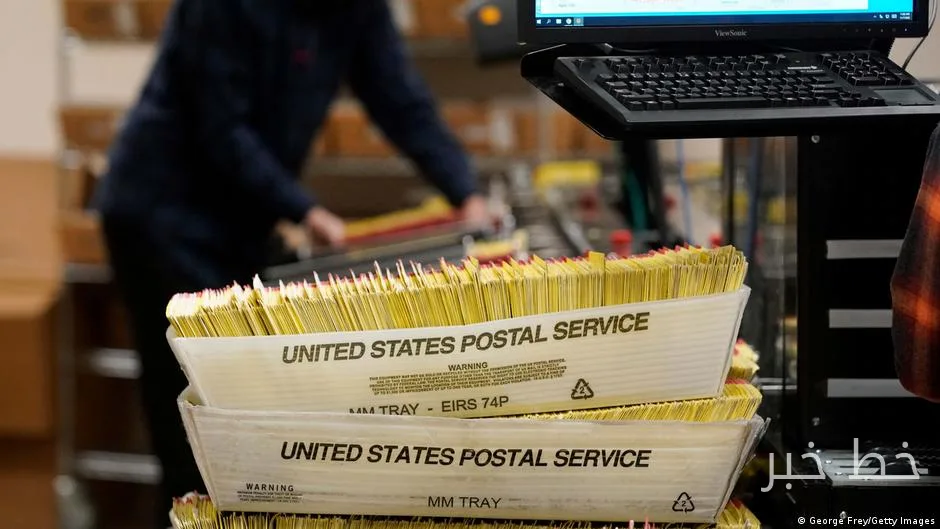
The U.S. Supreme Court rejected President Donald Trump's request to limit mail-in voting. This decision was made ahead of the November midterm elections.
Reasons for Rejecting Trump's Request
Trump had asked the court to overturn a lower court's order that prevented limiting mail-in voting. Conservative Justice Brett Kavanaugh stated in his opinion that although the President's plan may ultimately be legal, "state and local election officials do not have enough time to implement this law before the election."
Read more: Gavin Newsom announced he will not run if Kamala Harris runs for the 2028 presidency
Implications of This Decision
This decision allows states to continue sending mail-in ballots, a process that has been ongoing for years. This issue has major implications as nearly one-third of people in the country use mail-in voting.
Trump's plan included a requirement for states to use a specific style for mail-in ballot envelopes and to provide a list of recipients of the ballots to the postal service. These measures could have led to the non-delivery of millions of ballots, as the postal system was not technically able to handle this.
Critics argue that these restrictions could disrupt the delivery of thousands of legal votes before the November 3 election. States including Alabama, North Carolina, and Wisconsin have recently begun sending mail-in ballots to voters.
Democratic state officials and voting rights groups challenged these restrictions in court, arguing that the President has no authority to set election laws that "effectively eliminate mail-in voting on the eve of a major election."
In March, Trump signed an executive order to limit mail-in voting, claiming that the system is vulnerable to fraud without providing evidence. The President, who himself frequently uses mail-in voting, has generally criticized the system.
Limiting mail-in voting would benefit Republicans, as polls show that Democratic voters disproportionately use this system. Polls predict that the Republican Party is at serious risk of losing its narrow control of Congress in November, particularly in the House of Representatives.
Read more: Nationalists' leaders agreed that Andy Burnham should be the last Prime Minister of Britain · Trump's strategy to gain support from white women in the midterm elections