The Trump administration has signed a new agreement for military control and access to Greenland. This agreement, signed at the United Nations by Donald Trump and the Prime Ministers of Greenland and Denmark, addresses concerns about Chinese and Russian influence in the region and effectively ends previous disputes.
Details of the New Agreement
This agreement, which still requires approval from Danish and Greenlandic lawmakers, essentially acts as an amendment and completion of a previous agreement between the United States and Denmark dating back to 1951. Many experts had previously pointed out that the earlier agreement allowed Trump greater freedom in establishing military bases and ensuring regional security.
Read more: Greg Stanton considers the possibility of a new military operation by Trump against Iran likely
The main difference this time is that Greenland itself is also a signatory to this agreement. The initial part of the text emphasizes the signatories' commitments to adhere to international laws, respect Denmark's sovereignty, and fulfill NATO responsibilities. A significant portion of the text focuses on U.S. military and civilian access to Greenland and plans for establishing military bases.
Military Bases and Security Concerns
Trump has promised to build two large military bases in Greenland. According to the text released by the Danish government, these bases are not entirely new, with one located in Narsarsuaq in southern Greenland, which was previously the American base Bluie West One and was closed in the 1950s. The other base is in Mestersvig in eastern Greenland, which currently houses a Danish sled dog unit and is set to be rebuilt.
Under this agreement, U.S. military personnel will have "free" access to air, land, and sea routes in Greenland. Greenland currently hosts the U.S. Thule Air Base, where about 150 American military personnel monitor missile attacks.
This agreement also specifies how new drone warfare facilities will be established in Greenland, which require swift approval from Danish and Greenlandic officials. However, Denmark and Greenland will ultimately have the right to decide on the location of these facilities and whether they will be built or not.
Another new point is several clauses aimed at preventing the establishment of military bases and economic activities by non-NATO countries in Greenland. According to these clauses, no non-NATO country can establish a base on the island or mine for minerals and rare elements without the agreement of the three signatories.
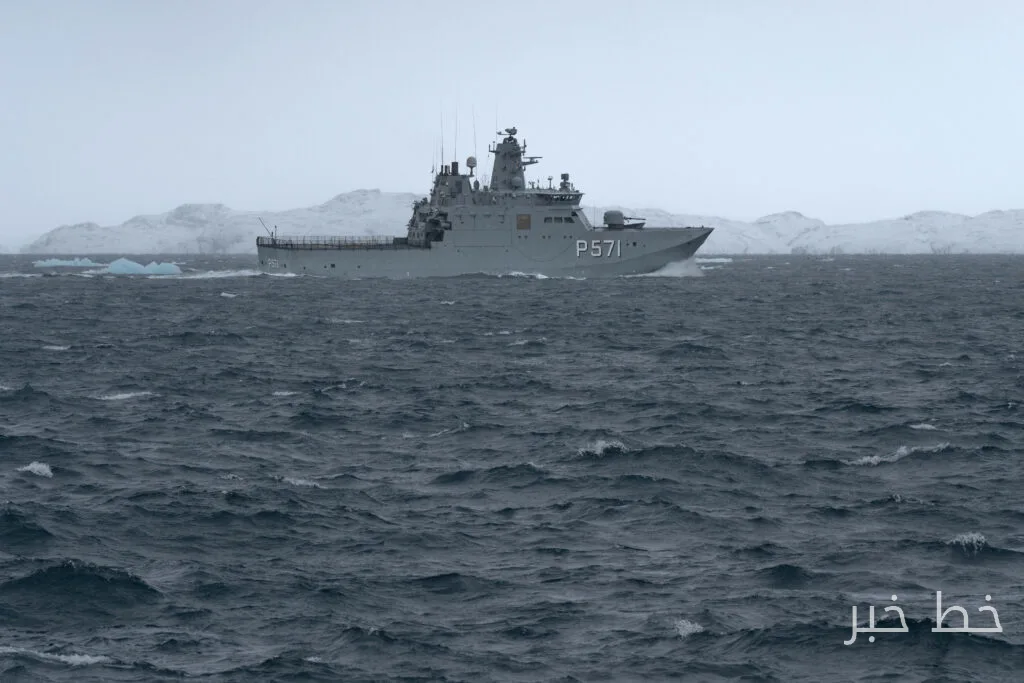
Trump has repeatedly expressed concerns about Chinese and Russian military activities around Greenland, claiming that "if you look at the current situation, Russian and Chinese ships are moving in." He emphasized that the United States does not want Russia or China to dominate Greenland.
NATO entities have quietly responded to these claims, with one diplomat stating, "We see no Chinese activity around Greenland." Additionally, Russian movements in the far north have not changed significantly, and there is no substantial presence near Greenland.
In a recent social media post, Trump stated that "there will be no cost to the United States" for rebuilding bases and expanding military presence in Greenland. However, it is unclear how this might be possible, as one of the bases mentioned in the agreement was closed by the United States in the 1950s and is now a small Danish facility.
The new agreement clearly affirms Denmark's sovereignty and Greenland's right to autonomy, including the right to choose independence from Denmark. It also references the need to protect the pristine environment of the region and the cultural, social, and economic rights of Greenlanders.
According to one expert, "Reading this agreement shows why there was so much controversy over something trivial, while this could have been done from the start."
Read more: The Trump administration signed a trilateral security agreement with Greenland and Denmark · The Trump administration emphasized the need to change the face of artificial intelligence at the United Nations