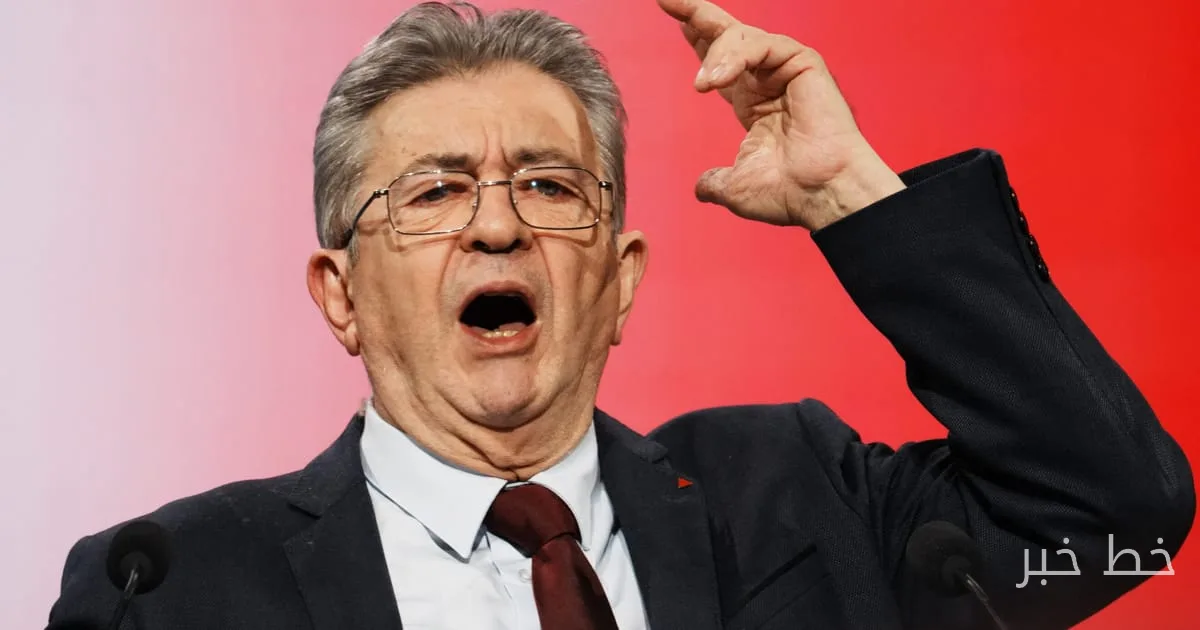
The Ukrainian government strongly reacted to the statements of Jean-Luc Mélenchon, the left-wing presidential candidate of France, regarding the right to self-determination in the occupied territories of this country. This reaction came after Mélenchon stated at a recent political rally that if he came to power, he would oppose granting any territorial concessions to Ukraine without consulting the affected people.
Ukraine's protest against Mélenchon's statements
The spokesperson for the Ukrainian Foreign Ministry, Yuriy Tyahnybok, emphasized on his social media account on X (formerly Twitter) that "referendums under conditions of occupation are tools for annexation, not expressions of the people's will." He also noted that no civilized and democratic country would ever accept this for its borders and therefore should not be proposed to Ukrainians either. Tyahnybok added that Ukraine had previously voted in 1991 and that Russia is now trying to change borders through war.
Read more: The attacker of the Krakow massacre died in the hospital
Political tensions in France and Ukraine
Mélenchon's statements came as he referred to the people of the Donbas region, saying they have the right to decide whether they want to be Ukrainian or Russian. This region is the heart of territorial tensions in the war with Russia, and for this reason, his statements have faced severe criticism.
This is not the first time Ukrainian officials have engaged with French electoral candidates in recent weeks. Volodymyr Zelensky, the President of Ukraine, responded to the promise of Marine Le Pen, the right-wing candidate in France, to reduce financial aid to Kyiv. France's strong support for Ukraine could significantly change if Mélenchon or Le Pen wins the elections next year.
Polls indicate that these two politicians may face each other in the second round of elections. Mélenchon, like Le Pen, has repeatedly been accused of being soft on Moscow, and these accusations have intensified as the election date approaches.
Jean-Noël Barrot, the French Foreign Minister, described Mélenchon as the "spokesman for the Kremlin" after last Saturday's rally. Mélenchon has denied these accusations.
Muriel Domenach, the former French ambassador to NATO and now an advisor to the centrist candidate, Raphaël Glucksmann, also raised criticisms regarding the recent uncompromising electoral program of France, which refers to leaving NATO and briefly mentions Ukraine. The representative of the uncompromising France, Bastien Lachaud, responded that his party has always supported helping Kyiv until a peace agreement is reached.
Lachaud added: "We have stated from the beginning that as long as these negotiations are fruitless, aid to Ukraine must continue unconditionally."
Read more: The Zaporizhzhia nuclear power plant has resorted to emergency generators · Democrats cannot repair the relationship between the US and Canada