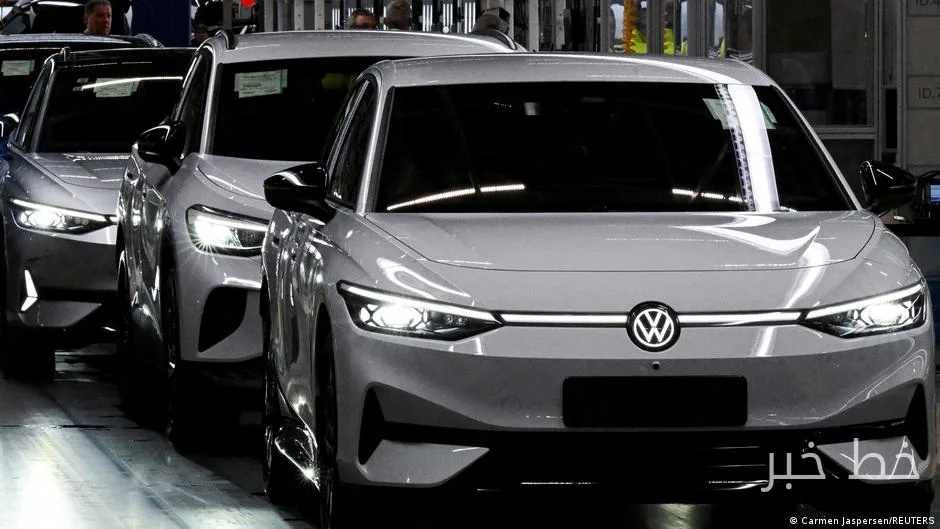
Volkswagen (VW) announced on Thursday that it reported a loss of 5.8 billion euros (6.5 billion dollars) in the third quarter of this year. This loss occurred as VW faces increasing competition from Chinese automakers and is also dealing with challenges in transitioning to electric vehicles and declining demand in the market.
Increasing competition and domestic challenges
Volkswagen, Germany's largest automaker, reported a loss of only 1.07 billion euros during the same period last year. The company has been particularly pressured by competitive pressures from rapidly expanding Chinese automakers. China, as the world's largest car market, has become one of VW's main challenges.
Read more: Kevin Warsh speaks after the Federal Reserve's decision on interest rates
The automaker also warned last month that its group of 10 brands, which includes manufacturers like Audi, Seat, and Skoda, would face a 10 billion euro reduction in annual profits. This decline is primarily due to falling sales of Porsche, VW's luxury subsidiary. Porsche, once a major profit driver for the VW group, has been severely affected by a sales slump in China and U.S. tariff policies.
Cost-cutting plans and workforce adjustments
Volkswagen announced this year that it intends to cut more than 100,000 jobs by the end of the decade to reduce costs. The company also stated that its restructuring plan will cost 31 billion euros. In this regard, VW is considering or deciding to close several factories in Germany, including the Zwickau, Emden, Hanover, and Neckarsulm plants.
Arno Antlitz, VW's CFO, stated, "What matters now is swift and effective implementation. We cannot afford to lose time and must act quickly and decisively." These remarks reflect the company's serious determination to tackle the challenges it currently faces.
While VW struggles with its issues, on the other hand, German Chancellor Friedrich Merz is concluding his trip to East Asia with a visit to South Korea, and President Frank-Walter Steinmeier is continuing his trip to China. This situation highlights the economic and political challenges that exist not only for automakers but for the entire German economy.
Read more: Possibility of updating registration or temporary voting in case of non-registration · Germany and France signed an agreement to support the European automotive industry