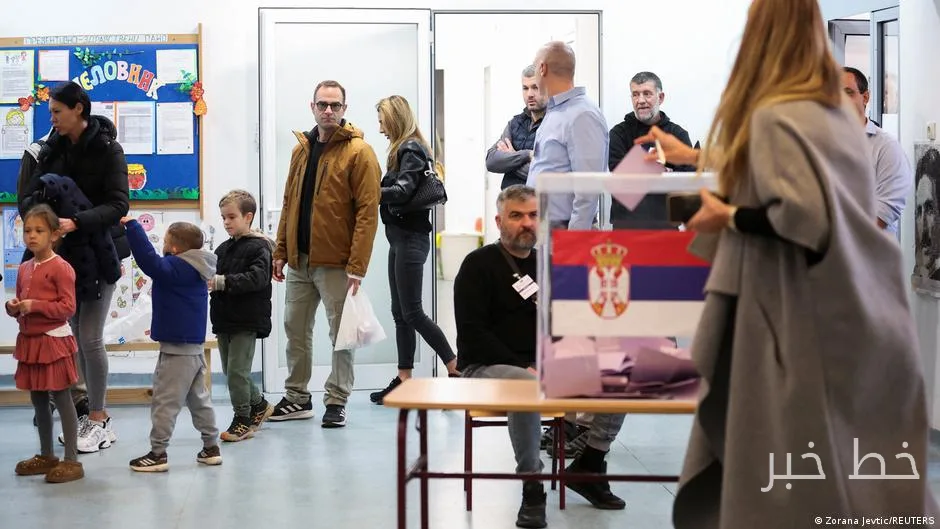
Aleksandar Vučić, the long-time leader of Serbia, on Sunday accepted defeat in the parliamentary elections to a student movement that has held protests against him over the past two years. This election is recognized as a major political change in the country.
Tense Elections and High Turnout
The parliamentary elections in Serbia were held with high voter turnout and increasing tensions. This election was somewhat a battle between Aleksandar Vučić and a diverse movement of university students who have been protesting against him since 2022. The result of this election marked the end of more than a decade of Vučić's rule and the Serbian Progressive Party (SNS).
Read more: Andy Burnham announced the possibility of the return of free movement between the UK and the EU
Pre-election polls indicated a close competition between the SNS party and a new student list that emerged from a large student protest movement. These protests began following the deadly collapse of a train station canopy in the city of Novi Sad in 2024, which claimed the lives of 16 people and sparked public outrage over alleged corruption, poor construction standards, and lack of accountability in public infrastructure projects.
Turning Anger into a Political Challenge
The protests following this disaster became the largest social movement in Serbia since the fall of Slobodan Milošević in 2000. What began with student blockades and marches soon garnered support from teachers, farmers, and other sectors of Serbian society, transforming demands for justice regarding this disaster into a broader challenge against Vučić's power.
The SNS party has won parliamentary elections since 2012 and has dominated Serbian politics since then. Vučić himself came to power as Prime Minister in 2014 and was elected President in 2017. After announcing early elections last month, Vučić stepped down as President to run for Prime Minister. His second presidential term was set to end in May 2027, and Serbia's constitution prevents him from running for a third term.
Critics have accused Vučić of concentrating power, undermining independent media, and weakening democratic institutions, allegations that he and his party deny. The student movement has sought to channel the energy of street protests into an electoral challenge, positioning itself as an alternative to both the ruling and established opposition parties in Serbia.
By 1:00 PM (1200 GMT), 41.1 percent of eligible voters had cast their ballots, compared to 26.6 percent at the same stage of the December 2023 parliamentary elections. Additionally, by 6:00 PM (1700 GMT) and two hours before polling stations closed, 64.89 percent of voters had voted.
After voting at a kindergarten in the suburbs of Belgrade, Vučić expressed hope that the elections would proceed smoothly. He said, "We will respect the democratic will of the citizens. You can win or lose in elections, but we will act responsibly regardless."
Elijah Srdanović, head of the student list, while neither a leader of the movement nor a specific candidate for Prime Minister, expressed hope that today would be spent in a democratic and peaceful atmosphere and that a new government would be legally elected in Serbia.
This election is being closely monitored in Europe. Serbia is a candidate for EU membership, but its accession process has faced obstacles due to concerns over democratic standards and the rule of law.
This voting takes place six months after the victory of Peter Magyar in Hungary, when he defeated the oligarch Vučić, Viktor Orbán. Polling stations will close at 8:00 PM local time (1900 GMT).
Read more: Friedrich Merz in Montenegro examines the chances of Balkan countries joining the EU · The Trump administration criticized Fox News for excessive coverage of Republican rivals