Aleksandar Vučić, the President of Serbia, criticized his rivals after the defeat in the elections on October 25 to the Student List, which received 53 percent of the votes. Vučić, who has been in the media spotlight for years, complained about the "revolutionary terror" of his rivals at a press conference with fewer microphones than usual and threatened that if these actions continued, they would be forced to organize.
Complaints Against the Media and Protests
As an example of this "terror," Vučić mentioned the resignation of the general director of the state television network RTS and also announced that some senior editors of this network have been dismissed. On Monday, a small group of protesters entered the Informer television station. This network has been criticized for years for disparaging Vučić's critics. Now, journalism associations are calling for the revocation of this network's license.
Vučić's affiliated yellow media have also quickly changed their tone. Unlike Informer, they no longer refer to the Student List as "terrorists" and "mercenaries." The Student List, which emerged from student protests, includes professors, activists, and artists.
Rapid Developments After the Elections
After the elections, in many cities, citizens have quietly removed portraits of Vučić from government buildings. The Public Prosecutor's Office for Organized Crime has begun investigations, and a special commission is examining the work of the High Public Prosecutor's Office in Belgrade. Criticisms of Vučić include tight media control, awarding government contracts to companies loyal to the regime, and his connections to organized crime.
The main trigger for these protests was the collapse of a concrete awning at the Novi Sad railway station two years ago, which resulted in the deaths of 16 people. This incident occurred due to poor work and corruption in awarding the repair contract.
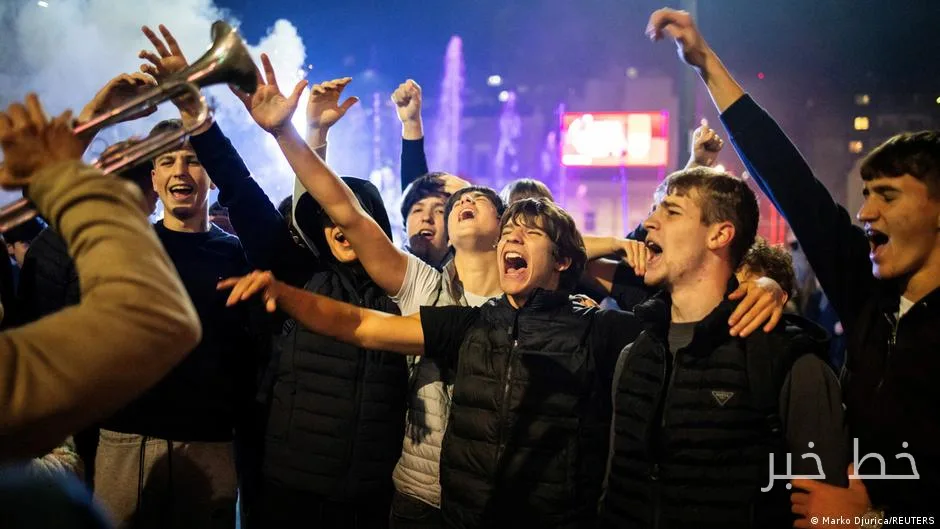
Those who were celebrating in the streets a few days ago are now quickly showing impatience. The new parliament has not yet been formed, and the Serbian Progressive Party (SNS) still holds control over many levers of power. Dijan Bursac from the Institute of Philosophy and Social Theory at the University of Belgrade stated that "a society that has been under pressure for a long time rightly expects justice now."
Vučić and his senior officials have promised to act as strong opponents and hope to quickly return to power after the country is destroyed by new rivals. However, the majority of critics are calling for investigations and trials against Vučić. Bursac added: "SNS members act as if they have lost a local election in democratic Scandinavian countries, rather than being part of a deeply corrupt and criminal regime."
It is common for politicians in Serbia to change their loyalty from one group to another. Even Vučić has acknowledged that many of his former comrades have turned their backs on him. Zlatko Minić from Transparency Serbia commented on this situation: "We will see whether individuals resign from their positions or remain in the shadows and even act as informants for the next government."
The issue is how much damage the old government can inflict on the new one. Minić warned: "There is still time for many officials to award contracts and create financial obligations for the institutions they manage."
However, some familiar with the situation said that the Student List has been in contact with police and administrative officials opposing Vučić's style of governance for some time. The election winners may now be able to prevent some actions. On Wednesday, the list again called for the resignation of senior officials in the police and judiciary.
In a symbolic move, representatives of the Student List held their first press conference in Pioneer Park in front of the parliament building. Vučić's supporters besieged this park in 2025 and turned it into a pro-government camp. According to investigative journalists, this park also became a base for thugs and criminals who attacked anti-government protesters.
The victorious Student List brings together left and right forces, pro-European and pro-Russian, and focuses on changes in domestic policy. They are calling for the advancement of EU accession negotiations through the implementation of real reforms and oppose sanctions against Russia and the recognition of Kosovo. These positions are almost universally agreed upon by the entire population of Serbia.
Oliver Tuškovic, a psychology professor and future member of parliament, said: "Our program is to stabilize and develop the country, not to destabilize it with sudden changes in foreign policy." Tuškovic added that unlike during Vučić's era, the European Union will not be used as a "cover."