Doris Dorrie, the famous German director, has made a new film called 'Mrs. Winkler Leaves the House' in the near future in Hamburg. In this film, robots act as service providers instead of delivery drivers, and talking robots move between tables in cafes. The film explores the social and ethical challenges related to elderly care and death with the help of artificial intelligence.
The Story of the Film and Social Themes
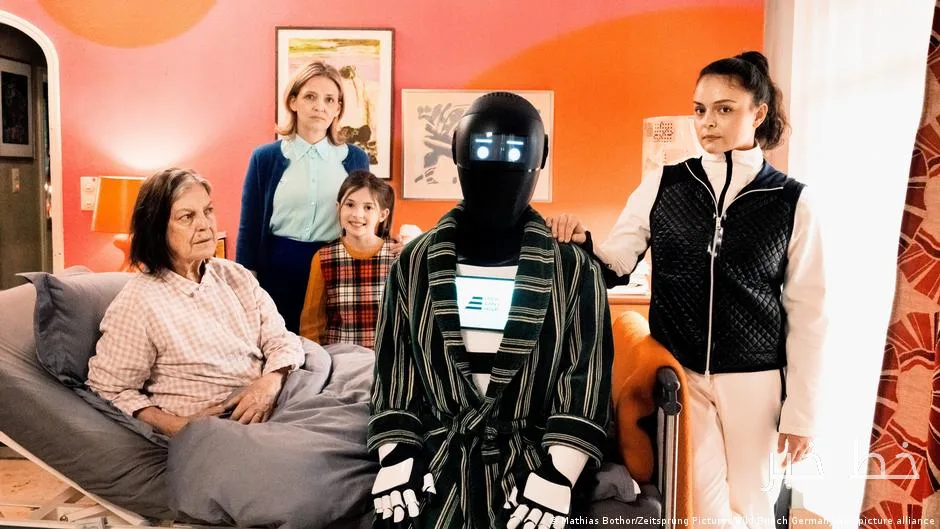
At the center of the story is an elderly woman named Mrs. Winkler, who cannot live alone after a fall. Since her only daughter cannot help her, the solution seems simple: a care robot with an end-of-life (EOL) program. This robot not only assists in daily life but can also help end life under specific conditions, especially when the individual explicitly wishes to end their life and meets the relevant medical criteria.
Read more: Greg Stanton announced the creation of the new smart toy Stickerbox
Dorrie examines the challenges of aging societies like Germany, Japan, and China with her unique style, raising questions about death by choice and the mother-daughter relationship that is accompanied by feelings of guilt and responsibility. Although the story is set in Germany, such issues are universally understandable.
Ethical and Philosophical Discussions
Doris Dorrie explores when artificial intelligence starts to calculate the costs of caring for an elderly person and whether these costs remain 'appropriate' for society. She references the Japanese legend of Narayama, where older children are responsible for taking their elderly parents to the mountain and leaving them there. This topic somewhat reflects our current discussions about society's ability to support the longer lives of the elderly.
In the film, elderly individuals are allowed to make their own decisions, but they cannot change their minds later. Dorrie raises the question of whether true free will exists or if economic and social pressures lead us to decisions that may benefit others.
Dorrie is not seeking to demonize artificial intelligence in her film, but rather shows that the care robot, which Mrs. Winkler names Pavlovich, helps her to taste life again and go out of the house. She states, "If artificial intelligence can help humans under certain conditions, why shouldn't we use it?"
Dorrie and her filming team were also influenced by the reality of how quickly humans can form emotional relationships with a robot. She attributes this to the structure of the human brain and emphasizes the need to pay attention to interactions with artificial intelligence.
This director clearly calls for regulations for artificial intelligence and believes that this issue urgently needs discussion and action. She believes that progress in this area must be made quickly.
Read more: Elon Musk rejected Starlink restrictions in Ukraine · Europe withdraws from competition in advanced artificial intelligence